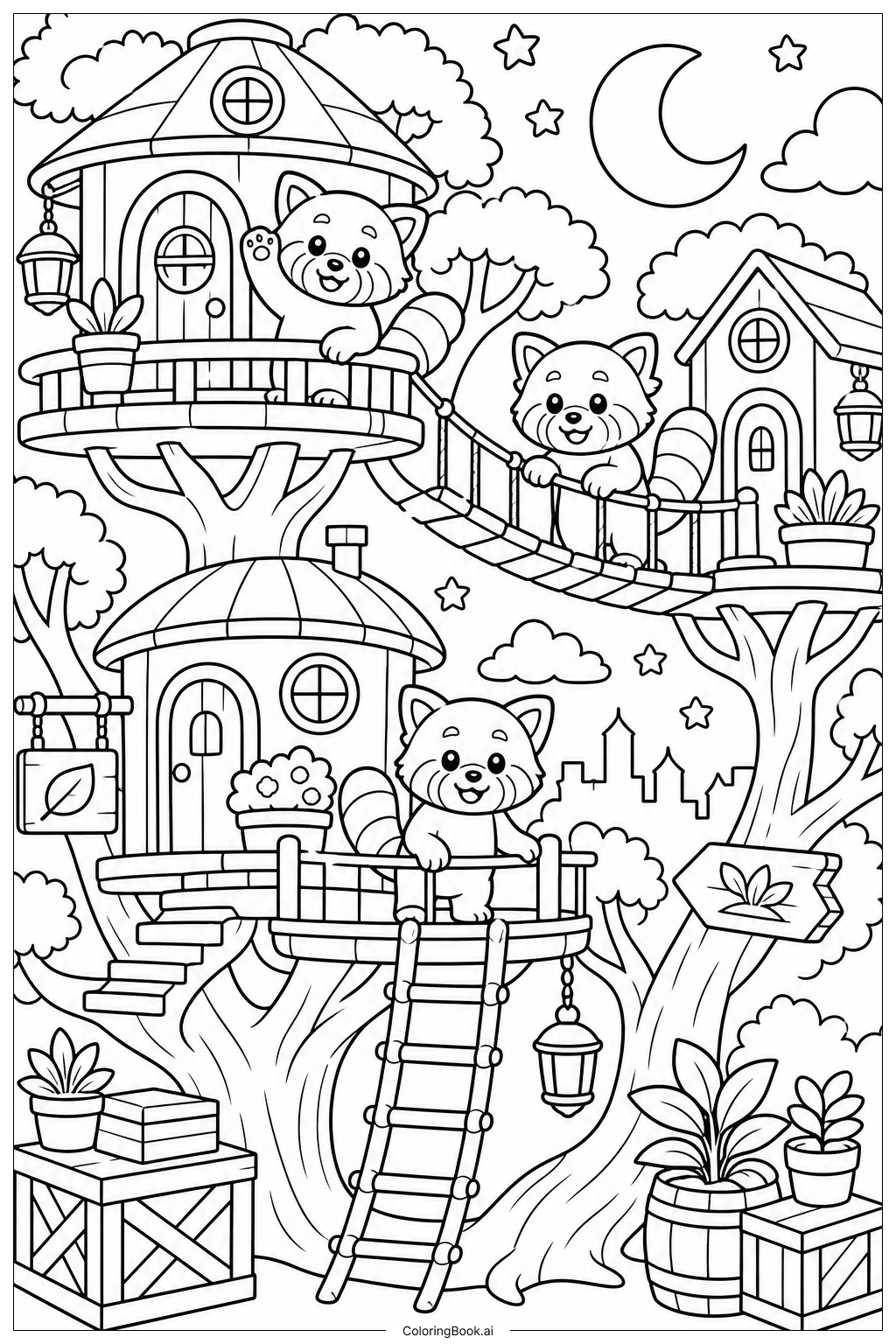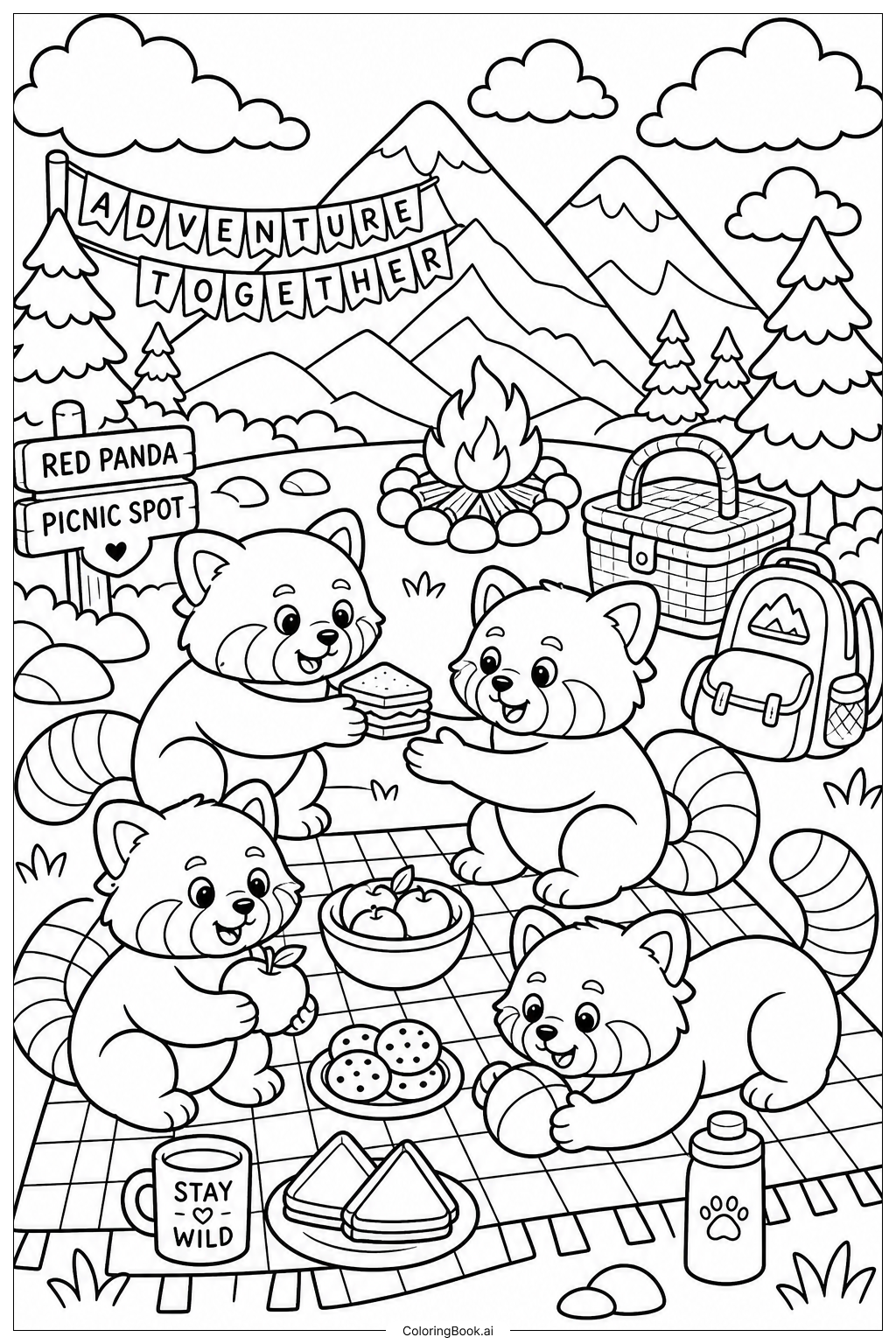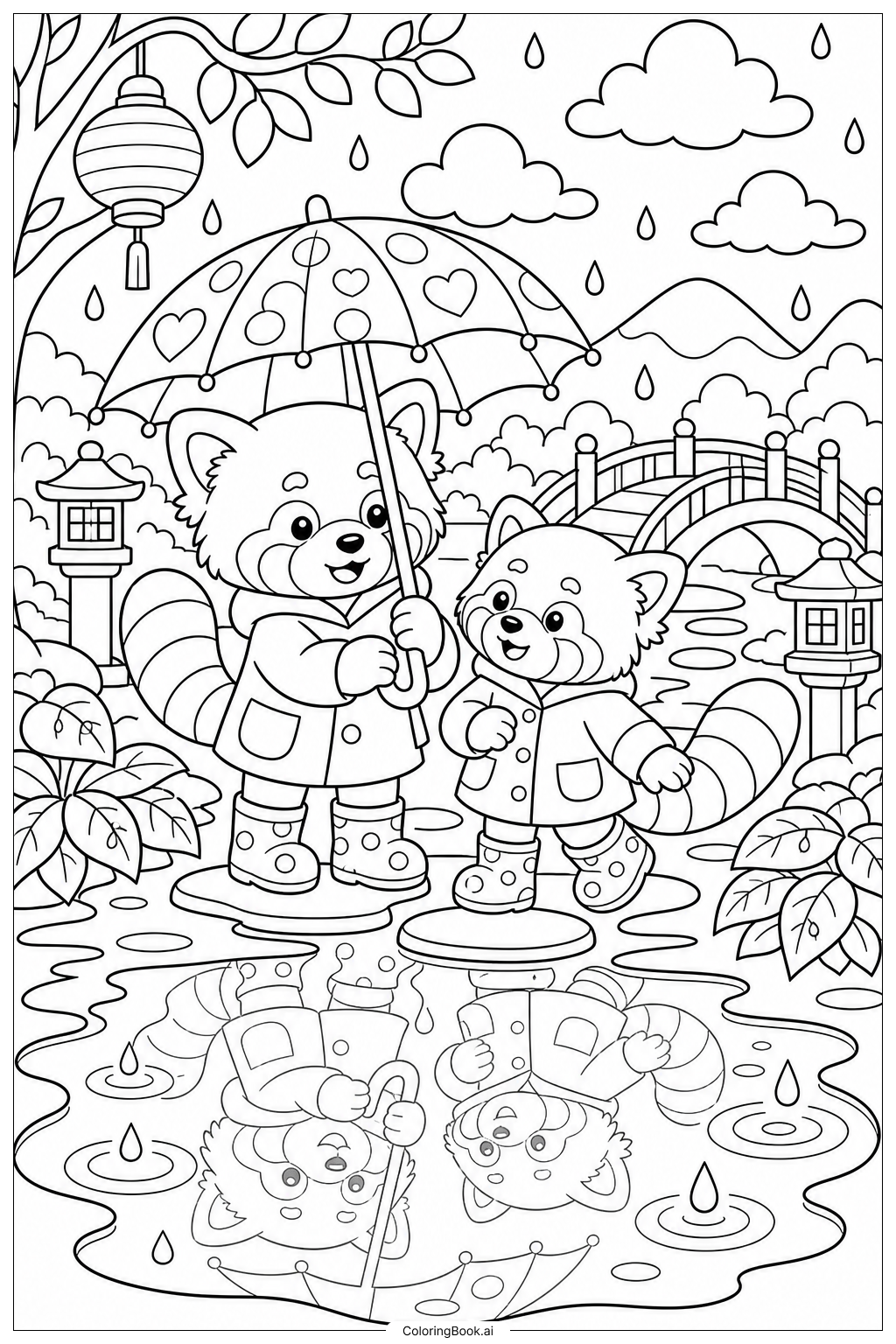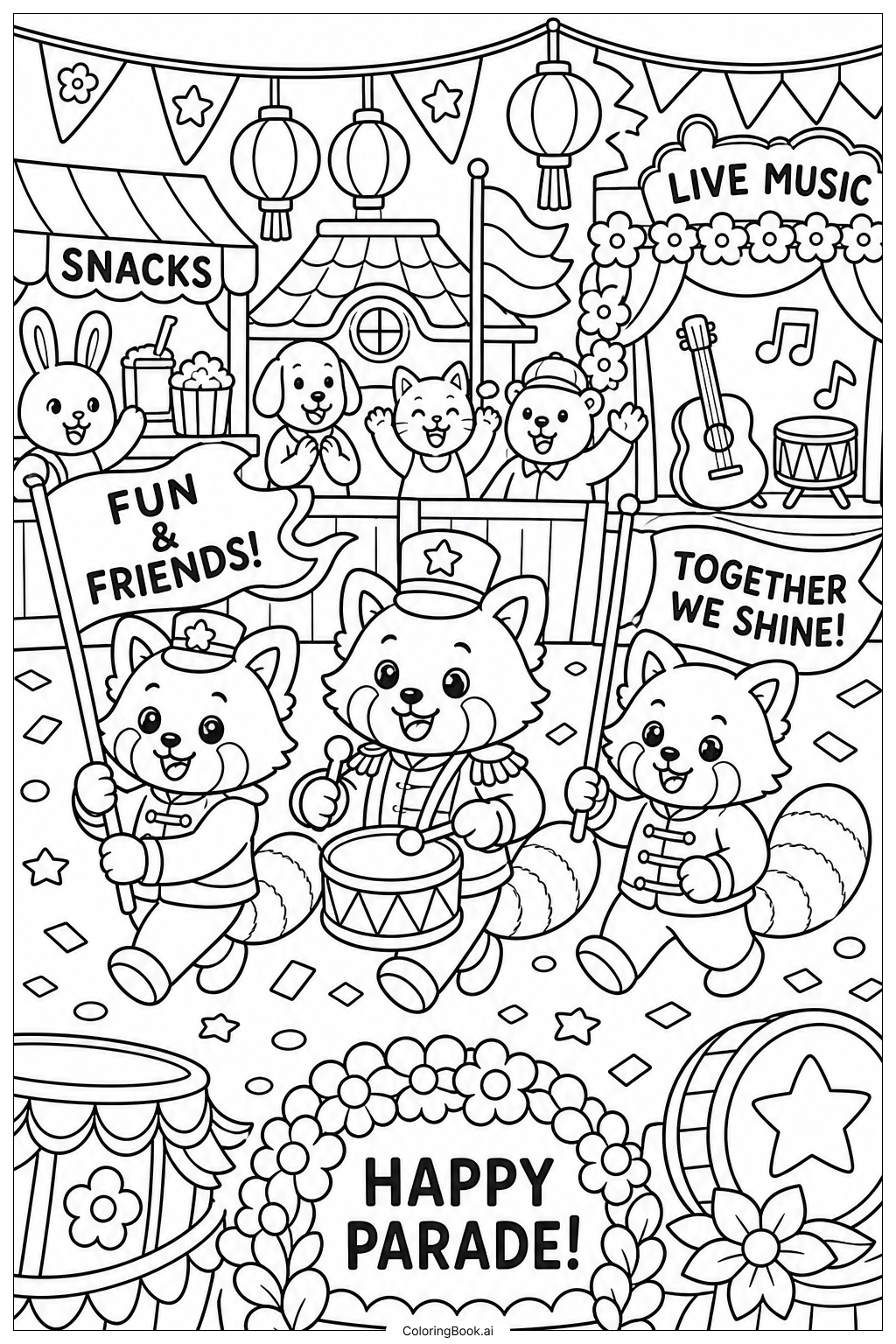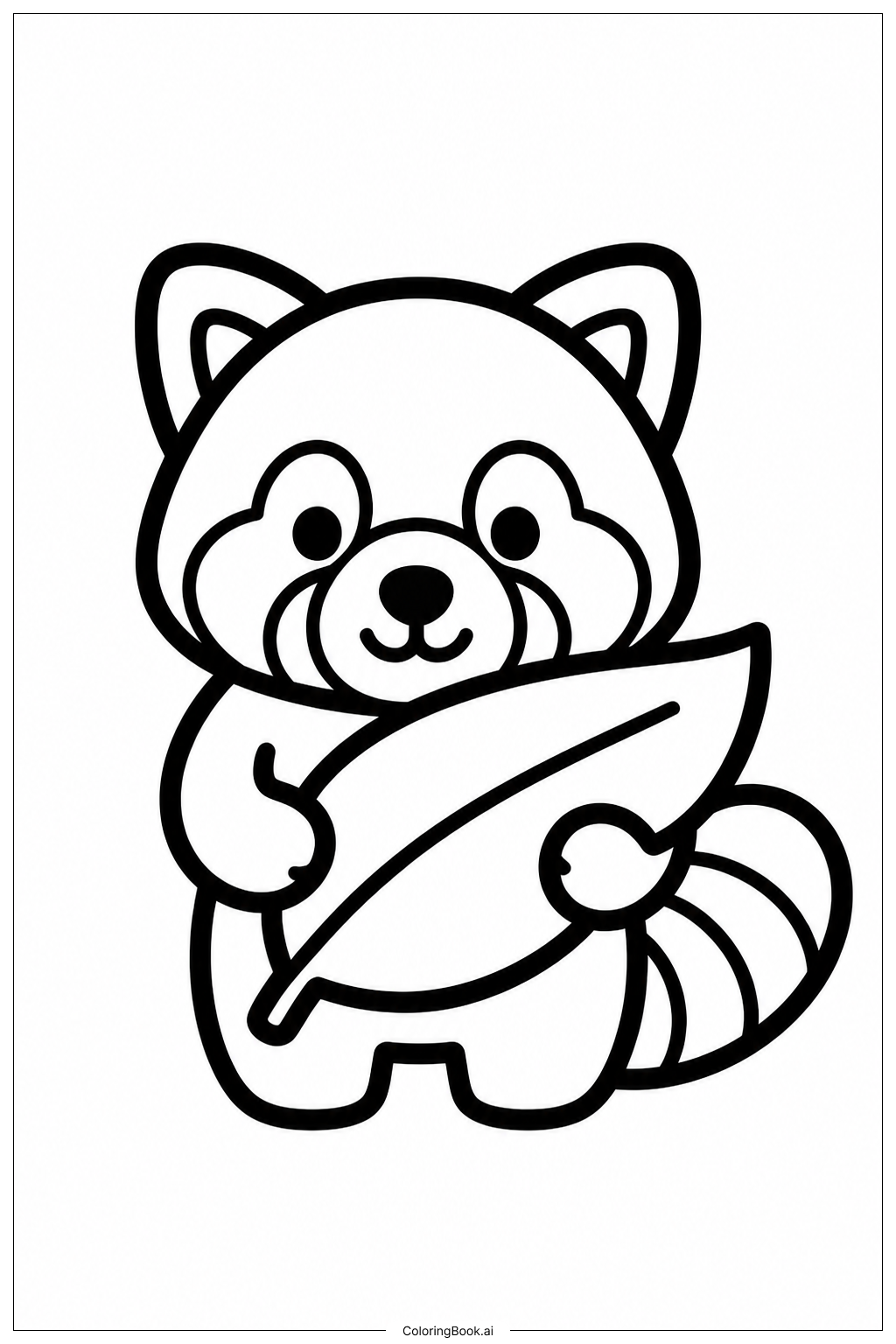
Coloring tips: How to color Red Panda Holding Leaf coloring page well?
For this delightful red panda, start with warm reddish-brown tones for the body and tail. Use russet, burnt sienna, or cinnamon colors to create the characteristic red panda fur. The facial markings can be colored with cream or white around the eyes and muzzle, while adding dark brown or black for the nose and eye details. The ears typically have white inner fur with darker outer edges. For the tail rings, alternate between the reddish-brown base color and darker brown or black bands. The leaf can be colored in various shades of green, from lime to forest green, with lighter yellow-green for the veins to add dimension. Consider adding subtle orange or yellow tones to create autumn leaf effects. The paws are usually dark brown or black. Use light pressure for the fluffier fur areas and darker shading in the shadows to create depth and texture.
Coloring challenges: Which parts are difficult to color and need attention for Red Panda Holding Leaf coloring page?
• Fur Texture and Direction: The red panda's fluffy coat requires careful attention to fur direction and layering. Young colorists may find it challenging to create realistic fur texture using short, directional strokes rather than solid coloring. The transition between different color zones, such as where the reddish fur meets the darker legs and the white facial markings, needs smooth blending to avoid harsh lines while maintaining distinct boundaries.
• Tail Ring Patterns: The signature banded tail presents a unique challenge as each ring must be colored consistently while maintaining even spacing and curved alignment around the cylindrical tail shape. Children need to understand how the rings wrap around the three-dimensional form, appearing narrower on the sides and wider when viewed directly. Keeping the alternating pattern uniform without the bands appearing wobbly or uneven requires patience and planning.
• Facial Feature Details: The red panda's expressive face contains small, intricate areas including the eyes, nose, and the distinctive white and dark markings. Coloring within these tiny spaces without crossing lines can be difficult for younger children. The white tear-mark shapes around the eyes need careful attention to preserve their crisp edges against the reddish-brown fur.
• Leaf Vein Structure: The botanical details of the leaf, including the central midrib and branching veins, require precision coloring with lighter or darker shades to create realistic depth. Coordinating the vein colors with the leaf base color while maintaining visibility of these delicate lines challenges fine motor control and color value understanding.
Benefits of coloring books: Advantages of drawing Red Panda Holding Leaf coloring page
Coloring this red panda image offers wonderful developmental benefits for children. It enhances fine motor skills and hand-eye coordination through detailed work on fur textures, facial features, and the intricate leaf veins. The project builds concentration and patience as young artists carefully color within the lines and create the distinctive tail ring pattern. Children learn about color theory by mixing and blending warm tones for realistic fur effects and understanding how light and shadow create dimension. The image provides educational value by introducing kids to red pandas, sparking curiosity about endangered species and wildlife conservation. The adorable subject matter makes the activity emotionally engaging and rewarding, boosting confidence when the finished artwork captures the red panda's charm. This coloring page encourages attention to detail while offering a relaxing, mindful activity that reduces stress and promotes creative expression through personal color choices.