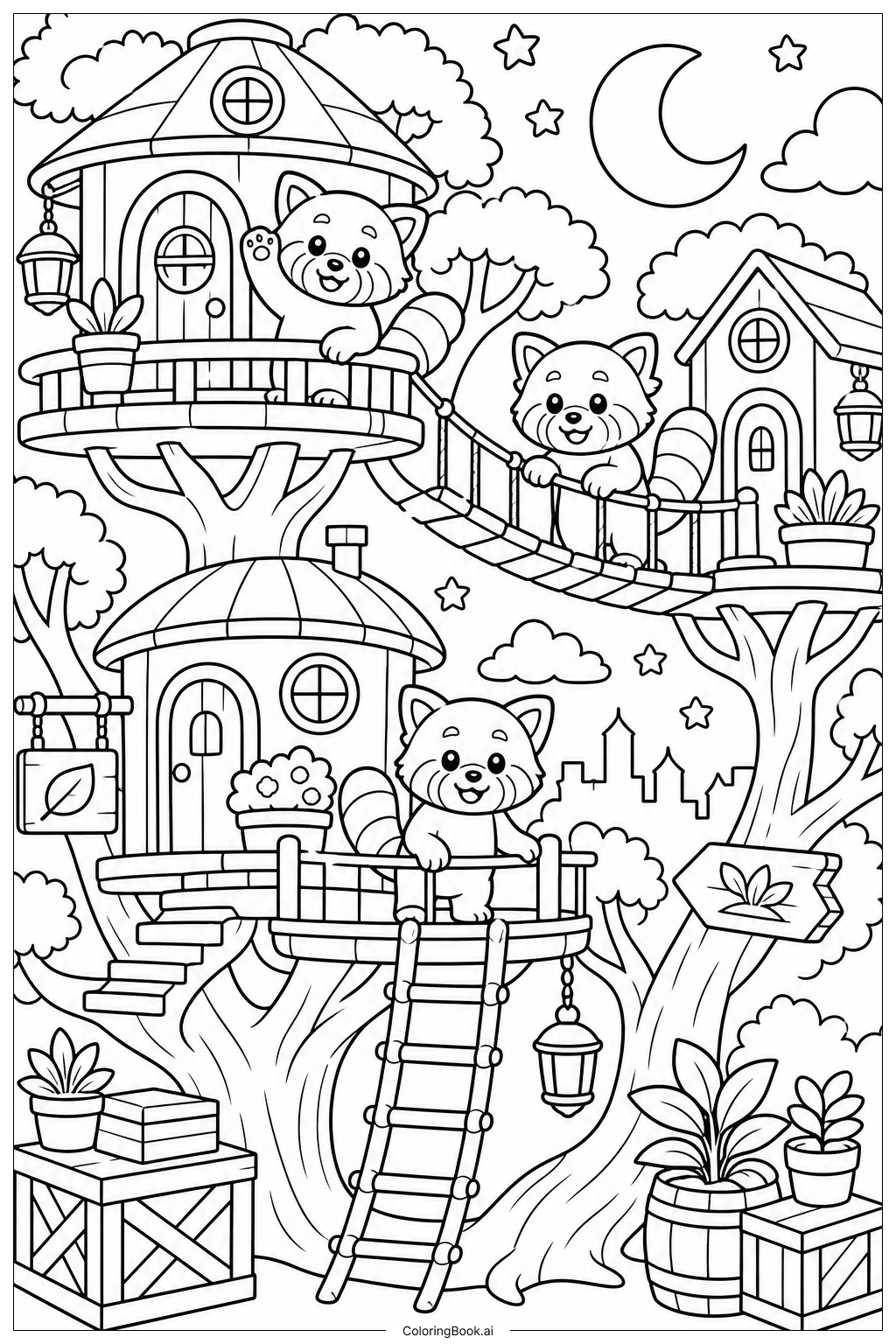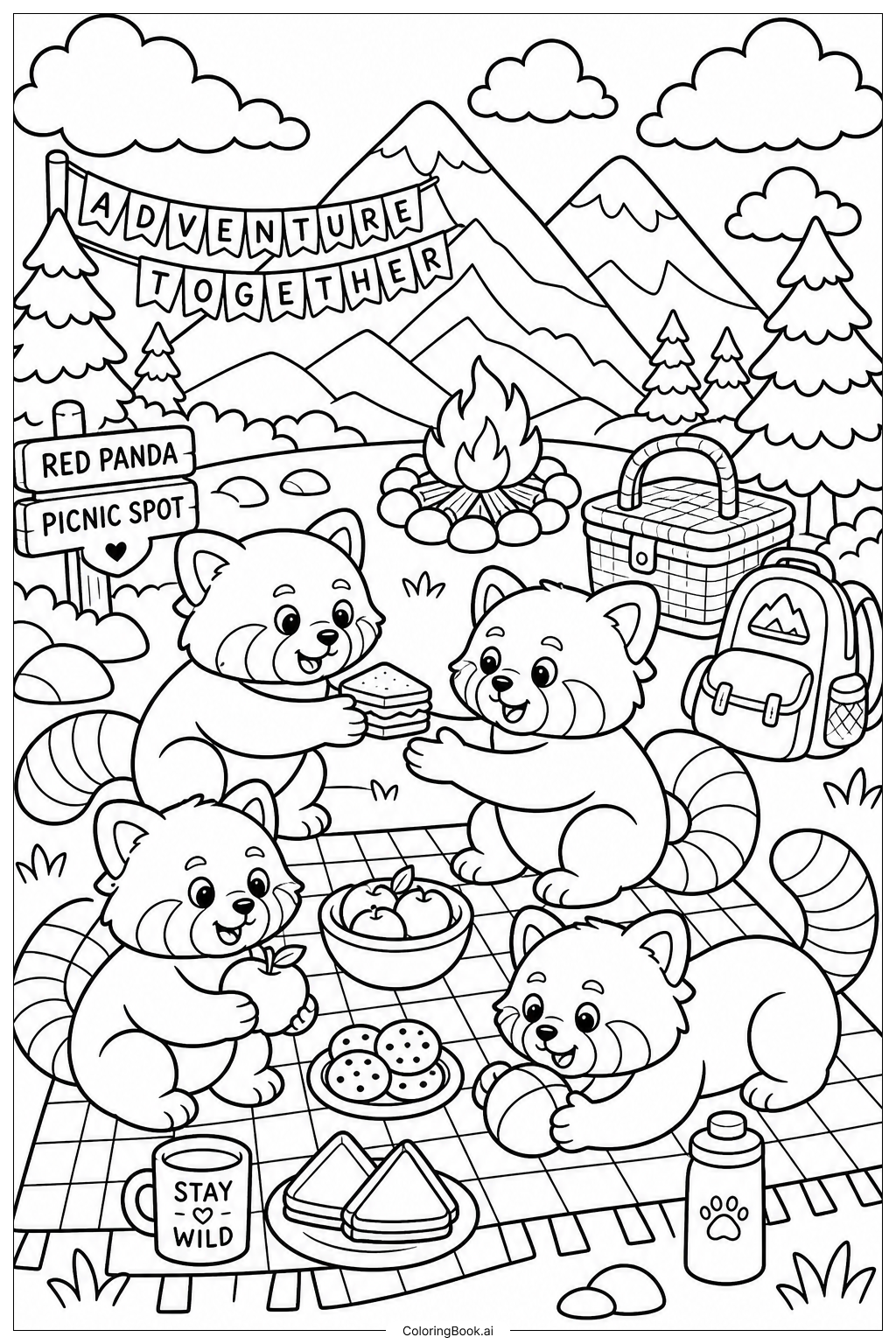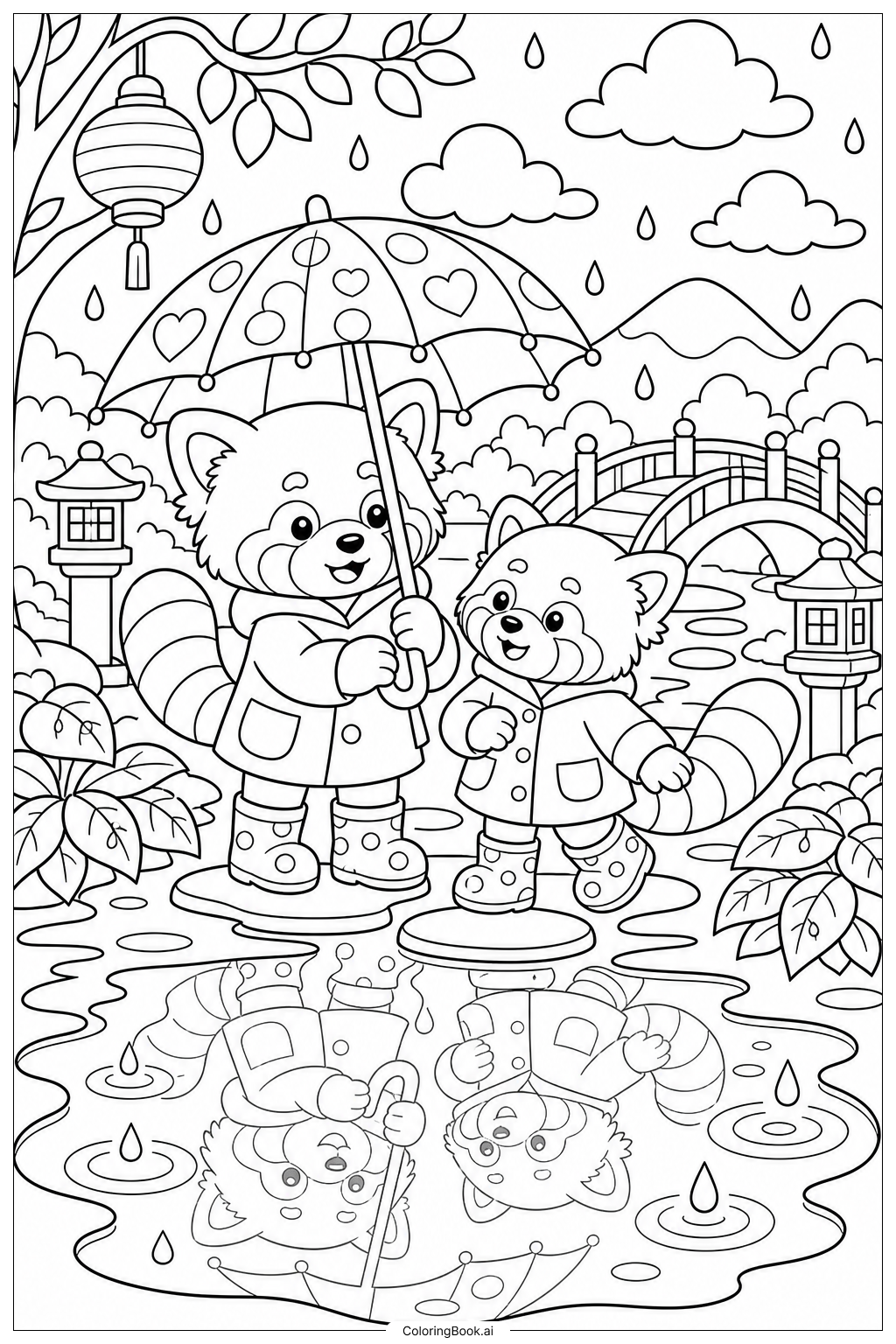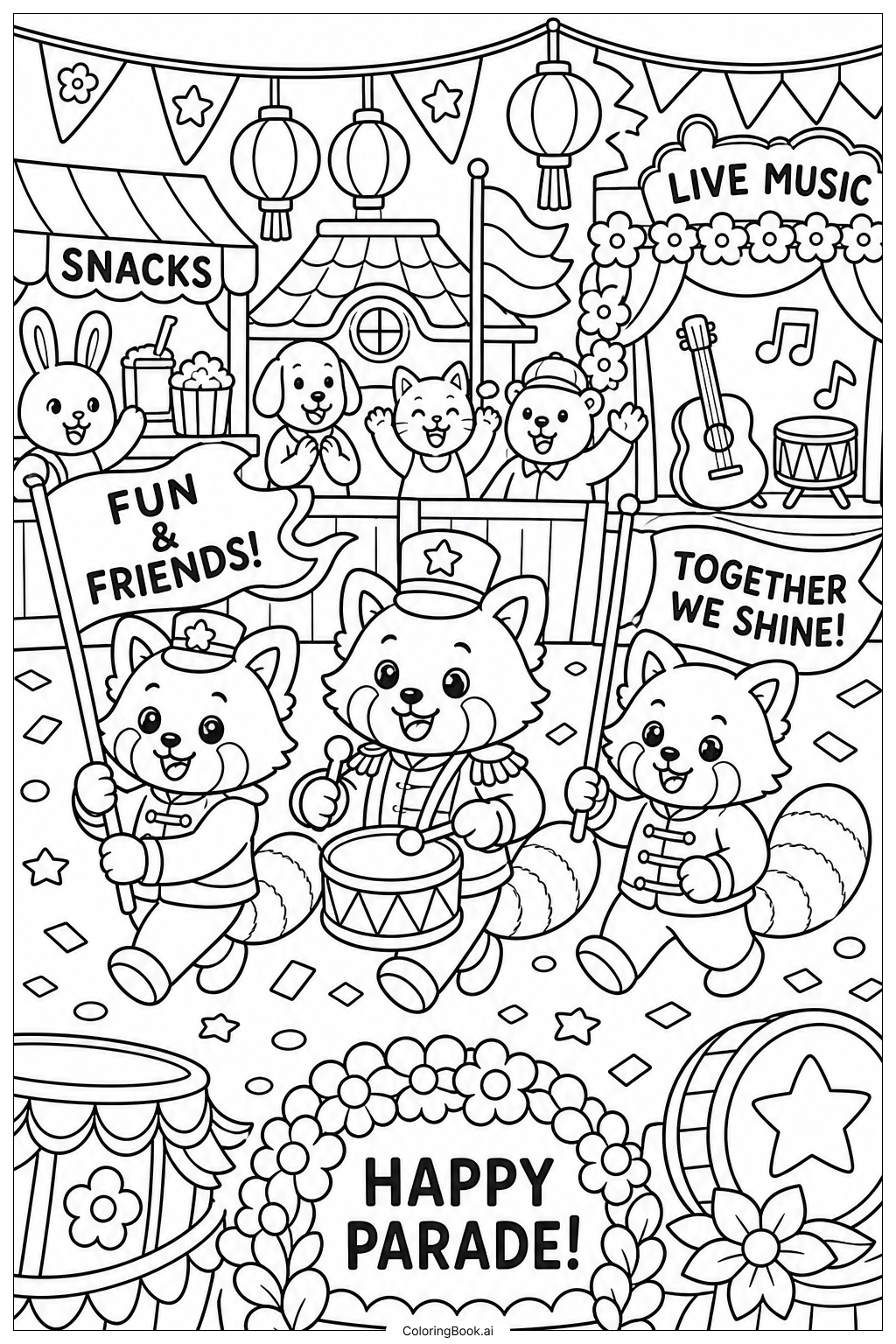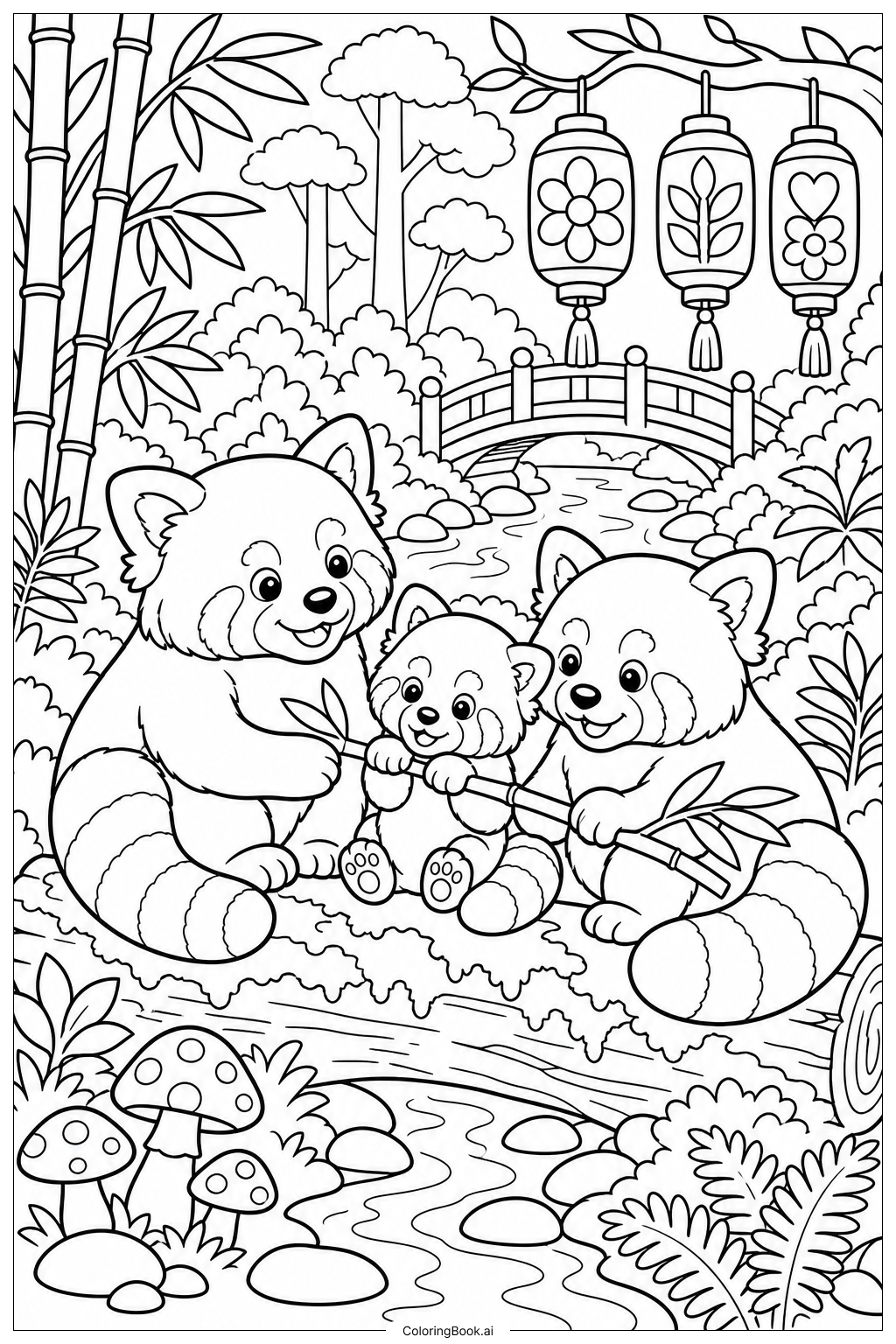
Coloring tips: How to color Red Panda Family In Forest coloring page well?
Start with the red pandas using warm reddish-brown tones for their fur, with cream or white for their facial markings and ear tips. Their bushy tails can feature alternating rust and tan rings. Use black for their noses, eyes, and leg markings. For the forest setting, choose various shades of brown for the tree bark, adding darker tones in crevices for depth. Color the leaves in different shades of green, from deep forest green to lighter lime tones. Add yellow-green highlights where sunlight might filter through. Consider using soft blues or purples for background shadows to create atmosphere. Flowers can be colored in pinks, yellows, or purples for cheerful accents. Layer colors gently to build texture in the fur and bark, and use colored pencils or markers to create realistic natural tones throughout the scene.
Coloring challenges: Which parts are difficult to color and need attention for Red Panda Family In Forest coloring page?
• Fur Texture Details: The red pandas feature intricate fur patterns that require careful coloring to achieve a realistic fluffy appearance. The challenge lies in creating smooth color transitions from the reddish-brown body fur to the white facial markings and cream-colored accents. Colorists need to use light, layered strokes to build up texture without making the fur look flat or overly dark. The tail rings require alternating colors with precise boundaries while maintaining a soft, furry look.
• Tree Bark Complexity: The tree trunks and branches display detailed bark textures with grooves, ridges, and natural wood patterns. Successfully coloring these elements requires varying shades of brown and strategic use of darker tones in the cracks and lighter highlights on raised surfaces. This dimensional shading technique can be challenging for younger colorists who may struggle with creating depth and realistic wood grain effects.
• Leaf and Foliage Layering: The forest scene contains multiple layers of leaves, branches, and vegetation that overlap throughout the composition. Distinguishing between foreground and background elements requires thoughtful color choices and value variations. Colorists must decide which leaves to make darker or lighter to create proper depth perception, which can be overwhelming given the density of botanical details.
• Fine Line Details: The image contains numerous small details including individual leaves, delicate branches, tiny flowers, and intricate facial features on the red pandas. These fine lines require precision and patience, especially when using markers or crayons that might bleed or cover multiple areas at once. Maintaining accuracy in these tight spaces while keeping colors within the lines presents a significant challenge for colorists of all skill levels.
Benefits of coloring books: Advantages of drawing Red Panda Family In Forest coloring page
Coloring this red panda family scene offers wonderful educational and developmental benefits. Children learn about wildlife and forest ecosystems while engaging with the adorable characters, fostering environmental awareness and appreciation for endangered species. The detailed nature elements help develop fine motor skills and hand-eye coordination as young colorists carefully navigate the intricate lines and small spaces. The complexity of the image encourages focus and concentration, promoting mindfulness and stress relief. Working with the various textures like fur, bark, and leaves allows children to experiment with color blending and shading techniques, building artistic confidence. The family theme creates emotional connections and can spark conversations about animal behavior and habitats. Completing this detailed coloring page provides a strong sense of accomplishment, boosting self-esteem and encouraging persistence in challenging tasks.