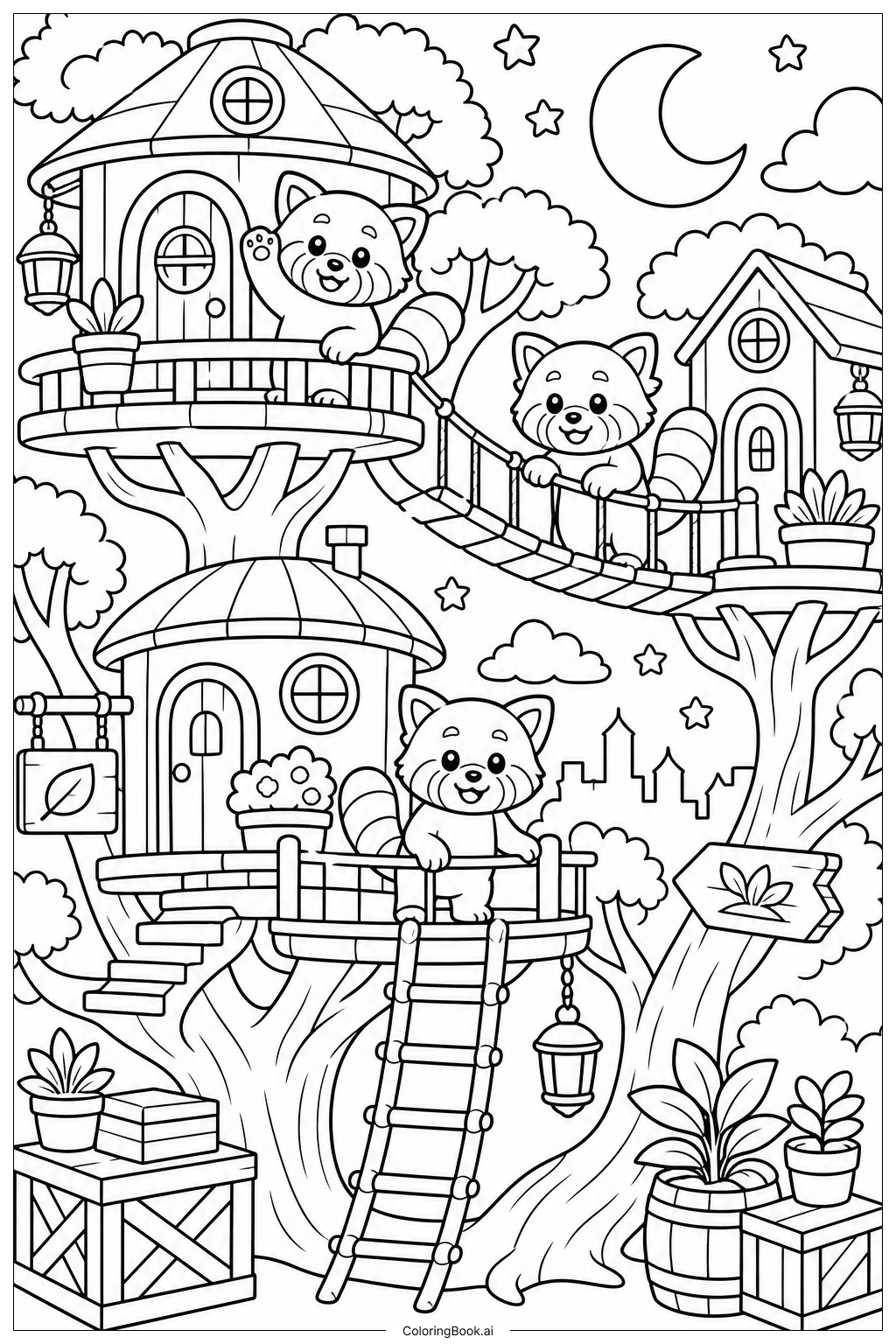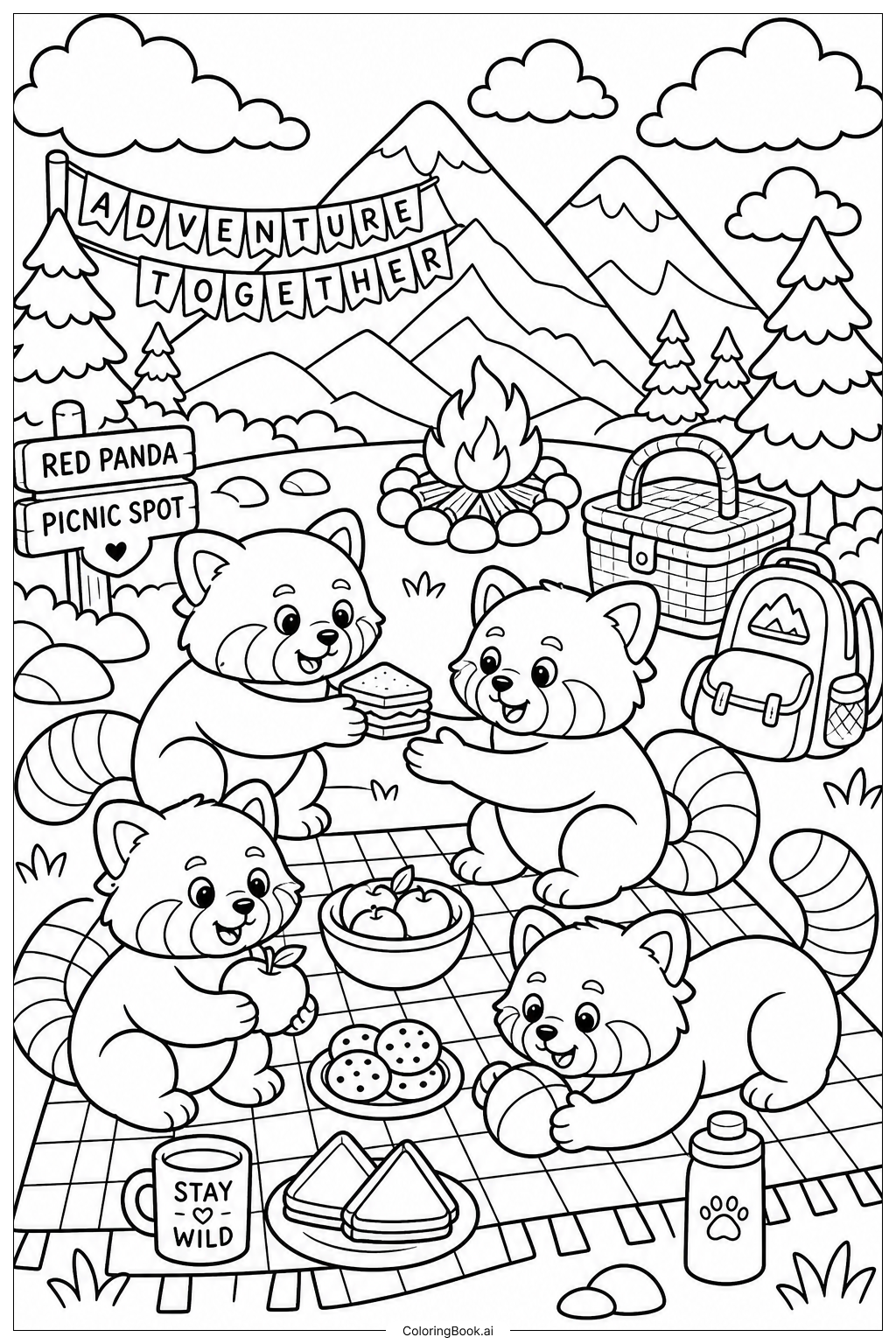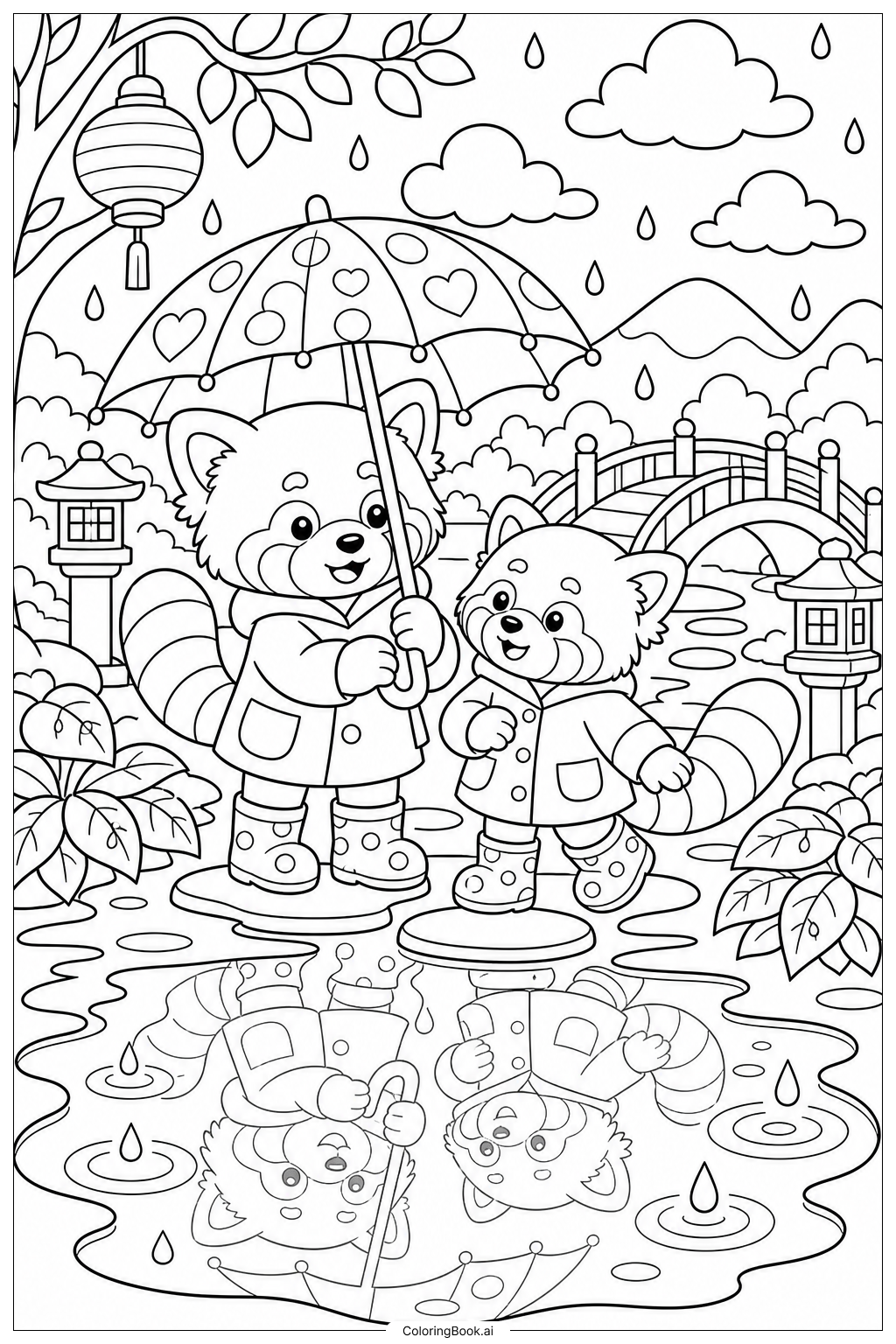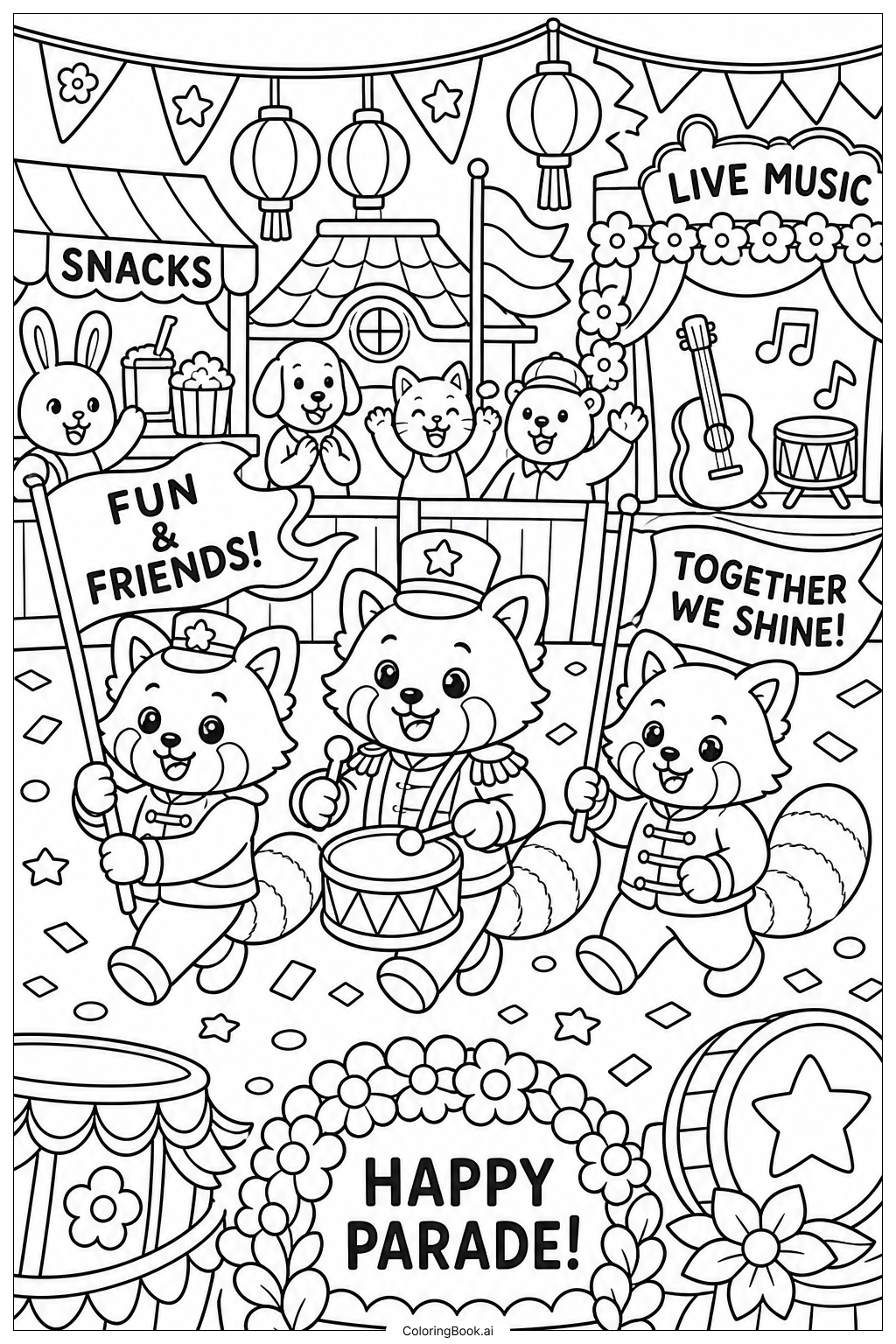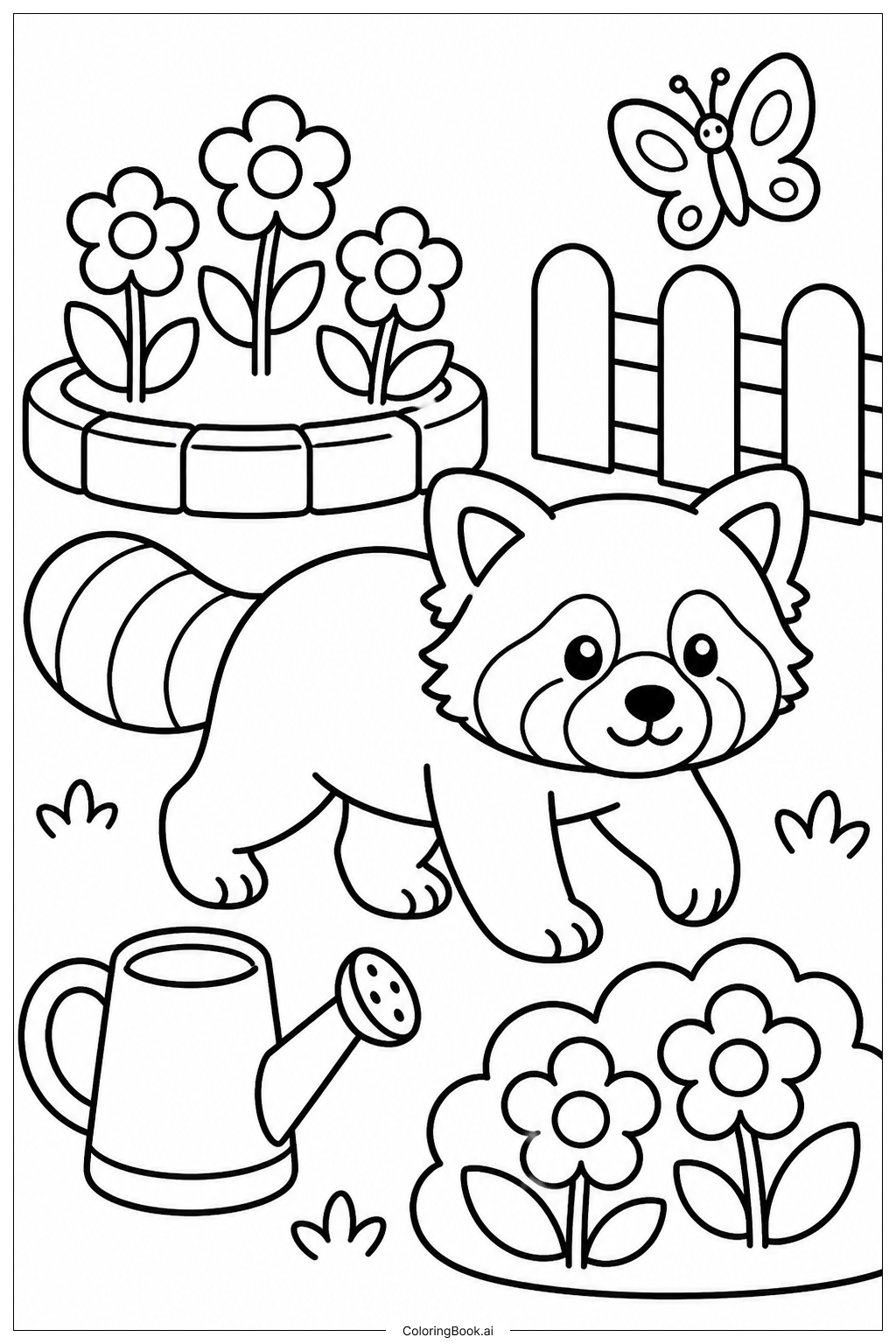
Coloring tips: How to color Red Panda Exploring Garden coloring page well?
Start with the red panda using warm reddish-brown tones for its body and darker brown or black for its legs and facial markings. The tail can feature alternating bands of reddish-brown and cream. For the face, use white or cream around the eyes and muzzle, with dark accents for the nose and eyes. The garden flowers offer wonderful opportunities for creativity—try bright pinks, purples, yellows, or oranges for the petals. Use various shades of green for the leaves, from light lime to deep forest green, adding depth by layering colors. Consider using colored pencils for smooth blending on the red panda's fur, and markers or crayons for bolder flower colors. Add subtle shading under leaves and petals to create dimension and make your garden scene come alive.
Coloring challenges: Which parts are difficult to color and need attention for Red Panda Exploring Garden coloring page?
• Fur Texture and Direction: The red panda's fluffy coat requires careful attention to create a realistic appearance. Colorists should consider the natural direction of fur growth, using short strokes that follow the body's contours. The transition between the reddish-brown body and darker legs needs smooth blending to avoid harsh lines, which can be challenging for younger artists.
• Intricate Floral Details: The garden flowers contain multiple layers of petals with thin lines separating them. Staying within these small petal boundaries requires steady hand control and patience. The overlapping petals create depth that can be tricky to shade properly, especially when trying to make foreground flowers stand out from background elements.
• Tail Ring Patterns: Red pandas have distinctive banded tails that require alternating colors in curved, irregular sections. Maintaining consistent color bands while following the tail's curve and volume demands planning and precision. Getting the spacing even while making the tail look three-dimensional adds complexity.
• Leaf Variety and Shading: The garden contains leaves of different shapes and sizes, each requiring its own color treatment. Creating realistic depth by varying green tones and adding shadows where leaves overlap challenges colorists to think about light sources and natural color variation. The veining in leaves adds another layer of detail work.
• Facial Feature Precision: The red panda's sweet expression depends on carefully coloring the small facial markings, eye patches, and muzzle areas. The contrast between light and dark areas on the face must be preserved to maintain the animal's characteristic appearance, requiring careful color selection and application in tight spaces.
Benefits of coloring books: Advantages of drawing Red Panda Exploring Garden coloring page
Coloring this red panda garden scene offers wonderful developmental benefits for children and relaxation for all ages. It helps improve fine motor skills and hand-eye coordination through detailed work on fur textures and small floral elements. The variety of shapes and patterns encourages focus and concentration, promoting mindfulness and stress relief. Children learn about color theory by experimenting with different shades for flowers and foliage, understanding how colors work together in nature. The image introduces young artists to red pandas, sparking curiosity about wildlife and conservation. Completing this detailed scene builds patience and persistence, boosting self-esteem and confidence. The garden theme connects colorists with nature, promoting appreciation for the environment. This coloring page also encourages creative decision-making as artists choose their own color palettes, fostering imagination and personal expression.