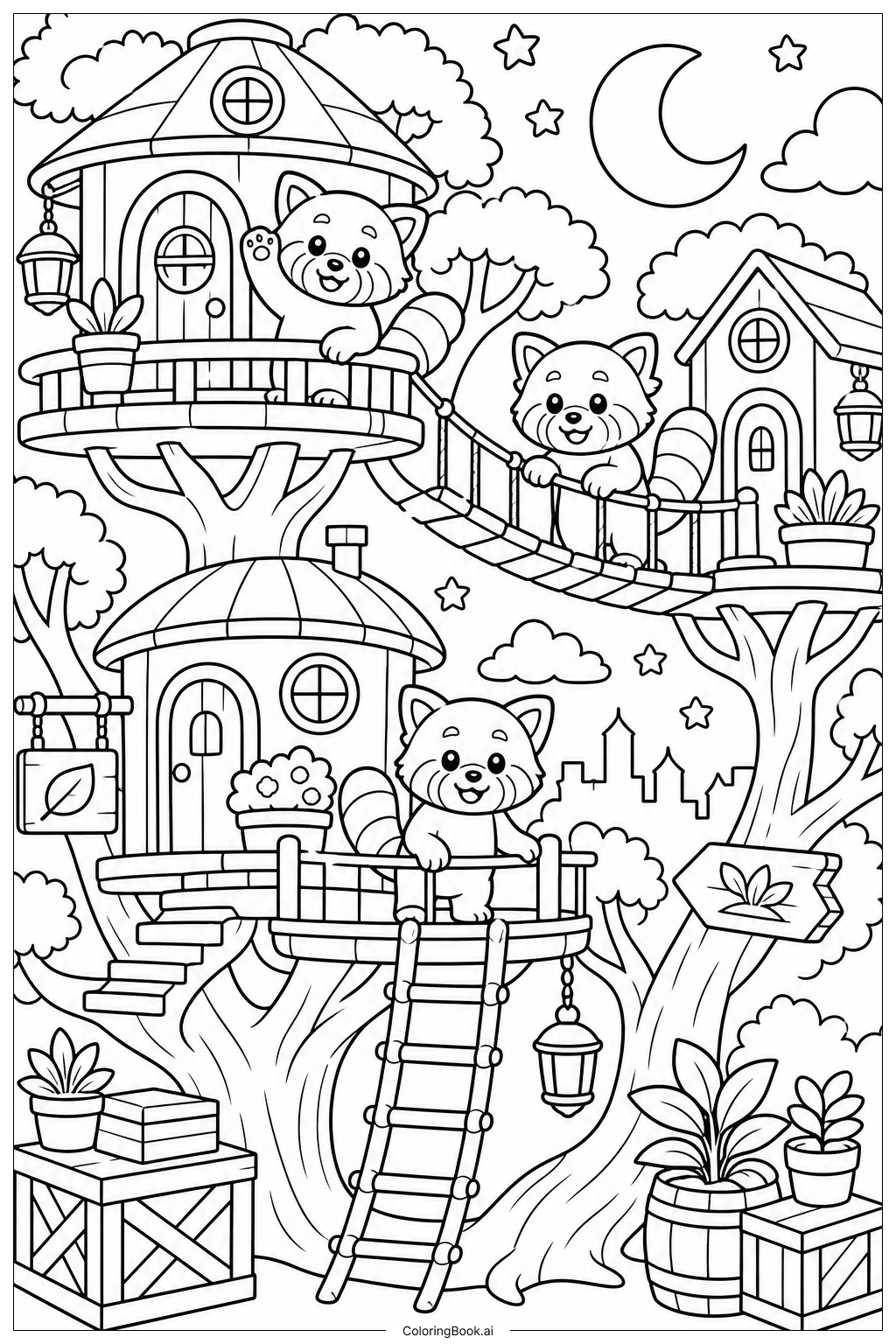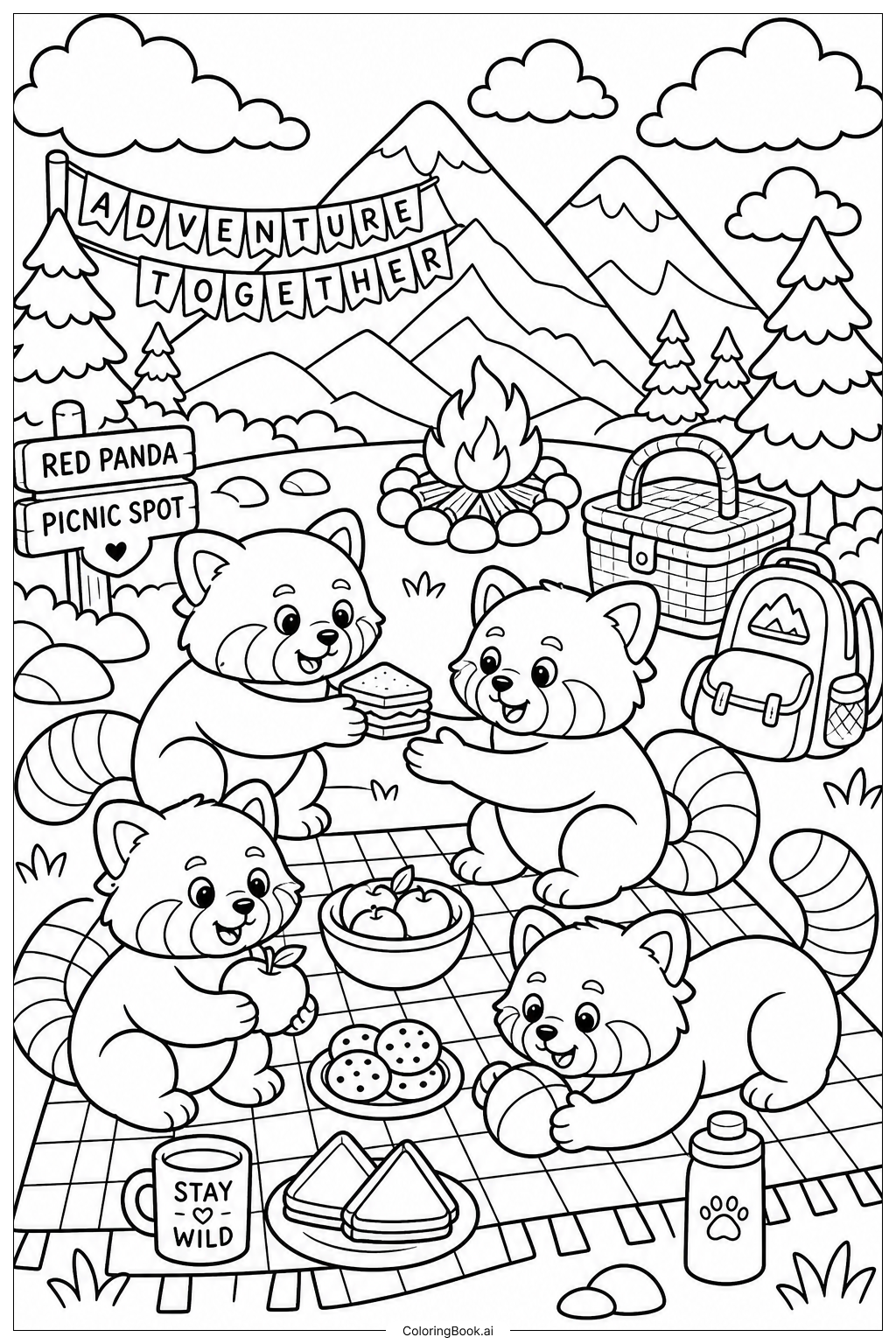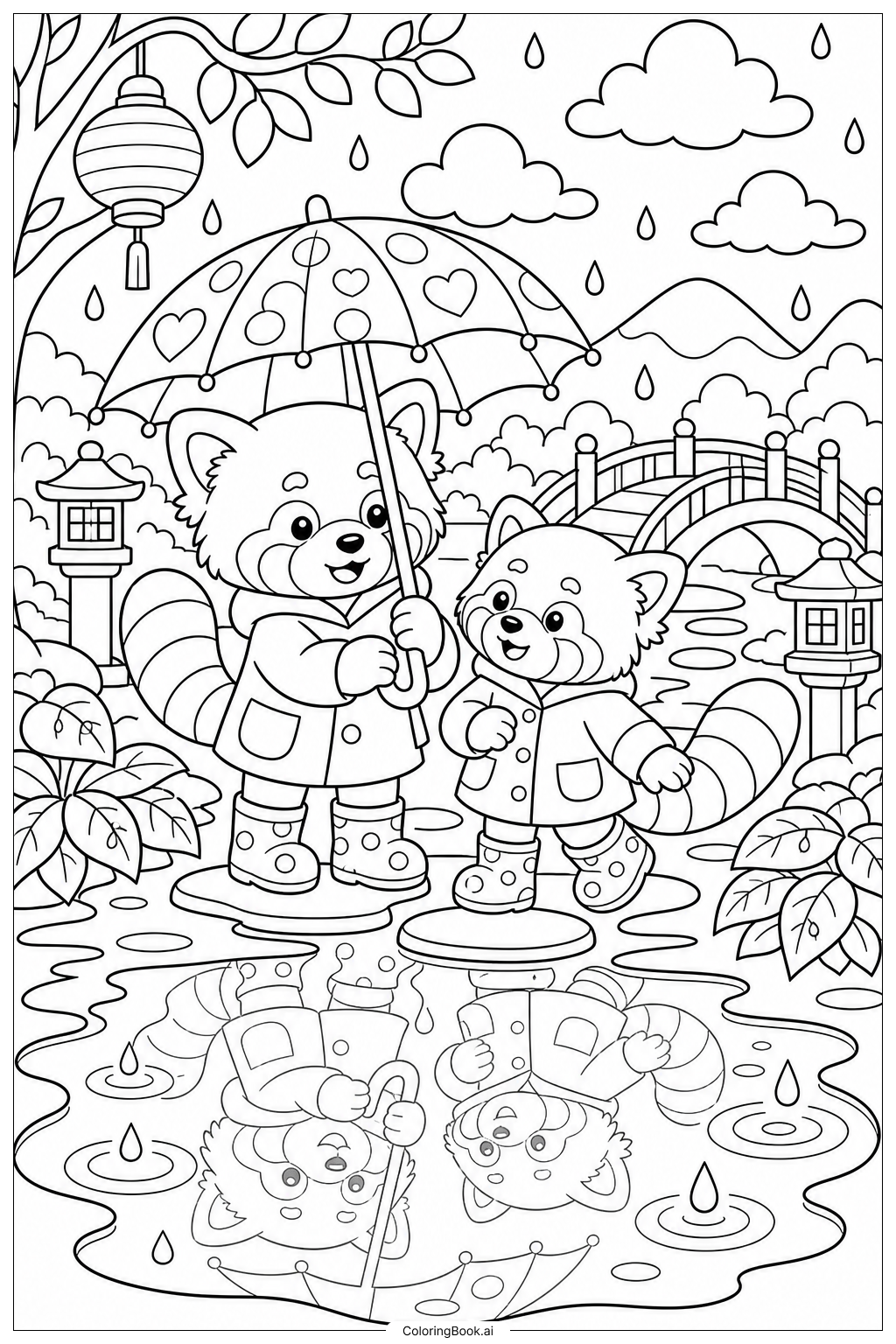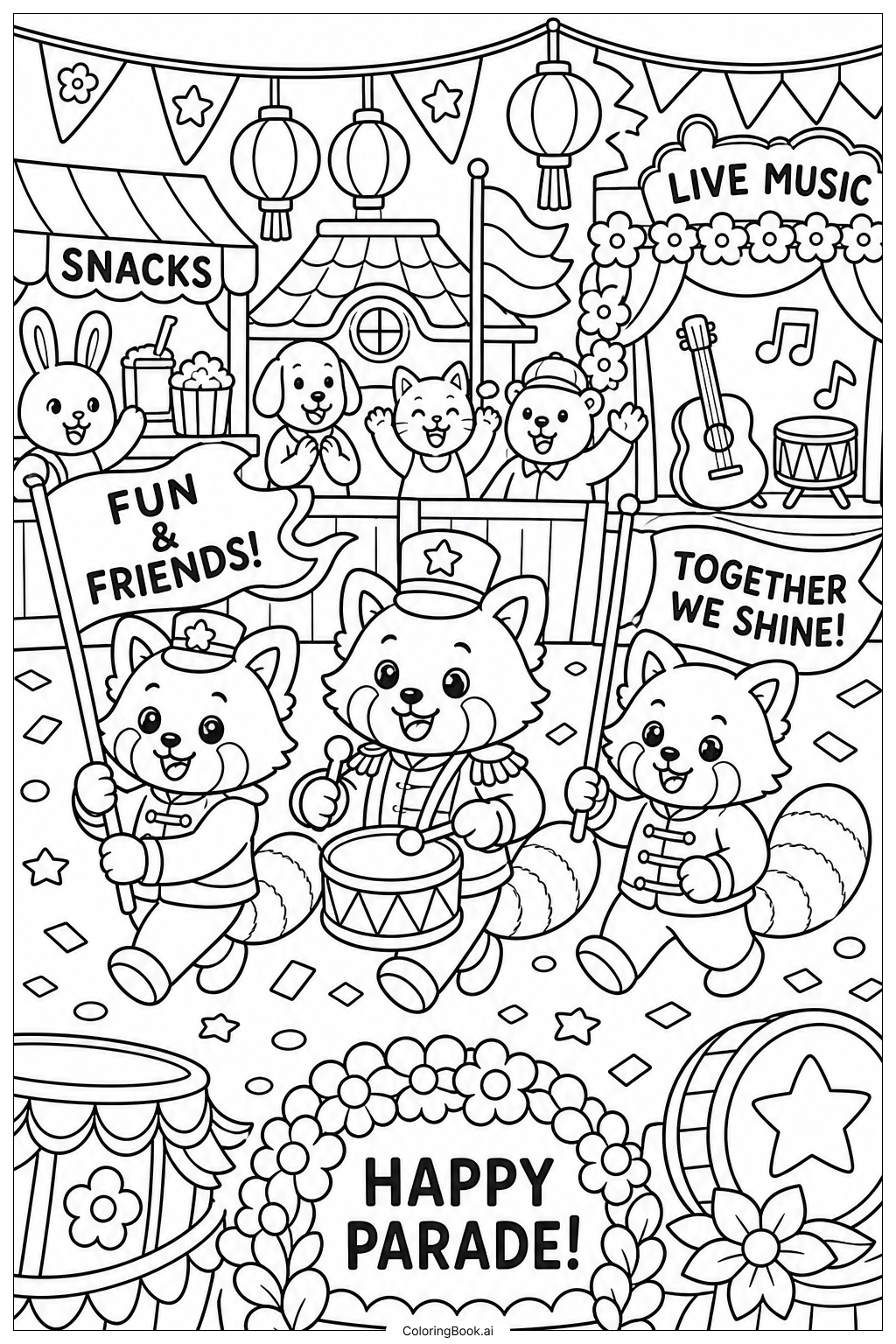
Coloring tips: How to color Red Panda By Riverbank coloring page well?
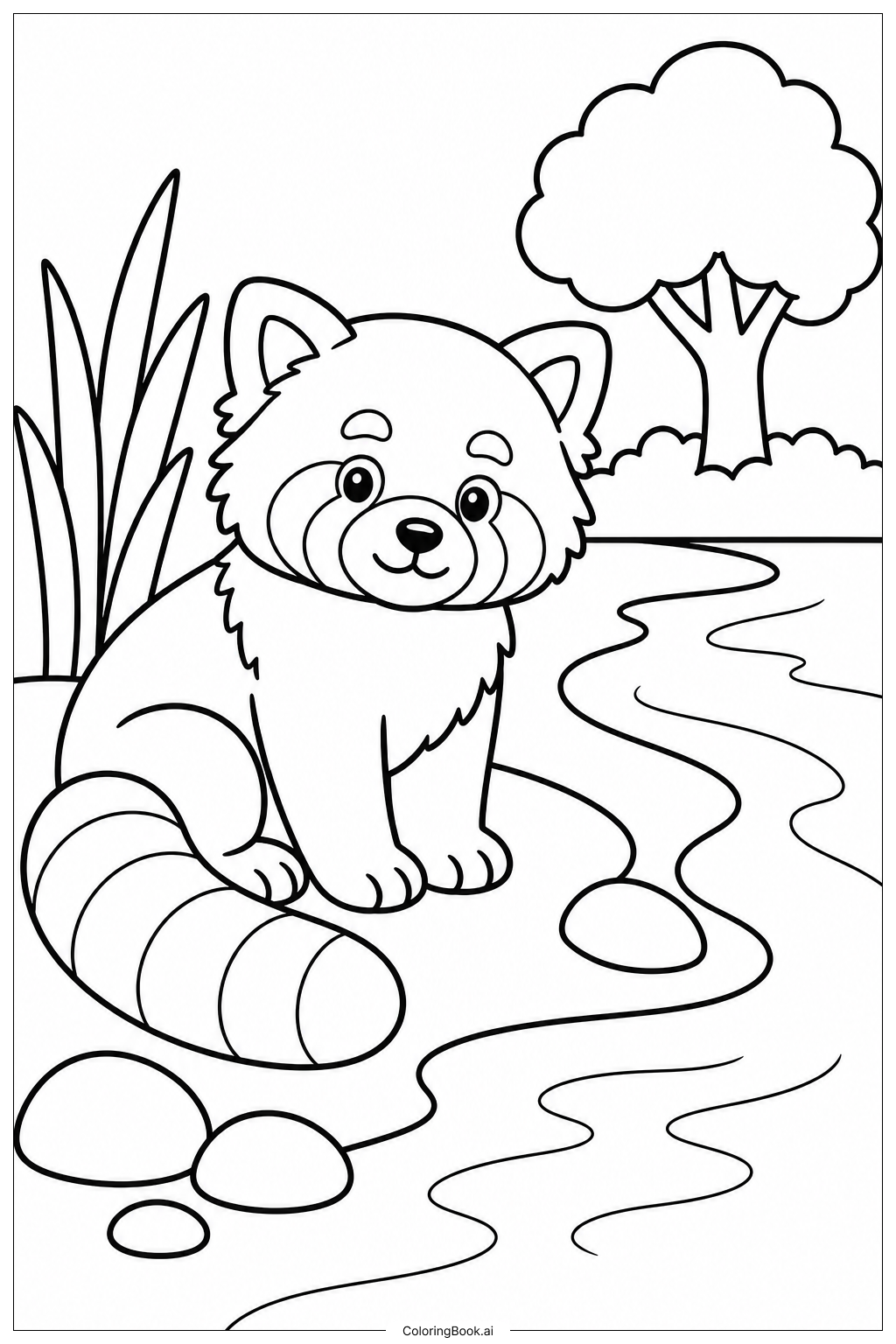
For the red panda, use rich reddish-brown or rusty orange for the body and tail. Color the face with white markings around the eyes, nose, and cheeks, while adding dark brown or black for the ears, legs, and eye patches. The bushy tail can feature alternating rings of red-brown and cream. For the river, try shades of blue ranging from light sky blue to deeper turquoise, adding white highlights for water reflections. Color the rocks in various grays, tans, and browns to create natural variety. The vegetation can be colored in multiple shades of green, from lime to forest green, with some yellow-green highlights. Tree branches can be brown, and leaves various greens. Consider adding purple or pink flowers in the bushes for extra color. Use light blue for the sky if visible, creating a peaceful, natural atmosphere.
Coloring challenges: Which parts are difficult to color and need attention for Red Panda By Riverbank coloring page?
• Fur Texture and Tail Rings: The red panda's fluffy fur and distinctive ringed tail require careful attention. Children may find it challenging to create the illusion of soft, thick fur texture. The tail's alternating color bands need precise boundaries to maintain the pattern without colors bleeding together. Younger children might struggle with keeping the rings evenly spaced and maintaining consistent coloring within each band.
• Water Effects and Ripples: The flowing river presents a unique challenge with its ripples, waves, and reflections. Creating realistic water requires blending different shades of blue and adding white highlights strategically. Children need to understand where light hits the water surface and how to show movement through color variation. The curved lines of the water ripples require steady hand control to stay within the lines.
• Detailed Vegetation and Layering: The surrounding plants, bushes, and leaves contain many small spaces and overlapping elements. Distinguishing between foreground and background vegetation while using appropriate color variations can be difficult. Children must decide which leaves are closer and should be darker or brighter, creating depth in the scene.
• Facial Features and Expression: The red panda's sweet face includes small details like eyes, nose, and mouth that require precision coloring. The distinctive white markings around the face need careful execution to maintain the characteristic red panda appearance. Staying within these small areas while creating a gentle, lifelike expression demands good fine motor control and patience.
Benefits of coloring books: Advantages of drawing Red Panda By Riverbank coloring page
Coloring this Red Panda By Riverbank page offers wonderful developmental benefits. It helps children improve fine motor skills and hand-eye coordination through detailed work on the fur patterns and small facial features. The scene encourages learning about wildlife and nature, sparking curiosity about red pandas and their riverside habitats. Children develop patience and focus while working on the intricate elements like the ringed tail and flowing water. Color selection and blending skills are enhanced as they decide how to depict fur texture, water reflections, and natural vegetation. The peaceful scene promotes relaxation and mindfulness, reducing stress while engaging in creative expression. Children also practice decision-making by choosing color schemes and planning how different elements interact. This coloring page builds confidence as they complete a complex, beautiful image, while fostering appreciation for endangered species and environmental awareness.