Coloring tips: How to color Red Panda Autumn Forest Walk coloring page well?
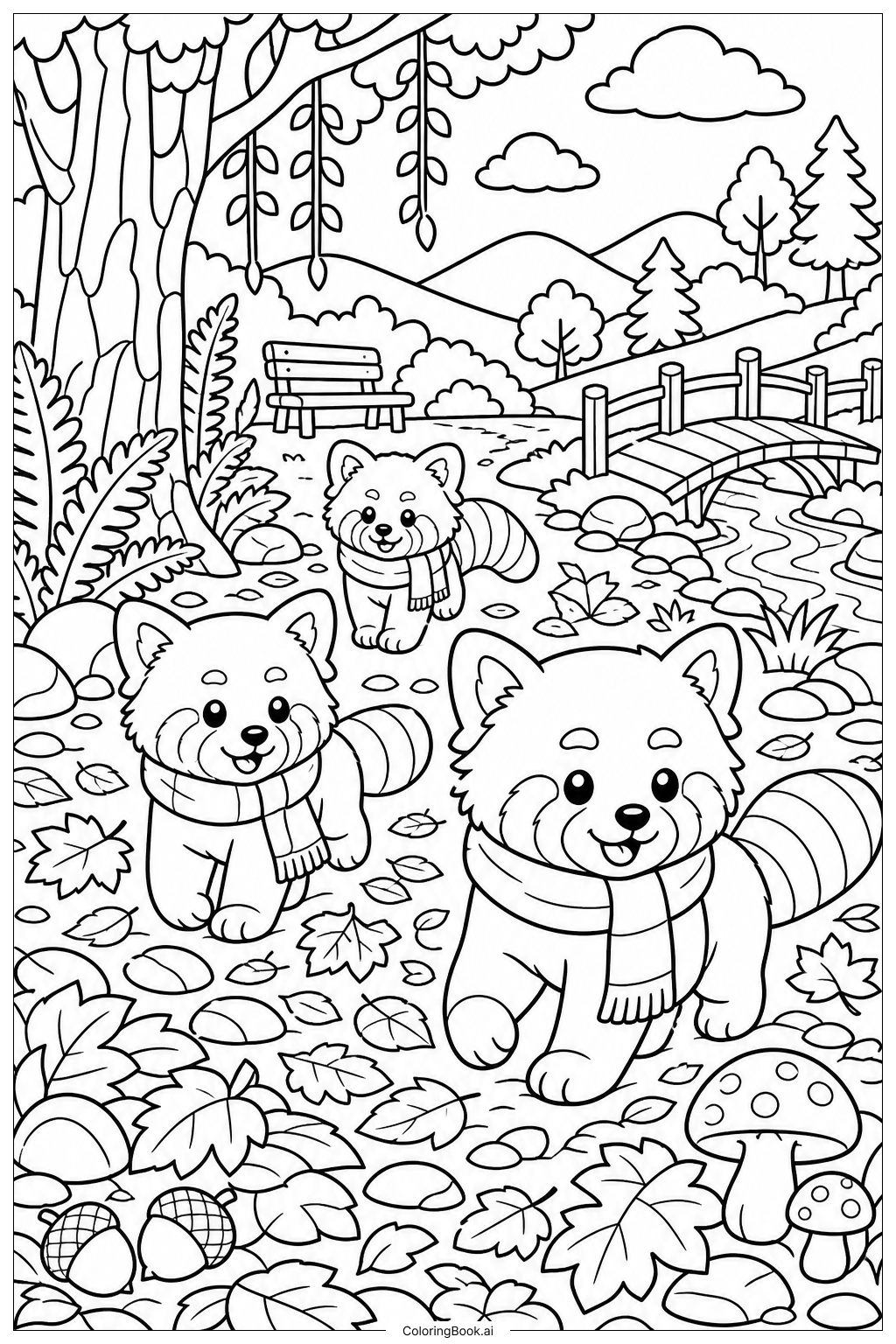
For the red panda, use rich rust-orange and reddish-brown tones for the body, with darker brown or black for the legs, ears, and distinctive facial markings. The fluffy tail can feature alternating bands of rust and cream colors. Create a warm autumn palette for the maple leaves using yellows, oranges, reds, and golden browns. The tree trunks work beautifully in various browns and grays with darker shadows in the bark grooves. Color the log in weathered browns and tans. Use earthy greens, yellows, and browns for the ferns and forest floor vegetation. The mushrooms can be tan, cream, or light brown with darker caps. Consider adding a soft blue or purple-gray sky visible through the trees to create depth and atmosphere in your forest scene.
Coloring challenges: Which parts are difficult to color and need attention for Red Panda Autumn Forest Walk coloring page?
• Fur Texture and Direction: The red panda's thick, fluffy coat requires careful attention to create realistic fur texture. Young colorists may find it challenging to blend multiple shades of rust, orange, and brown to show the natural variations in the fur. The tail presents particular difficulty with its distinctive ring pattern, requiring steady hand control to maintain even bands of color while keeping the fluffy appearance.
• Leaf Vein Details: The maple leaves feature intricate vein patterns radiating from the center that require precision coloring. Children must use fine motor skills to stay within the narrow spaces between veins while applying different autumn shades. Creating realistic color gradients within each leaf section, transitioning from yellow centers to red or orange edges, demands patience and color blending skills that younger artists are still developing.
• Layered Forest Elements: The scene contains multiple overlapping elements including the red panda, log, leaves, ferns, mushrooms, and background trees. Distinguishing between foreground and background elements through color choices and shading intensity can be challenging. Deciding which elements should be brighter or darker to create depth requires spatial understanding and planning before coloring begins.
• Bark and Wood Texture: The tree trunks and fallen log have detailed texture lines that need varied brown and gray tones to look realistic. Creating the appearance of rough bark with shadows and highlights requires understanding how light interacts with textured surfaces. Young colorists may struggle to avoid making the wood look flat or overly uniform in color.
Benefits of coloring books: Advantages of drawing Red Panda Autumn Forest Walk coloring page
Coloring this Red Panda Autumn Forest Walk scene offers wonderful developmental benefits for young artists. The detailed fur patterns help children practice fine motor control and hand-eye coordination as they carefully fill small areas. Working with autumn colors teaches color theory and seasonal awareness, helping kids understand how nature changes throughout the year. The variety of textures including fur, bark, leaves, and mushrooms encourages experimentation with different coloring techniques like layering, blending, and shading. This forest scene also promotes focus and concentration as children work through the multiple elements in the composition. The peaceful nature theme can have calming effects, reducing stress and anxiety while encouraging mindfulness. Additionally, learning about red pandas through coloring fosters appreciation for wildlife and environmental conservation, making this both an artistic and educational activity.