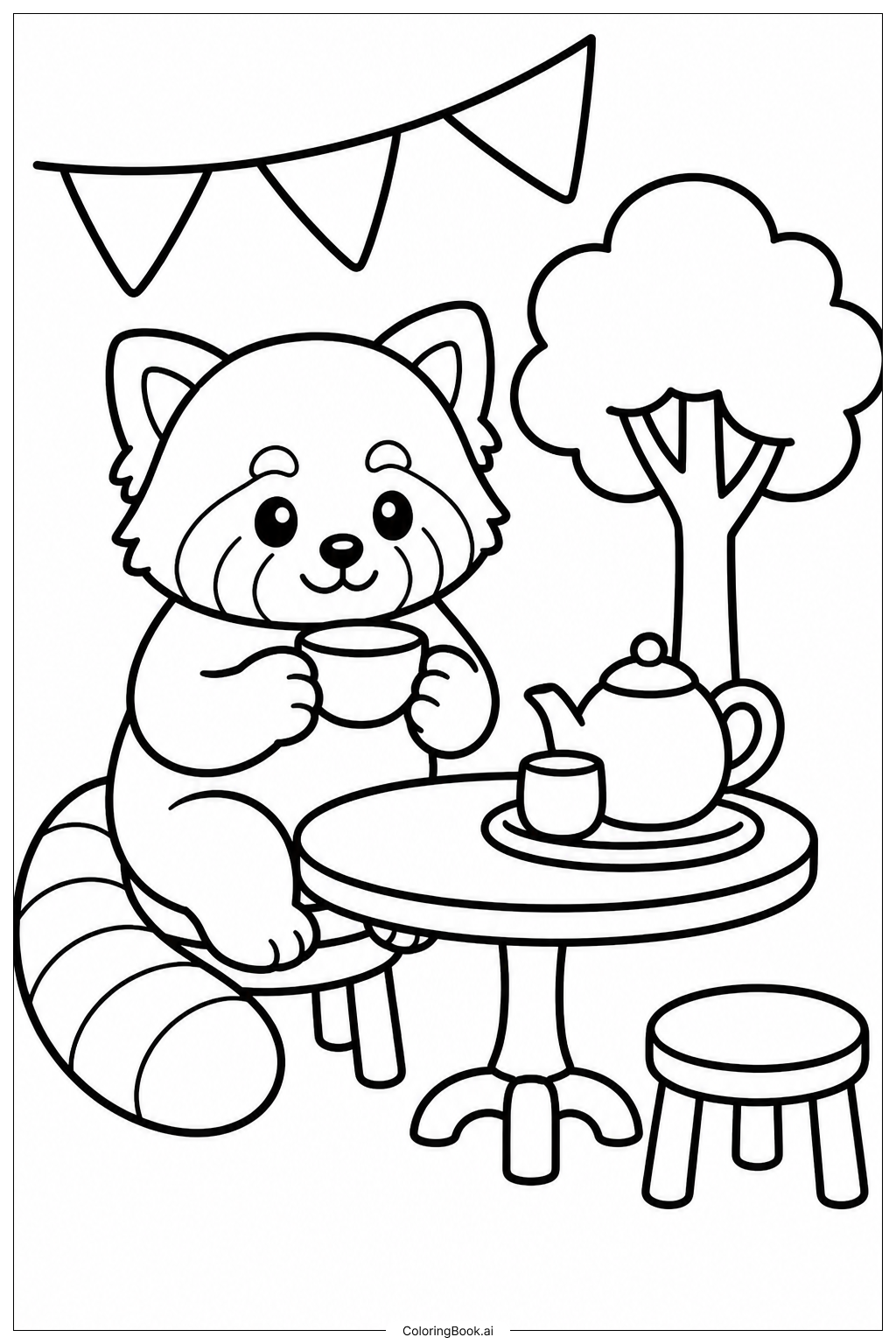
Coloring tips: How to color Red Panda At Tea Party coloring page well?
Start with the red panda using warm russet browns and oranges for the body, with creamy white for the face markings and chest. The fluffy tail can alternate between rust-red and dark brown rings. For the tea set, try soft pastels like mint green or lavender for the teapot, with gold accents on the handles and rims. The teacups can match or complement the teapot. Add pinks, yellows, and purples to the flowers surrounding the scene. The leaves can be various shades of green, from light lime to deep forest. Consider using soft browns or grays for the table surface. Add small details like colorful treats on plates using bright colors like pink frosting or chocolate brown. The background can be left light or filled with gentle sky blues and soft yellows.
Coloring challenges: Which parts are difficult to color and need attention for Red Panda At Tea Party coloring page?
• Fur Texture and Details: The red panda's fluffy fur requires careful attention to create realistic depth and texture. Children need to blend different shades of orange, brown, and rust colors to show the natural variations in the coat. The tail rings need consistent coloring with clear boundaries between light and dark bands. Small areas around the ears, paws, and facial features require precision to avoid color bleeding into adjacent white spaces.
• Intricate Tea Set Elements: The teapot, cups, saucers, and decorative handles contain small detailed areas that can be challenging for younger colorists. The curved surfaces of the pottery need shading techniques to show dimension and make them look three-dimensional rather than flat. Handle details and spout areas are narrow and require steady hand control.
• Overlapping Floral and Leaf Elements: The flowers and foliage surrounding the scene create overlapping layers that can be confusing to navigate. Children must identify which petals and leaves are in front and which are behind to create proper depth. Each flower may have multiple small petals requiring different shades to show natural variation and light direction.
• Fine Facial Features: The red panda's face includes small details like eyes, nose, whiskers, and distinctive facial markings that need precise coloring. The contrast between the white markings and darker fur requires careful boundary work to maintain the characteristic red panda appearance.
Benefits of coloring books: Advantages of drawing Red Panda At Tea Party coloring page
Coloring this charming tea party scene helps children develop fine motor skills through detailed work on small elements like the teacups and flower petals. It encourages color recognition and creative decision-making as they choose complementary colors for the tea set and surrounding decorations. The red panda subject provides an educational opportunity to learn about this endangered species and its natural habitat. The whimsical theme sparks imagination and storytelling as children create narratives about the tea party. Working on the various textures, from fluffy fur to smooth pottery to delicate flowers, helps improve artistic understanding of different surfaces. The complexity of overlapping elements builds problem-solving skills and spatial awareness. Completing this detailed image provides a sense of accomplishment and boosts confidence in artistic abilities.