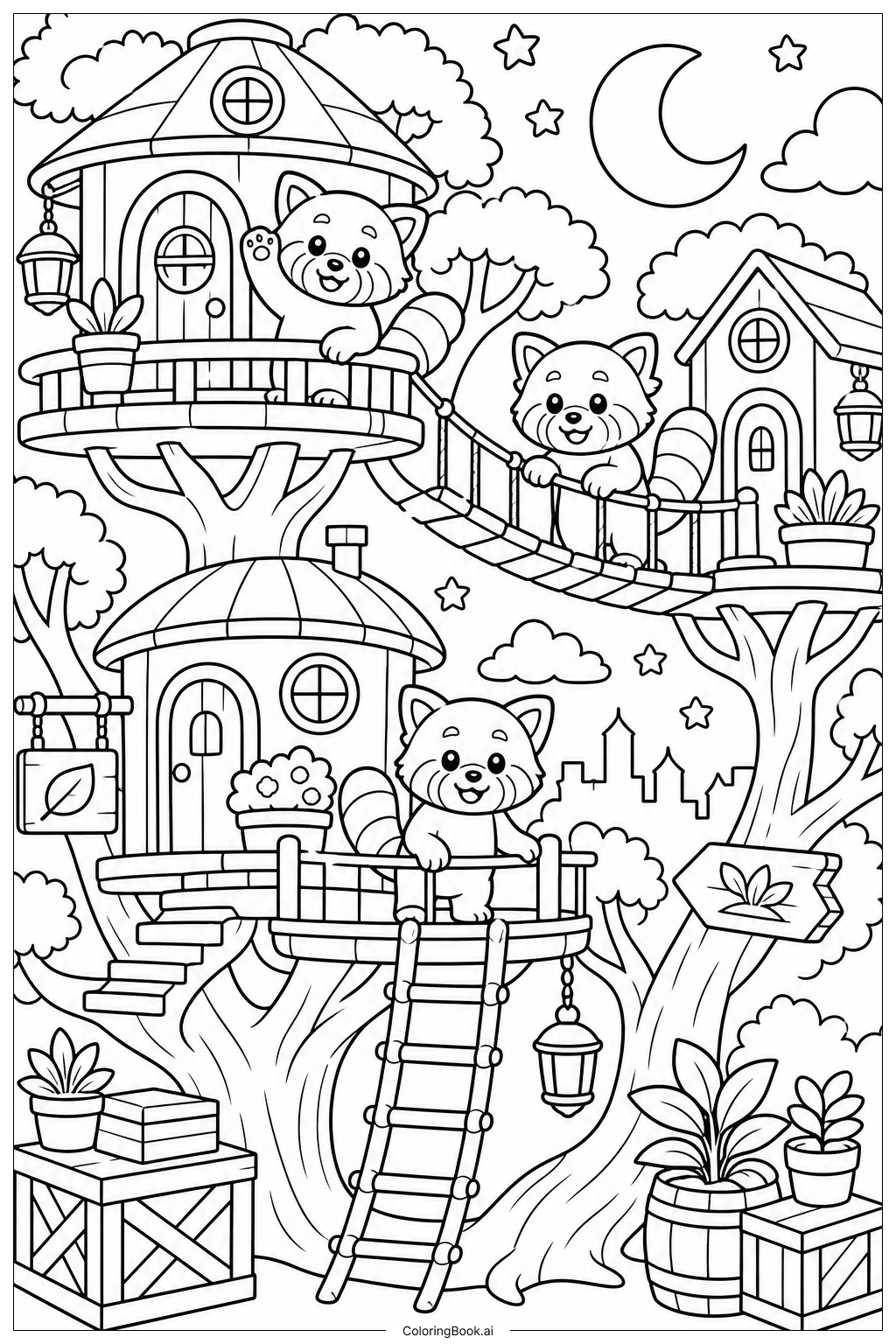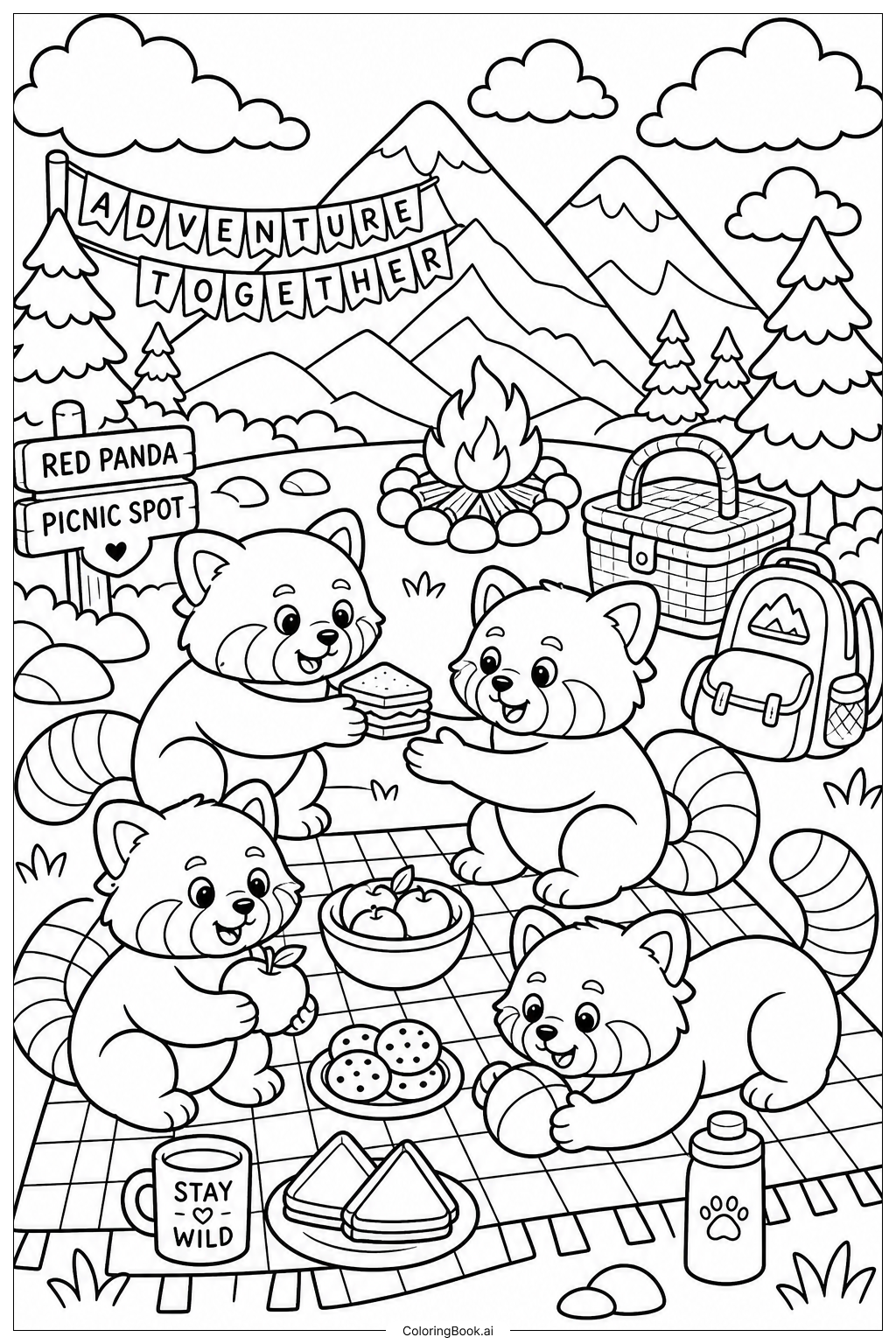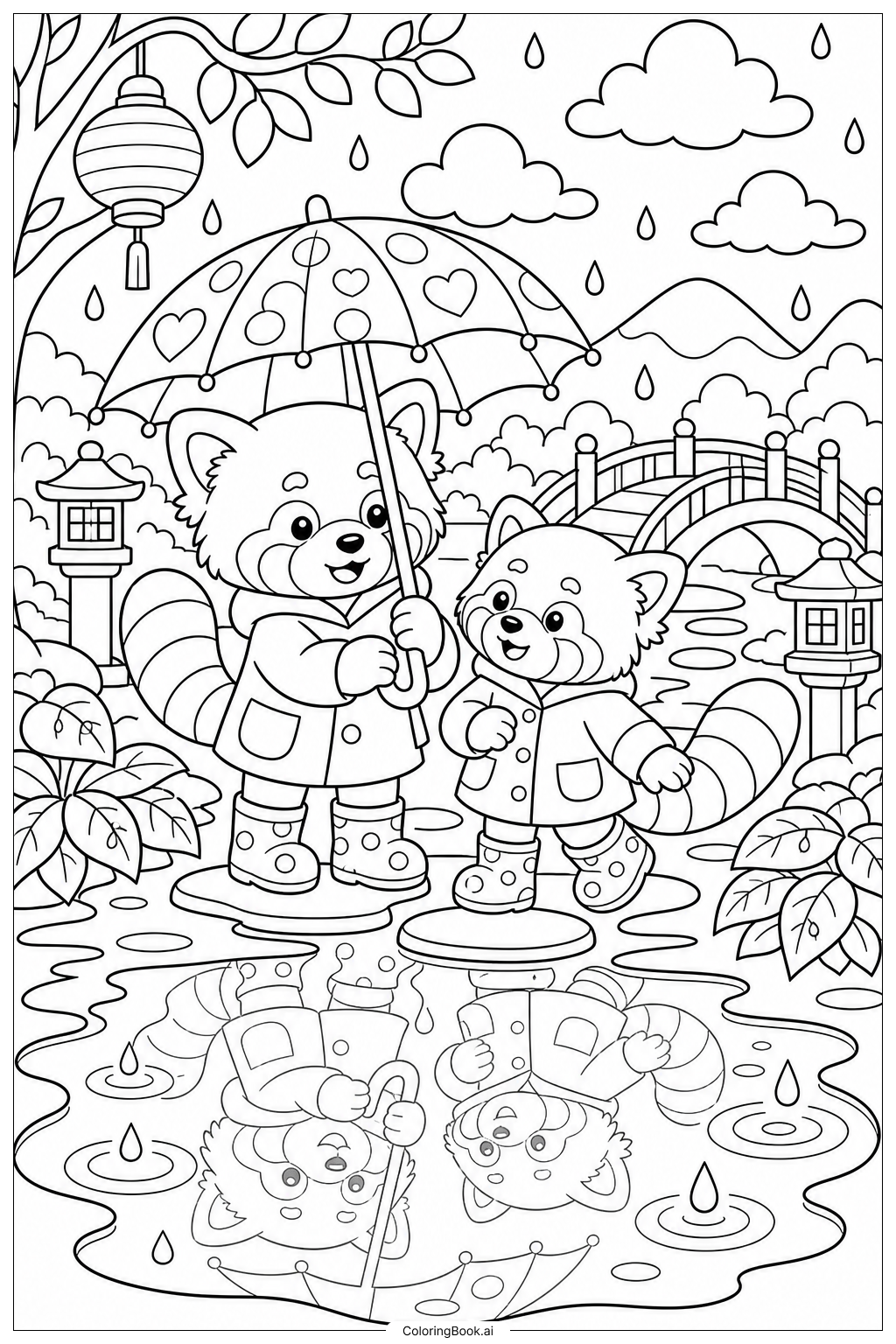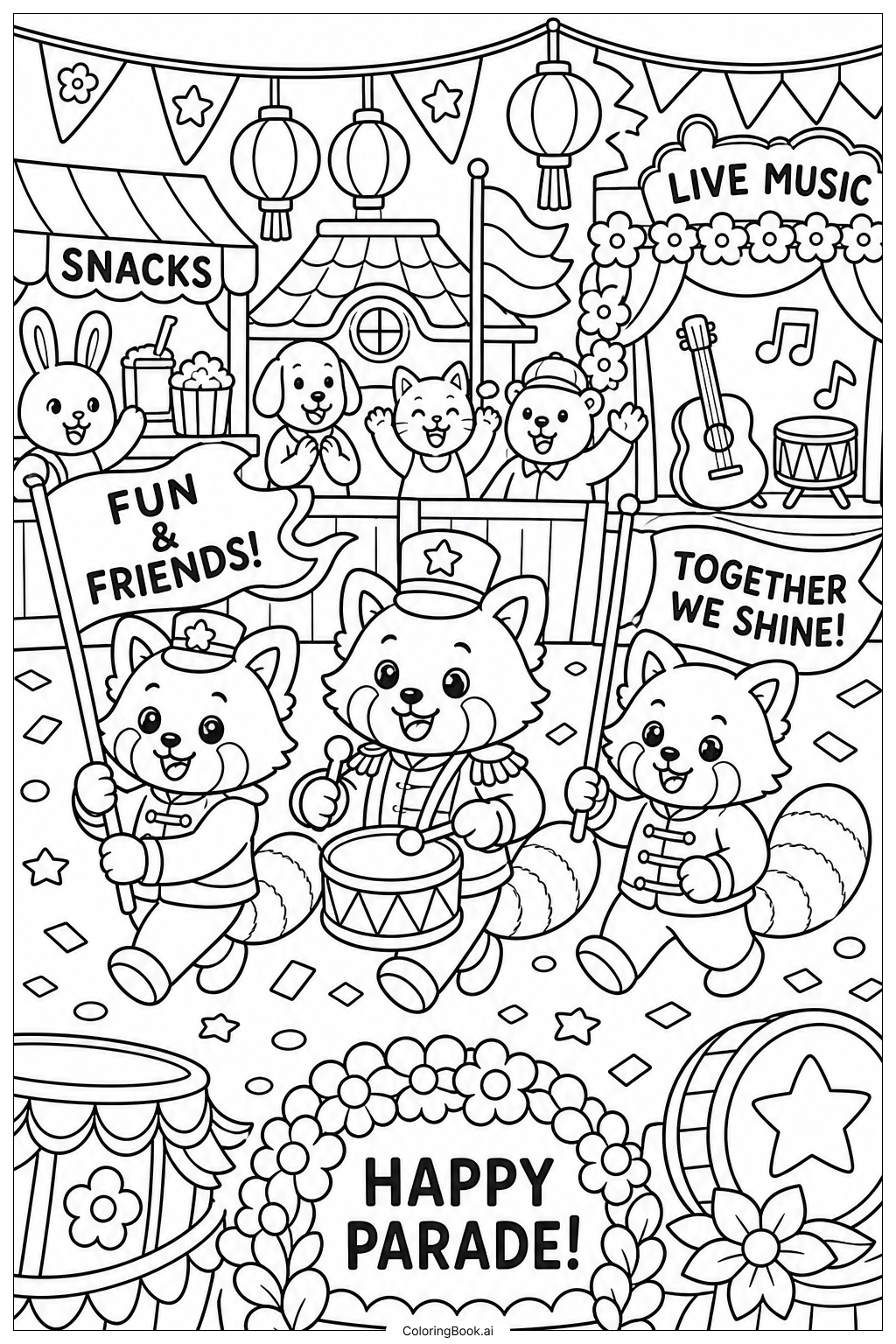
Coloring tips: How to color Red Panda At A Pond coloring page well?
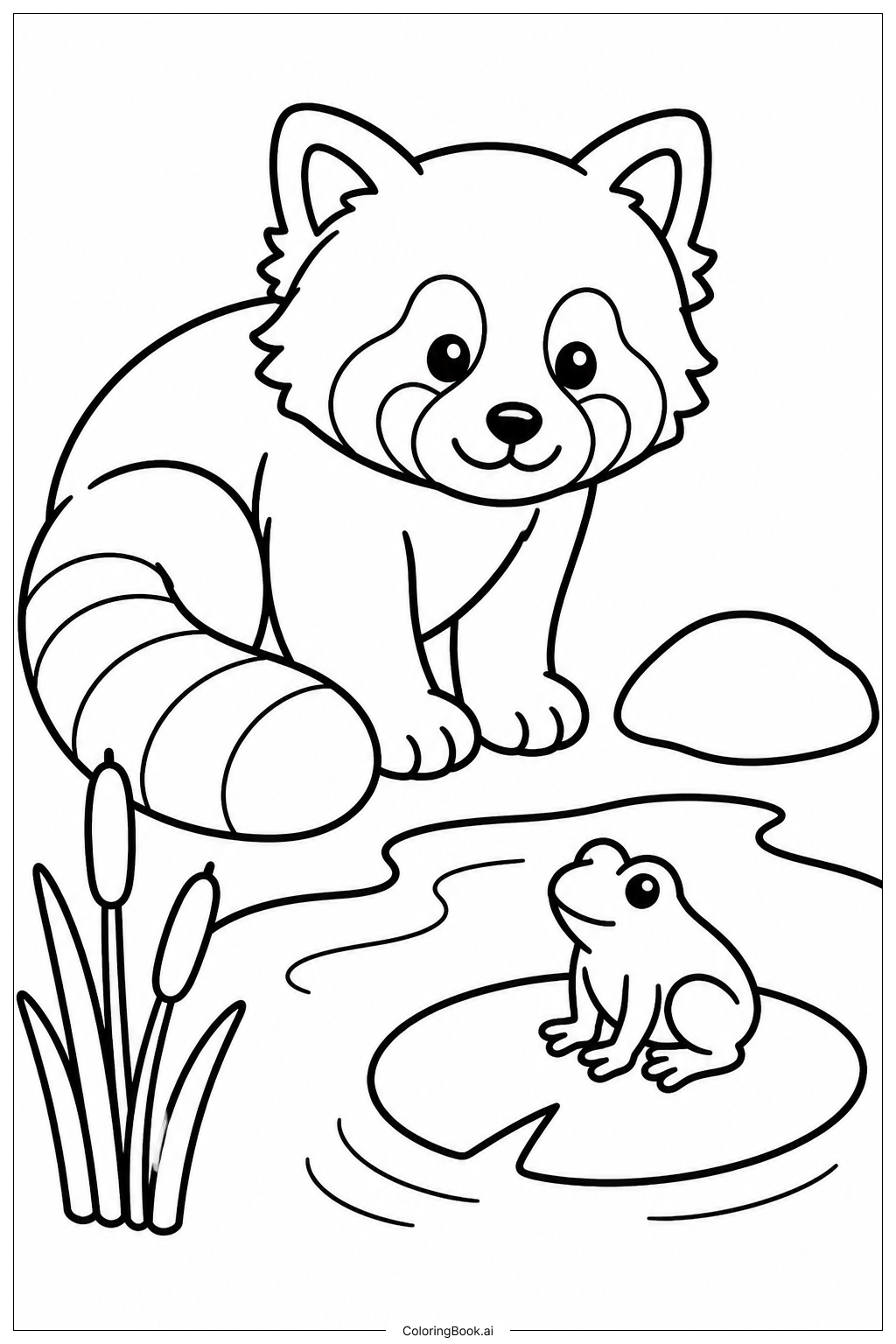
Start with the red panda using rich reddish-brown tones for the body and darker brown or black for the legs and belly. The face can be colored with white and reddish-brown markings, with black around the eyes. Use alternating light and dark brown bands for the distinctive ringed tail. For the pond, try blues and greens with lighter shades for reflections. Color the lily pads in various shades of green, and make the lotus flowers pink, white, or yellow. Use golden yellows and tans for the cattails, and earthy browns and grays for the stones. The background vegetation can be colored in multiple green shades to create depth, with perhaps some purple or blue tones for distant hills.
Coloring challenges: Which parts are difficult to color and need attention for Red Panda At A Pond coloring page?
• Fur Texture Details: The red panda's coat features many fine lines indicating fur texture, especially on the tail, body, and face. Maintaining consistent direction and pressure while coloring these detailed areas requires patience and a steady hand to achieve a realistic fluffy appearance without the lines becoming muddy or overworked.
• Tail Ring Patterns: The red panda's signature striped tail presents a unique challenge with its alternating light and dark bands. Keeping the rings distinct while blending them naturally into the fur texture requires careful color selection and precise application to avoid harsh transitions or uneven spacing between the stripes.
• Water Reflections and Depth: Creating a believable water surface in the pond involves layering different shades of blue and green while suggesting movement and transparency. The challenge lies in showing depth and reflections without overcomplicating the coloring, especially where lily pads and flowers interact with the water surface.
• Layered Background Elements: The scene includes multiple depth layers from foreground stones to mid-ground reeds and background hills. Successfully differentiating these layers through color intensity and value requires planning to ensure the red panda remains the focal point while the background adds context without overwhelming the composition.
• Small Detailed Flora: The lotus flowers, lily pads, cattails, and various plants contain intricate details in small spaces. Coloring these elements cleanly without colors bleeding into adjacent areas, especially where petals meet stems or leaves overlap, demands precision and possibly fine-tipped coloring tools.
Benefits of coloring books: Advantages of drawing Red Panda At A Pond coloring page
Coloring this Red Panda At A Pond scene offers wonderful opportunities for learning about wildlife and nature. Children can discover the beautiful red panda species while exploring color mixing and shading techniques. The variety of elements encourages experimentation with different color palettes for fur, water, and plants. The detailed fur textures help develop fine motor skills and hand-eye coordination through careful, controlled coloring movements. The peaceful pond setting promotes relaxation and mindfulness, making it an excellent stress-relief activity. Working on the layered background elements teaches spatial awareness and depth perception. This image also encourages creativity in choosing realistic or imaginative color schemes, allowing personal expression while learning about natural habitats and ecosystems.