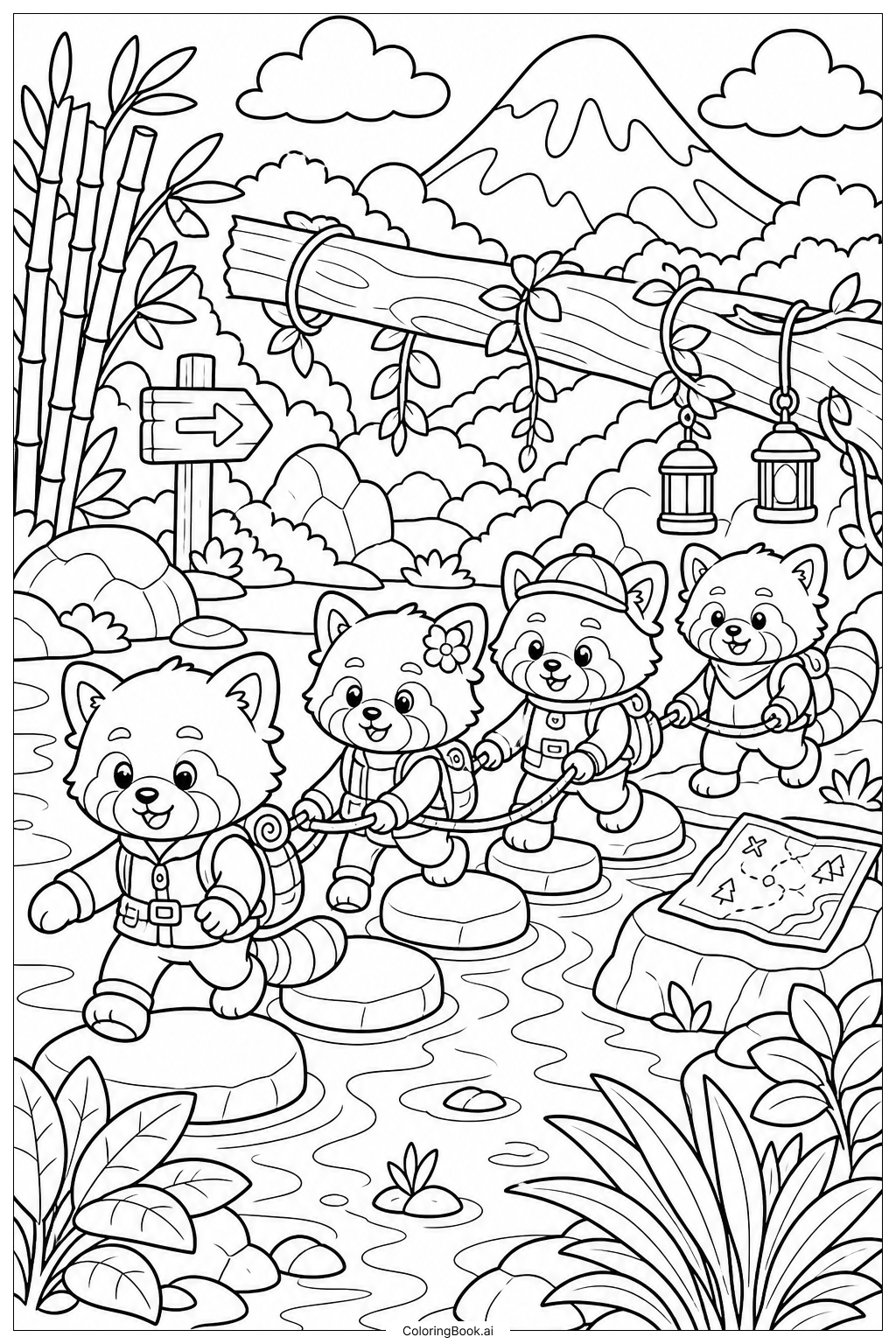
Coloring tips: How to color Red Panda Adventure With Friends coloring page well?
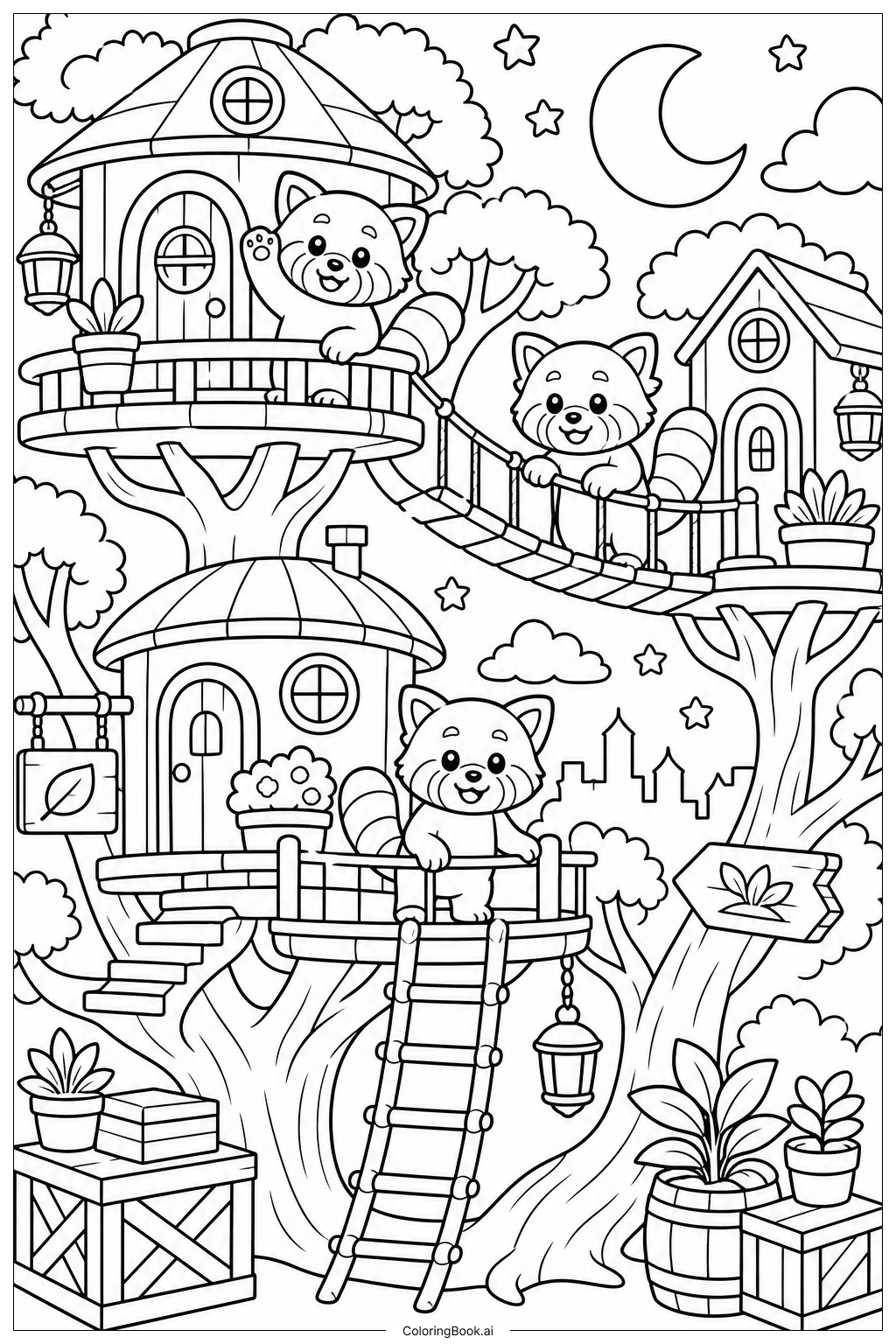
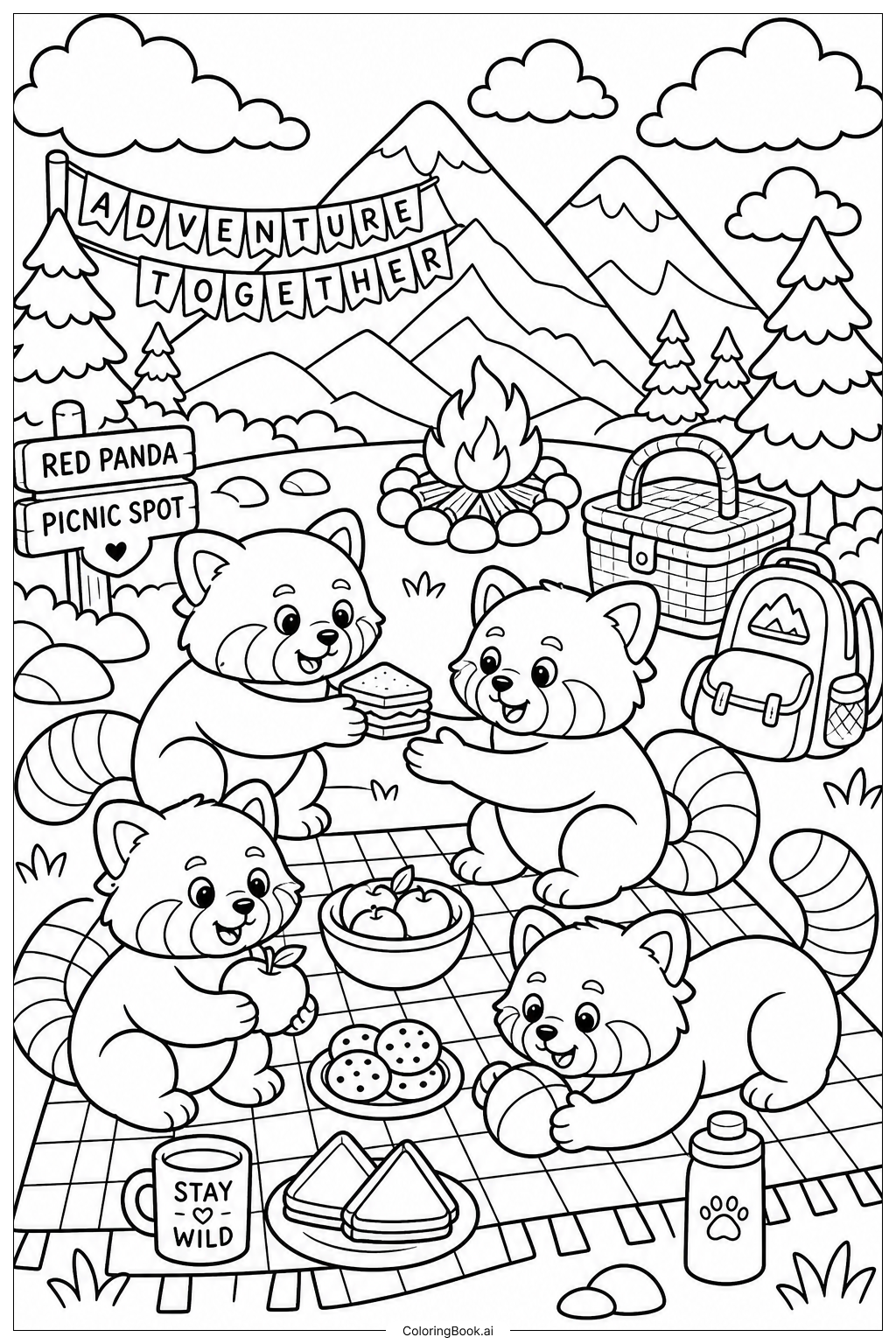
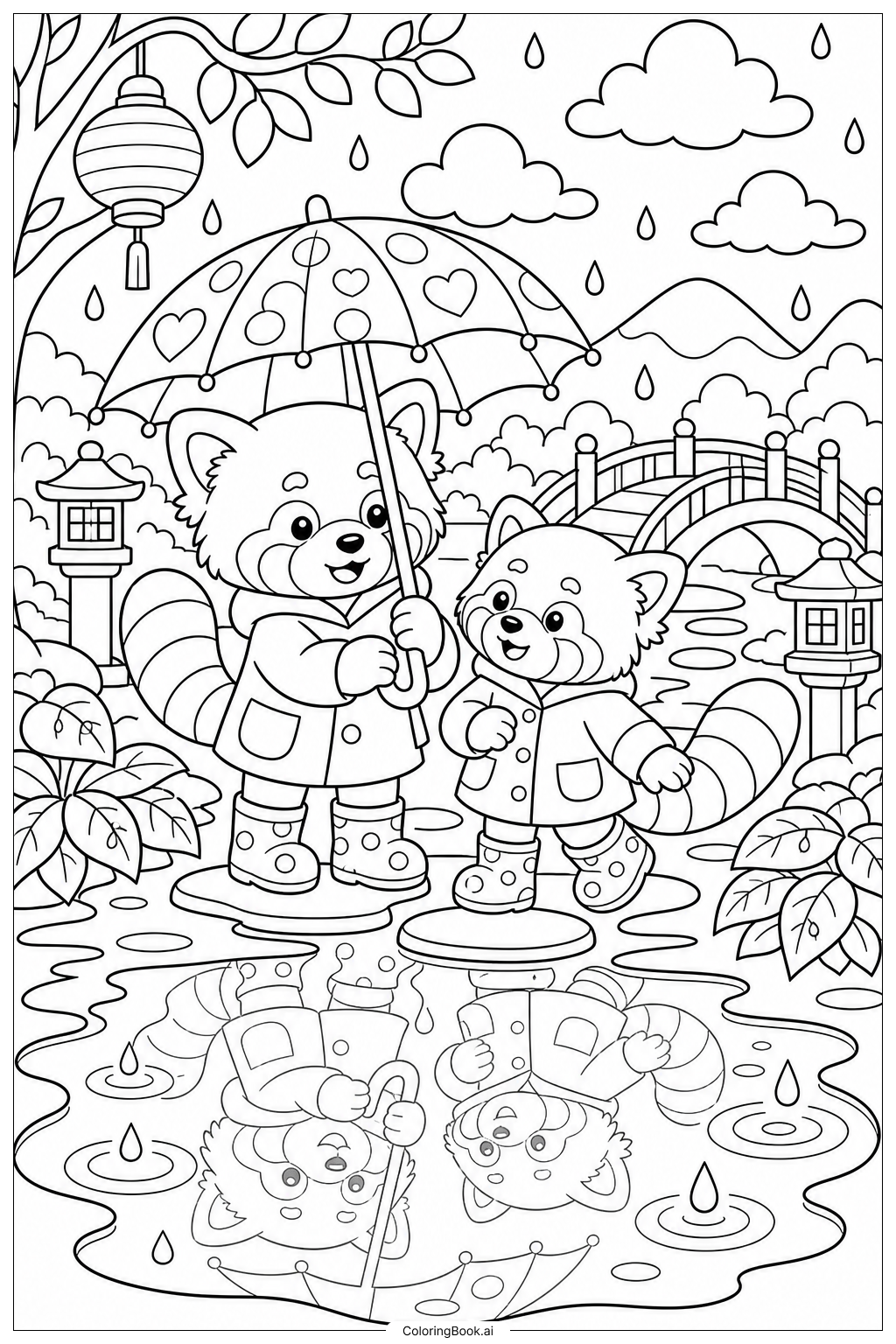
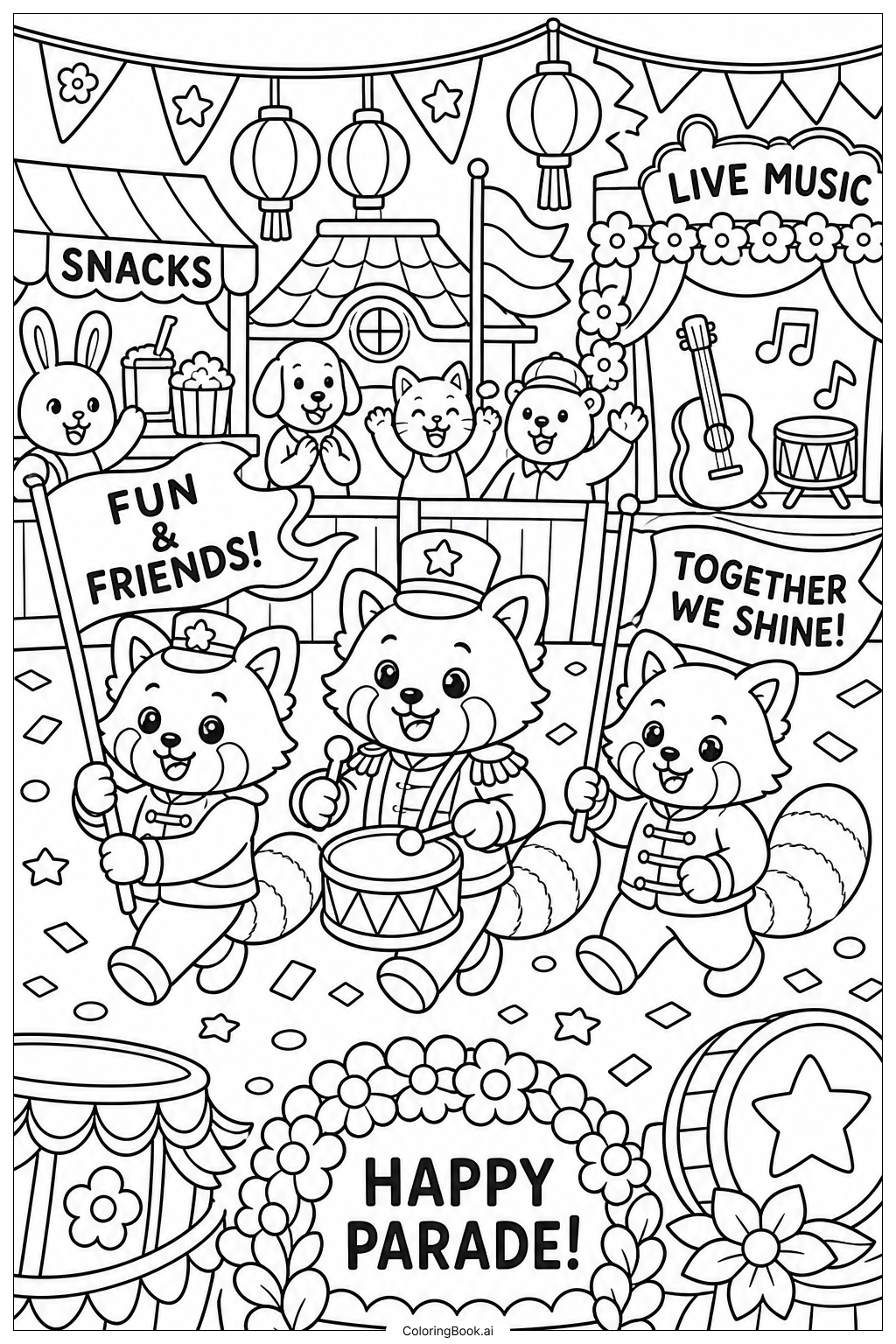
For the red panda, use warm reddish-brown tones for the body and deep russet shades for the tail rings. Color the face with white or cream around the eyes and muzzle, adding dark brown for the markings. The ears can be a lighter rust color with white inner fur. For the woodland friends, rabbits look lovely in soft grays, browns, or whites, while birds can feature bright blues, yellows, or reds to add pops of color. Use various shades of green for the leaves and foliage, mixing lighter lime greens with deeper forest greens for depth. Flowers can be colored in cheerful yellows, pinks, purples, or oranges. Consider using light blue or soft yellow for the sky areas if visible. Add brown tones for any tree branches or ground elements to create an earthy, natural feel throughout the scene.
Coloring challenges: Which parts are difficult to color and need attention for Red Panda Adventure With Friends coloring page?
• Tail Ring Patterns: The red panda's distinctive striped tail requires careful alternation between reddish-brown and dark brown or black rings. Maintaining consistent color boundaries between each ring segment while following the curved tail shape can be challenging, especially where the tail loops or overlaps with other elements. Young colorists may need to work slowly to keep colors within the lines of each stripe.
• Multiple Character Details: With several animal friends in one scene, each creature has its own facial features, fur textures, and body details that need individual attention. Switching between different color palettes for each animal while maintaining visual harmony requires planning and concentration. Small features like eyes, noses, and whiskers on multiple characters demand precision and steady hand control.
• Overlapping Elements: The composition includes layers of leaves, branches, flowers, and animals that overlap each other, creating complex boundaries where one element meets another. Deciding which parts go in front or behind and maintaining color separation at these intersections requires careful observation. These overlapping areas can be tricky for younger children who may accidentally color over boundaries.
• Varied Textures and Patterns: The scene combines smooth animal fur, detailed leaf veins, delicate flower petals, and rough branch textures, each requiring different coloring approaches. Creating visual interest through varied shading techniques while keeping the overall image cohesive presents a creative challenge for more advanced colorists.
Benefits of coloring books: Advantages of drawing Red Panda Adventure With Friends coloring page
Coloring this red panda adventure scene helps children develop fine motor skills through careful control when working on detailed areas like facial features and tail stripes. The multiple characters and natural elements encourage color recognition and decision-making as kids choose harmonious color combinations for different animals and plants. This engaging scene promotes focus and concentration as children work through the various layers and components of the illustration. The friendly animal theme sparks creativity and storytelling, allowing children to imagine adventures and relationships between the characters. Working on the intricate foliage and overlapping elements builds patience and attention to detail. The natural subject matter also provides an educational opportunity to learn about red pandas, their habitat, and the importance of wildlife, fostering environmental awareness and appreciation for nature from an early age.