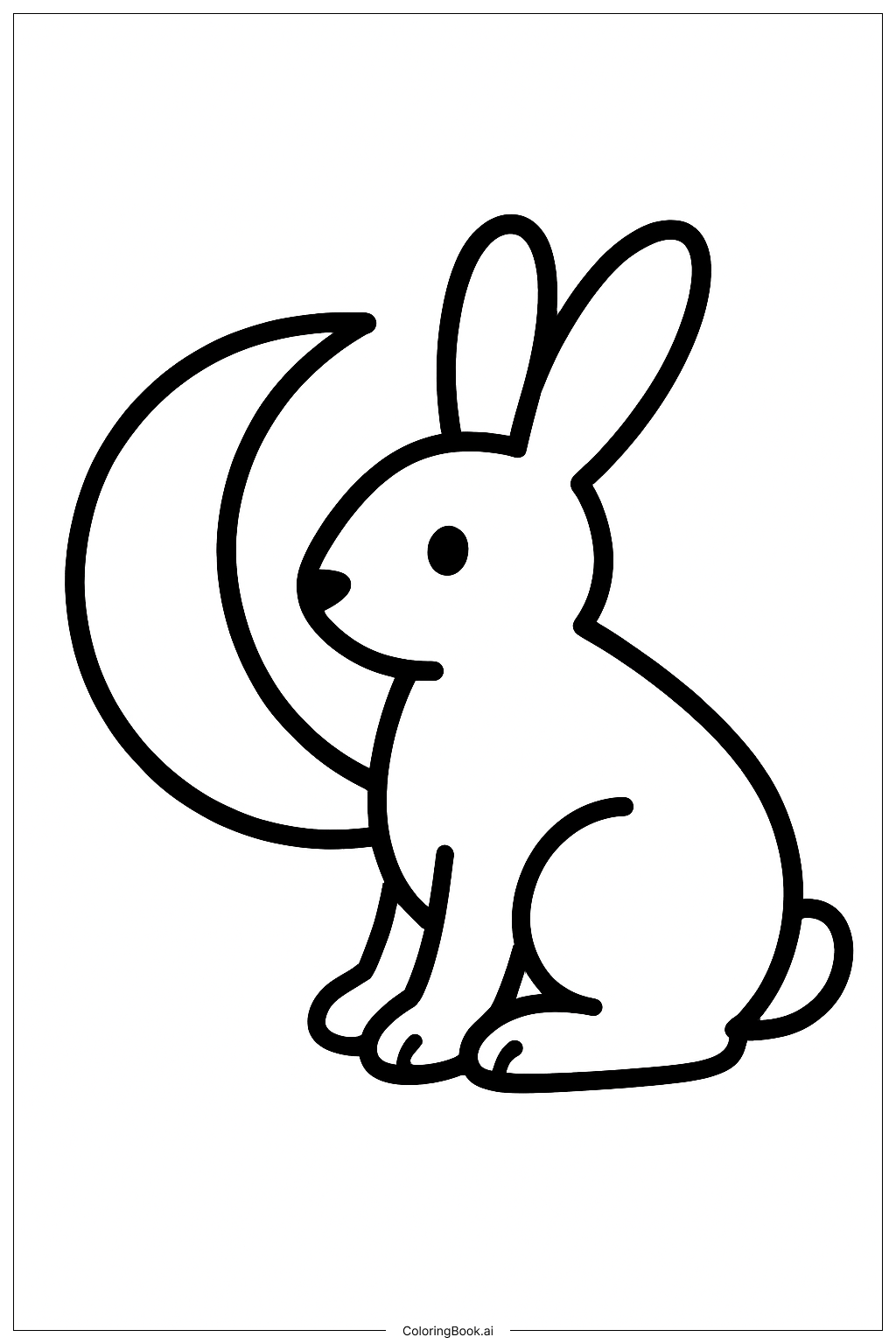
Coloring tips: How to color Rabbit With Moon coloring page well?
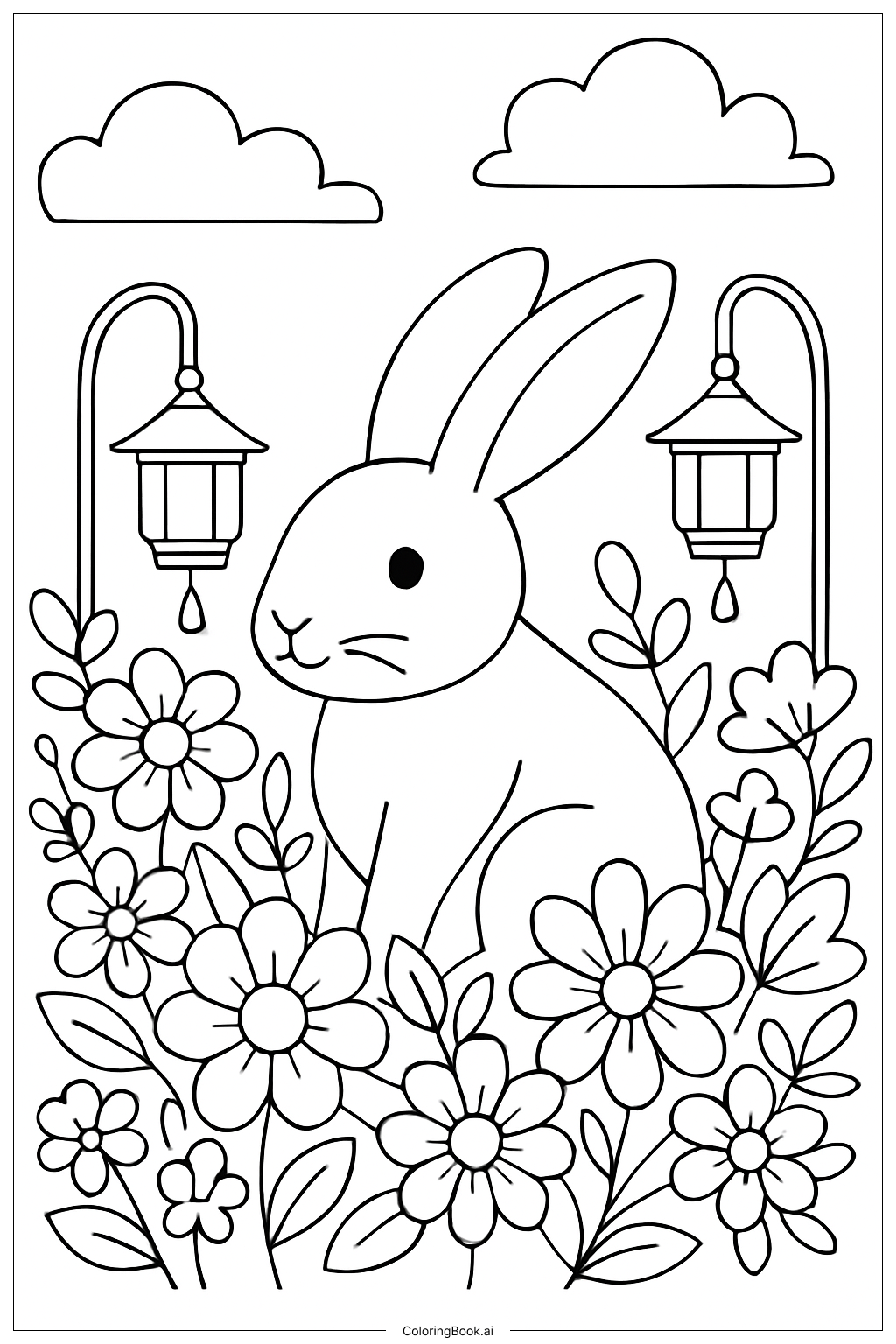
For the rabbit, you might choose soft colors like light gray or beige for a realistic look. Add some pink to the ears and nose to make it cute. The crescent moon can be bright yellow or pale blue to create a dreamy effect. Consider a dark night sky in shades of navy or deep violet around the moon. You can also use sparkly or metallic colors for added fun! Encourage children to blend colors for a more dynamic look, and remind them to use light shades for highlights and darker shades for shadows.
Coloring challenges: Which parts are difficult to color and need attention for Rabbit With Moon coloring page?
1. **Details in the Rabbit**: The rabbit has various small areas, like inside the ears and the nose, which can be tricky to color. Children need to learn to be careful in these tiny spots to avoid going outside the lines.
2. **Color Blending**: While coloring the rabbit, achieving a blended look might be tough. Mixing colors requires some skill, especially for young children. They might need guidance on how to blend colors for depth.
3. **Understanding Light and Shadow**: Teaching children about light and shadow can be challenging. They might find it hard to determine where to place darker colors compared to lighter ones, which is essential for making the rabbit look three-dimensional.
4. **Color Selection for the Moon**: Choosing the right color for the moon can be confusing. Kids may struggle to pick a shade that complements the rabbit while keeping the moon looking bright and appealing.
5. **Maintaining Neatness**: Staying within the lines can be difficult for some younger children. It can take practice to develop control over their coloring tools, especially in detailed areas.
Benefits of coloring books: Advantages of drawing Rabbit With Moon coloring page
Coloring this page is a fantastic way for kids to express their creativity. It encourages imagination as they choose colors for the rabbit and the moon. This activity also improves fine motor skills, helping children develop better hand-eye coordination as they learn to color within the lines. Additionally, coloring can be a calming experience, reducing stress and anxiety, especially when working on a peaceful image like this. It promotes focus and patience, as children spend time on their artwork. Lastly, sharing their finished pieces boosts confidence and gives them a sense of achievement.