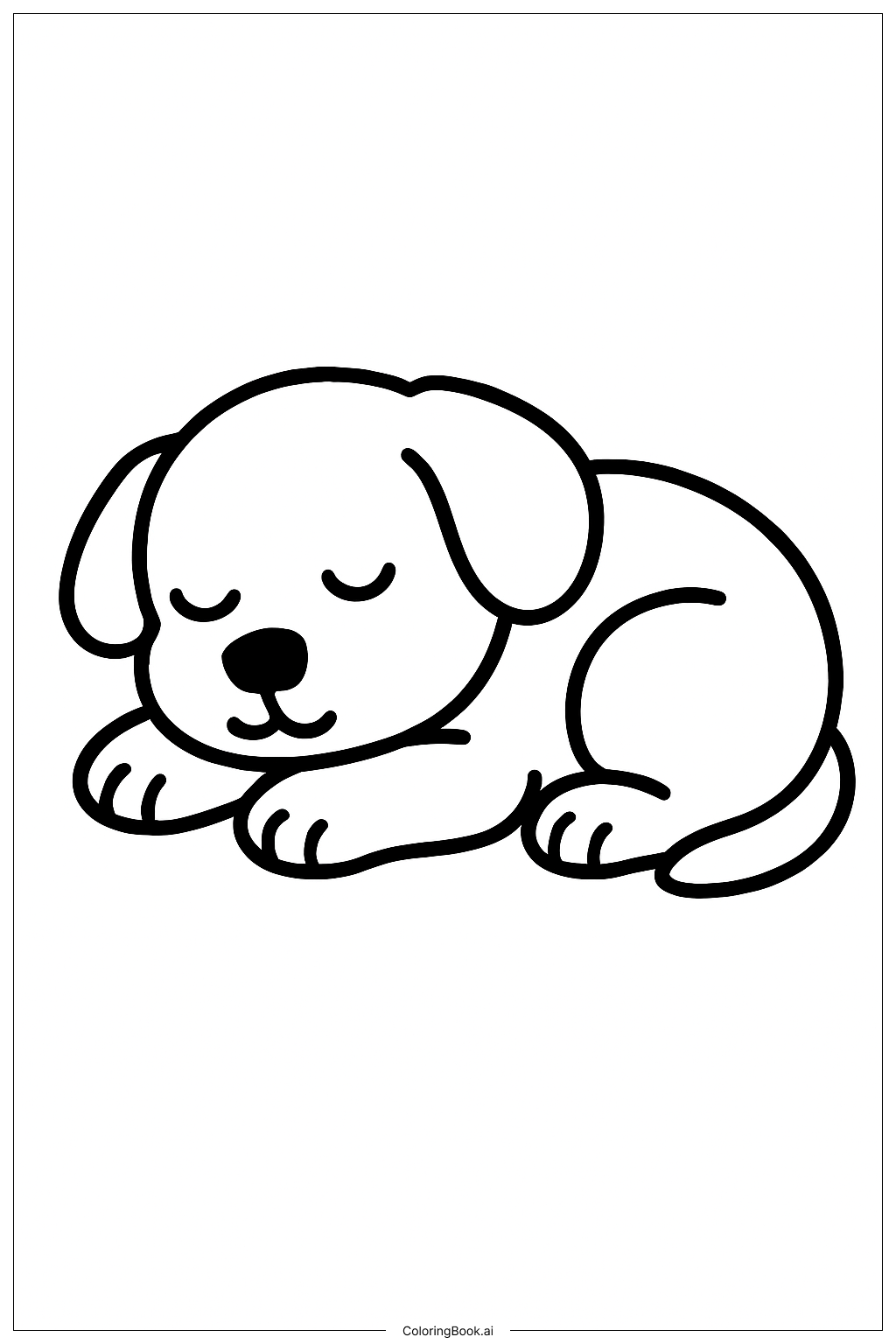
Coloring tips: How to color Sleeping Puppy Dog coloring page well?
When coloring this Sleeping Puppy Dog, consider soft and warm colors to show how calm and relaxed it is. Light browns, creams, or gentle grays work well for the fur. You can add subtle shading using darker tones on the puppy’s ears, paws, and tail to give it more depth. The background can be colored with soothing shades like pale blues or soft greens to create a peaceful atmosphere. For a bit of fun, you could use bright colors to decorate a cozy blanket or pillow underneath the puppy. Remember to use smooth strokes to highlight the puppy’s softness.
Coloring challenges: Which parts are difficult to color and need attention for Sleeping Puppy Dog coloring page?
• Fur Texture: Coloring the puppy’s fluffy fur can be tricky because it has many soft curves and fine lines. Using different shades smoothly can help show the fluffiness without making the colors look patchy. • Shadowing Curves: The puppy is curled up, which creates shadows in the folds of its body and under its head. Figuring out where to add darker tones to show these curves might be challenging. • Small Details: The puppy’s paws have detailed pads and tiny claws that need careful coloring to stay within the lines. • Expressing Calmness: The dog’s closed eyes and relaxed expression require gentle coloring around the face. Any harsh or heavy coloring could disturb the feeling of peaceful rest. • Consistency: Maintaining consistent color tones across the puppy’s body to make it look natural can be difficult, especially while blending light and dark areas.
Benefits of coloring books: Advantages of drawing Sleeping Puppy Dog coloring page
Coloring this Sleeping Puppy Dog can help improve fine motor skills by encouraging careful, detailed work on the puppy’s small features. It also promotes focus and patience as you shade the soft fur and shaded areas smoothly. For children and adults alike, coloring a peaceful sleeping animal can be relaxing and reduce stress. It encourages creativity while also teaching the use of color tones to show light, shadow, and texture. This image is perfect for practicing gentle color blending and helps develop an appreciation for calmness and softness in art.