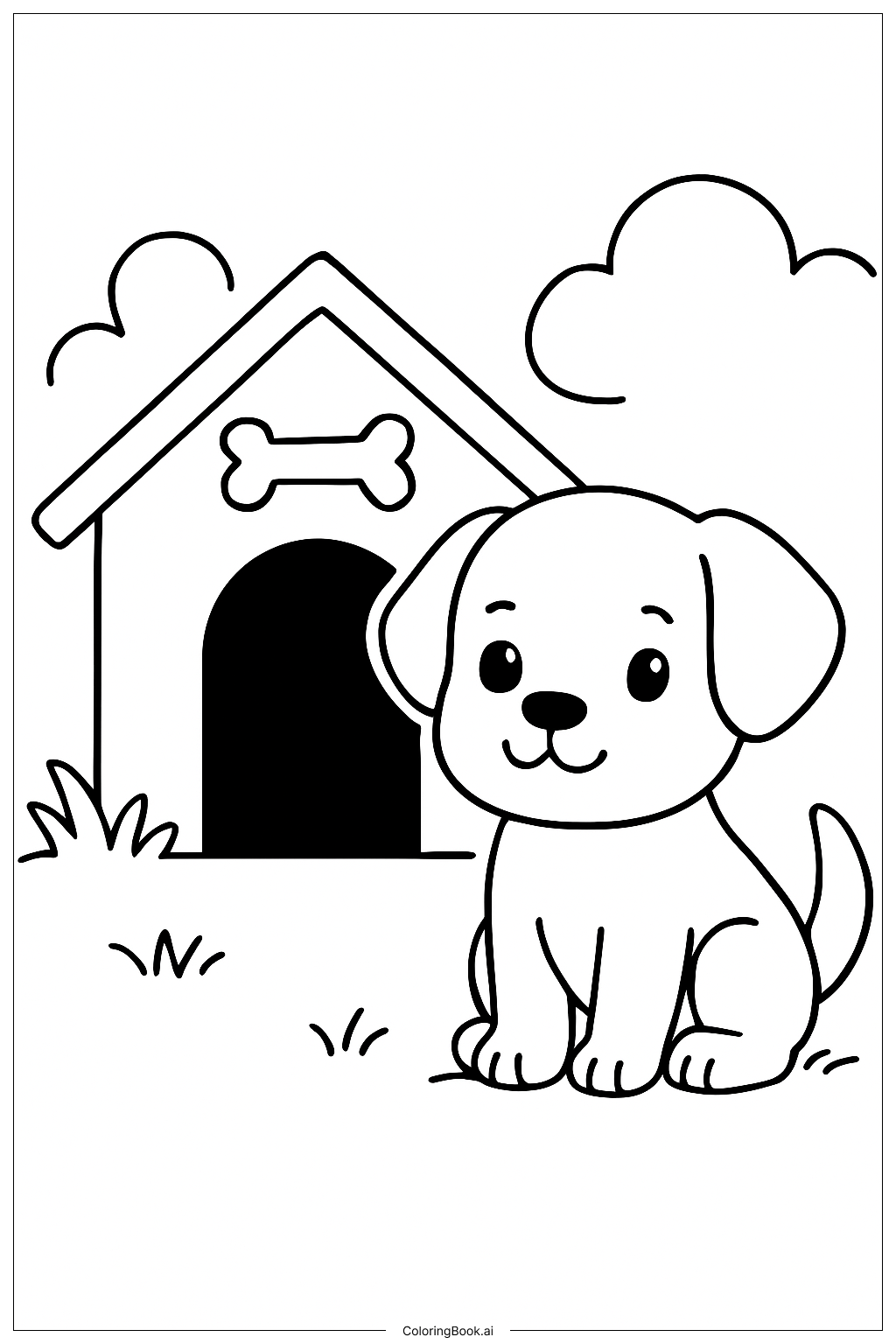
Coloring tips: How to color Puppy Dog At Dog House coloring page well?
For the puppy, consider using warm browns, golden yellows, or soft creams for the fur, with a darker shade for the nose and eyes to make them stand out. The collar can be bright red, blue, or any favorite color to add a pop of vibrancy. For the dog house, try natural wood tones like light brown or tan for the walls, and darker browns or grays for the roof shingles to create depth. You can also get creative with the dog house by using painted colors like red, blue, or green if you prefer a more colorful look. The ground can be colored with earthy greens for grass or light browns for dirt. Adding shadows underneath the puppy and around the dog house entrance will make the scene more realistic and three-dimensional.
Coloring challenges: Which parts are difficult to color and need attention for Puppy Dog At Dog House coloring page?
• Fur Texture and Direction: The puppy's fluffy coat requires careful attention to create a realistic appearance. Children may find it challenging to decide which direction to color the fur and how to layer different shades to show texture and volume. Using lighter and darker tones of the same color family can help create dimension, but this technique requires patience and planning.
• Facial Features and Expression: The puppy's face contains small, detailed areas including the eyes, nose, and mouth that need precision coloring. Staying within the lines of these tiny features can be difficult for younger children. The eyes especially need careful work to create the sparkle and emotion that brings the puppy to life, often requiring a combination of colors and leaving white highlights.
• Dog House Shingle Details: The roof contains multiple shingle lines that create a repetitive pattern. Maintaining consistency in color while adding subtle variations to show individual shingles requires concentration and steady hand control. Deciding whether to color each shingle differently or create a uniform look presents a creative challenge.
• Creating Depth and Shadows: Adding shadows under the puppy, around the dog house entrance, and beneath the roof overhang helps create a three-dimensional effect. Understanding where shadows naturally fall and choosing appropriate darker shades requires spatial awareness and color mixing skills that may be challenging for beginners.
Benefits of coloring books: Advantages of drawing Puppy Dog At Dog House coloring page
Coloring this puppy and dog house scene offers wonderful developmental benefits for children. It helps improve fine motor skills and hand-eye coordination as they carefully color within the lines of detailed areas like the puppy's face and the dog house shingles. The image encourages creativity in color selection, allowing children to imagine their dream puppy and customize the dog house in any style they prefer. This scene also promotes emotional connection as children think about pets, caring for animals, and the concept of home and shelter. The combination of organic shapes in the puppy and geometric structures in the dog house provides practice with different coloring techniques. Completing this page gives children a sense of accomplishment and can spark conversations about pet responsibility and kindness to animals.