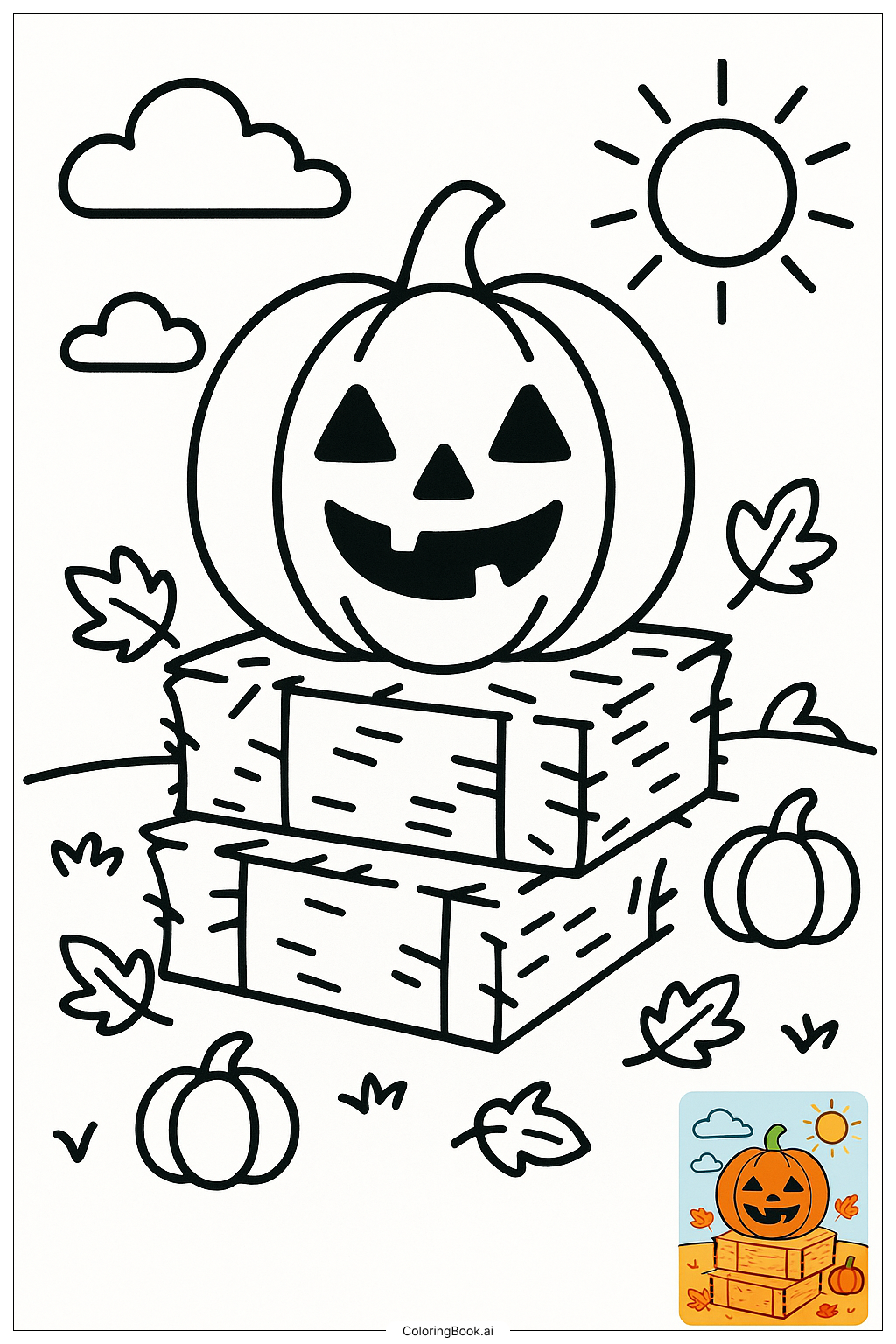
Coloring tips: How to color Pumpkin Stacked On Hay Bales coloring page well?
Try coloring the pumpkins in bright orange shades to capture their classic autumn look. Use yellows and light oranges to create highlights and darker oranges or reds for shadows to give each pumpkin depth. For the stems, use green or brown to make them look natural. Color the hay bales with yellows, light browns, and golden tones to show the straw texture. You can use different shades to show light and shadow on the hay. Feel free to add a soft blue or gray background to suggest a crisp fall sky. Adding small green grass patches at the bottom can make the scene more lively. Keep the colors warm and rich to reflect the cozy feel of fall harvest.
Coloring challenges: Which parts are difficult to color and need attention for Pumpkin Stacked On Hay Bales coloring page?
• Pumpkin Curves: The rounded shapes of the pumpkins require smooth coloring to keep their natural form. Uneven coloring might make them look flat or irregular. • Layered Stacking: Showing how one pumpkin rests on another means careful shading to highlight the overlap and depth. Getting the shadows correct is key to making the stack appear realistic. • Straw Texture: The hay bales have many thin straw lines sticking out, making it tricky to color cleanly without losing details. Small, fine strokes are needed to keep the texture visible. • Stem Details: The curling stems have thin lines and curves that require careful coloring to avoid spilling over pumpkin edges. • Light and Shadow: Balancing highlights and shadows for both pumpkins and hay is challenging but essential to create a 3D effect and lively image.
Benefits of coloring books: Advantages of drawing Pumpkin Stacked On Hay Bales coloring page
Coloring this image helps children practice shading techniques because of the round pumpkins and layered stack. It improves fine motor skills by requiring careful strokes around the stems and hay details. The image encourages creativity through choosing warm autumn colors and experimenting with different shades. It also teaches observation skills by helping colorists notice light and shadow to make the picture more realistic. Overall, this activity develops patience and concentration while celebrating a seasonal theme that many kids find fun and familiar.