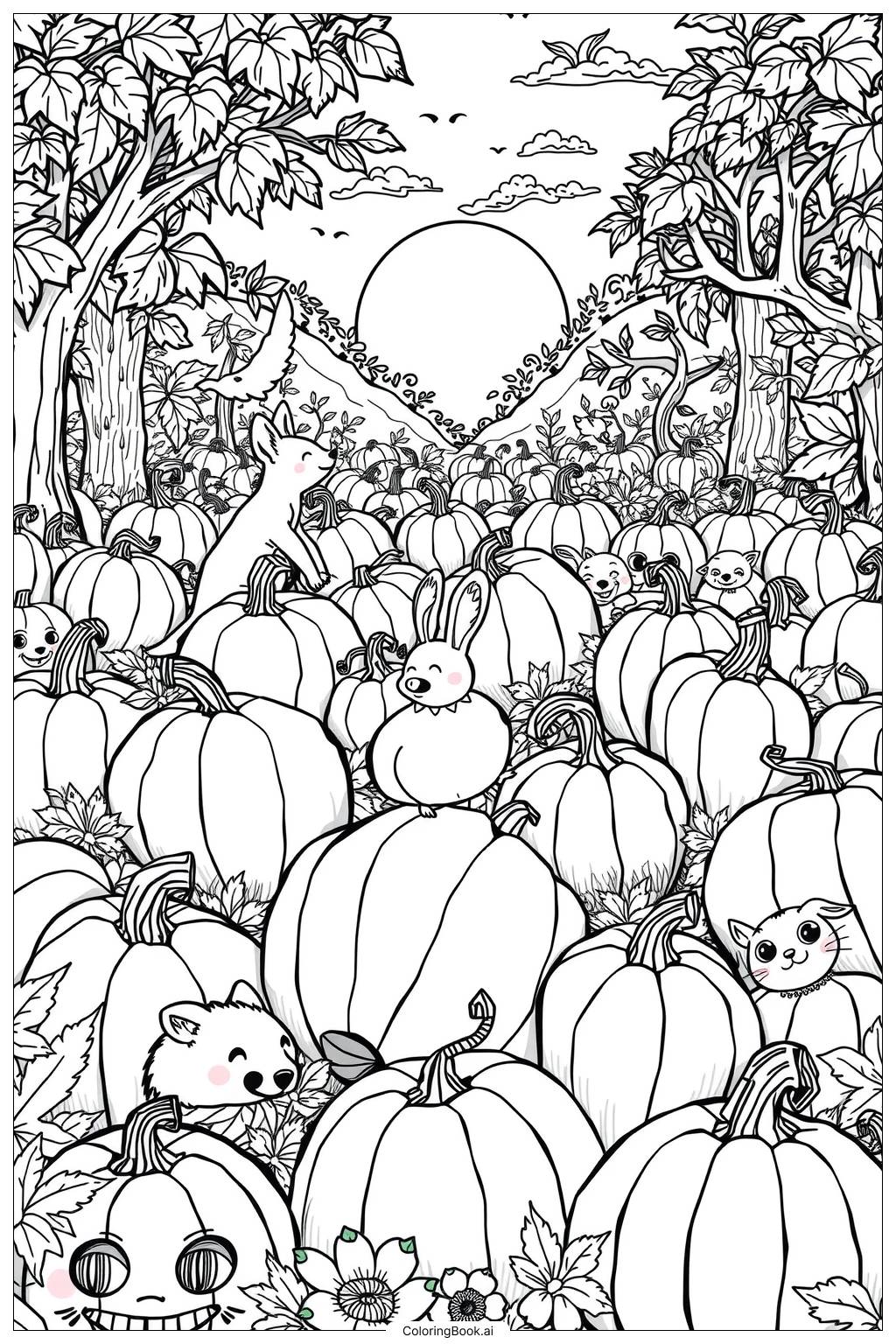
Coloring tips: How to color Happy pumpkin patch scene-2 coloring page well?
Use warm oranges and yellows to bring the pumpkins to life, varying shades to show depth and shadows. The leaves and vines can be colored in rich greens with hints of brown to highlight autumn changes. The scarecrow’s outfit offers great opportunity for bright colors like red, blue, or patchwork patterns to create a cheerful character. For the wooden fence, choose soft browns, and for the trees, blend greens with touches of gold or red to suggest early fall colors. The birds can be small pops of color like blue or black to add contrast. Consider layering colors gently to make the scene feel warm and inviting, perfect for a festive pumpkin patch environment.
Coloring challenges: Which parts are difficult to color and need attention for Happy pumpkin patch scene-2 coloring page?
• Pumpkin Shapes: The pumpkins vary in size and some have detailed ridges, which require careful shading to give them a rounded, three-dimensional look.
• Vines and Leaves: The curling vines and overlapping leaves can be tricky to color neatly because they intertwine closely, needing steady control to keep colors within boundaries.
• Scarecrow Details: The scarecrow’s face, clothes, and hat have many small elements like patches and stitches that demand precision and patience to color well.
• Background Elements: The wooden fence and tree branches have textures that call for layering colors or using fine strokes to mimic wood grain and bark patterns.
• Birds: These small figures may be challenging to color finely due to their size, requiring focus on small details without coloring outside lines.
Benefits of coloring books: Advantages of drawing Happy pumpkin patch scene-2 coloring page
Coloring this scene helps children develop fine motor skills by practicing controlled strokes on small and large areas alike. It encourages creativity as they choose colors to bring the pumpkin patch to life in their unique way. The image also promotes focus and patience, especially when dealing with detailed parts like the scarecrow and the intertwining vines. Additionally, this scene can spark conversations about autumn, farming, and nature, providing an educational layer while the child colors. Overall, it supports both artistic expression and cognitive development in a fun, seasonal context.