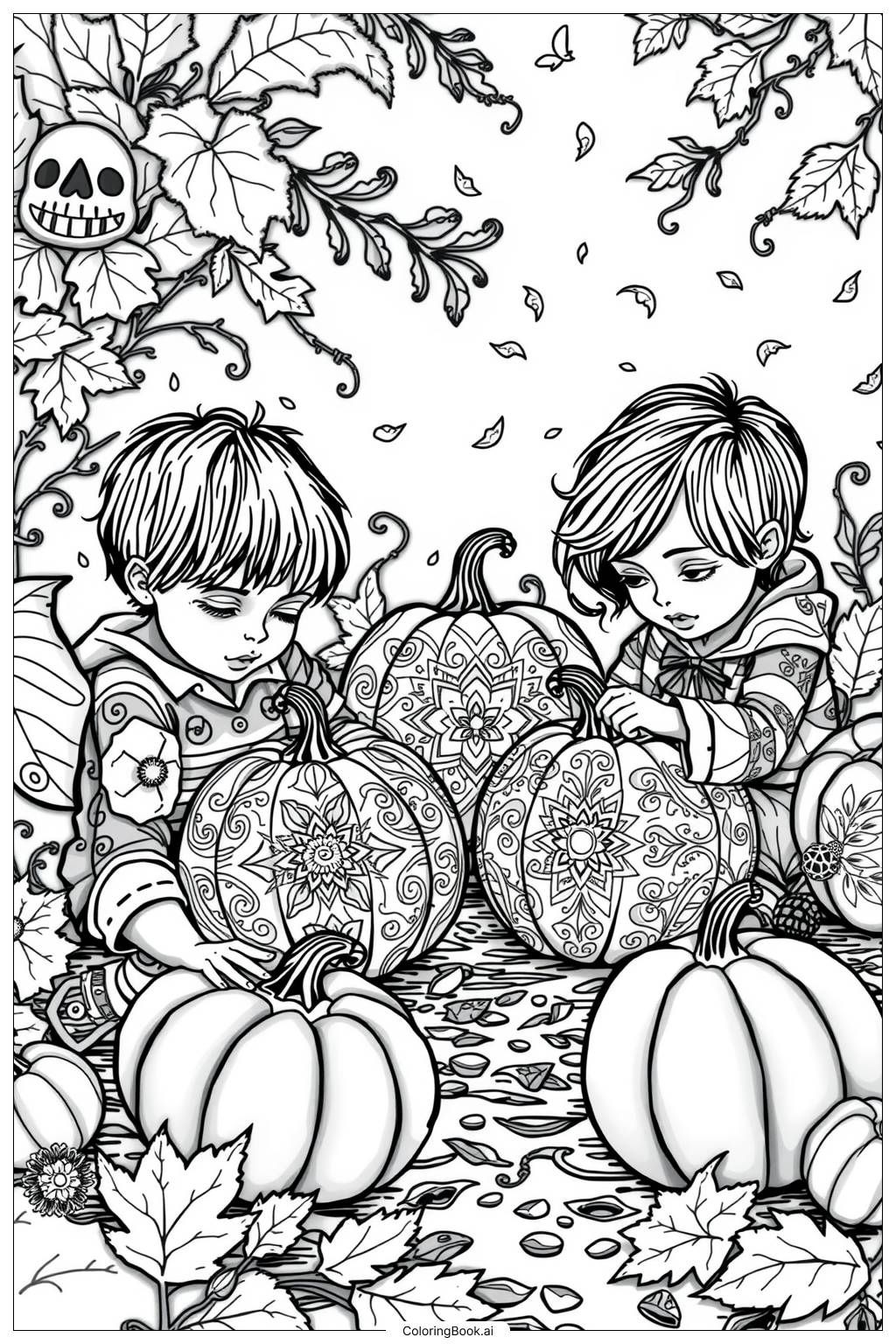
Coloring tips: How to color Children carving pumpkins at Halloween coloring page well?
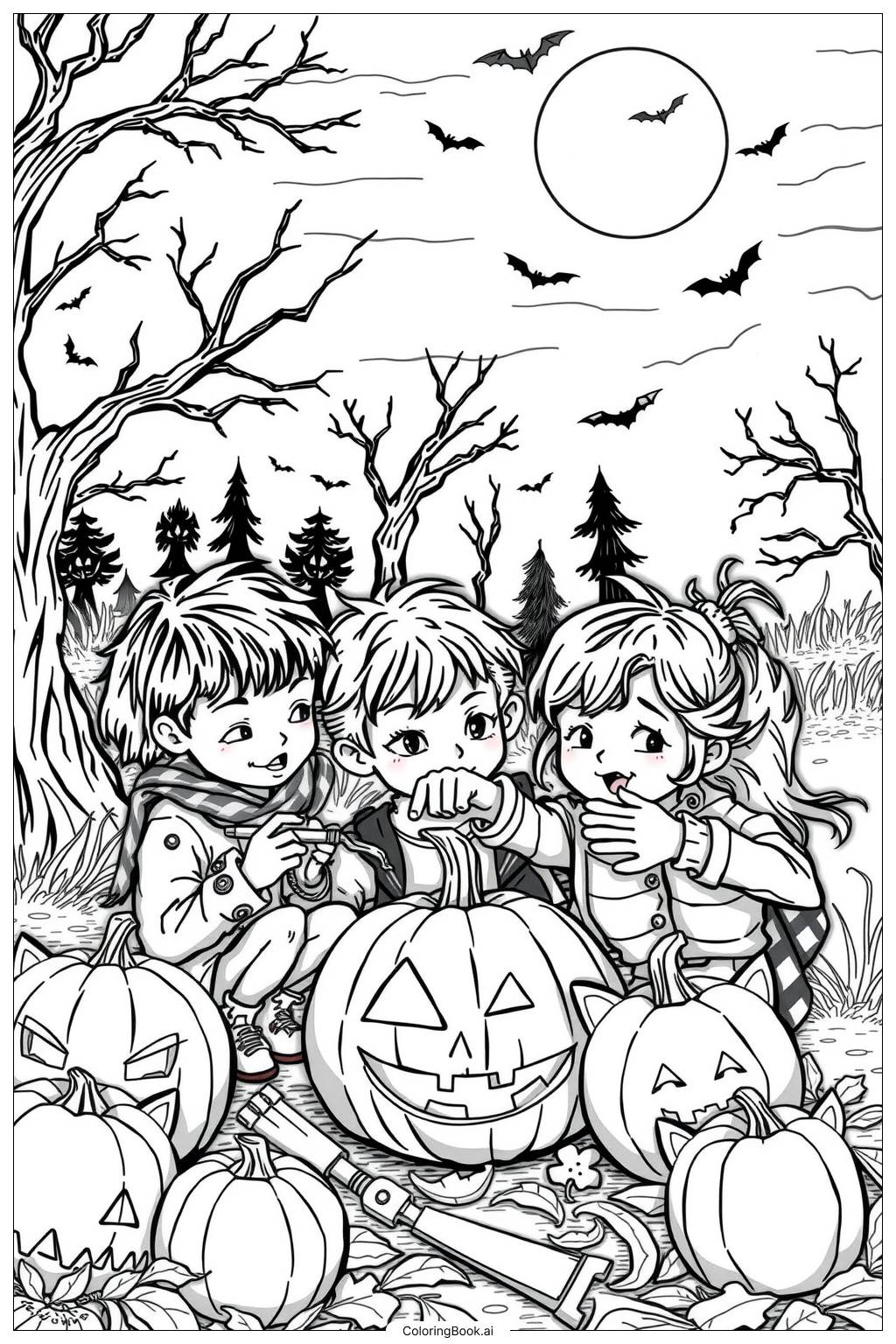
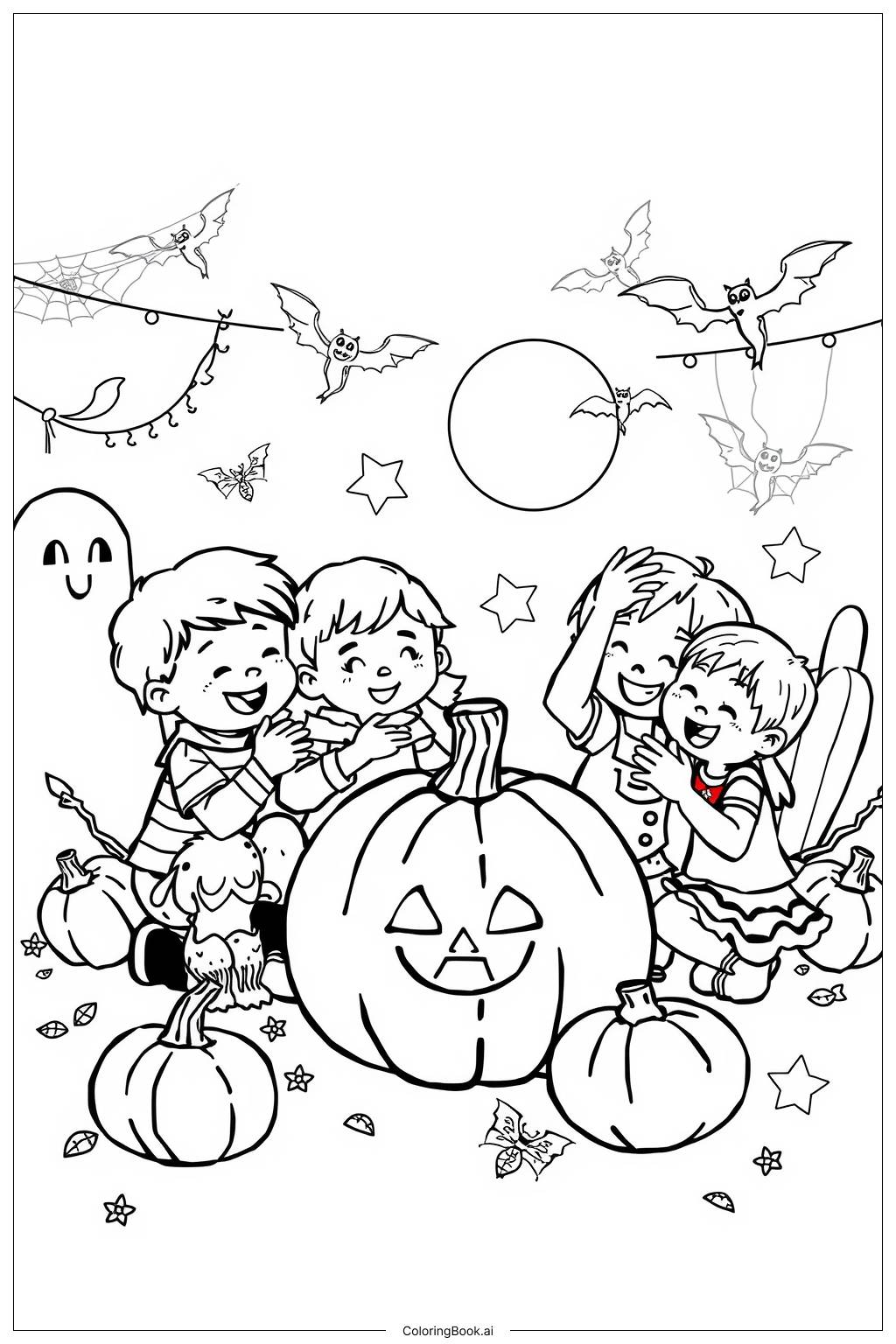
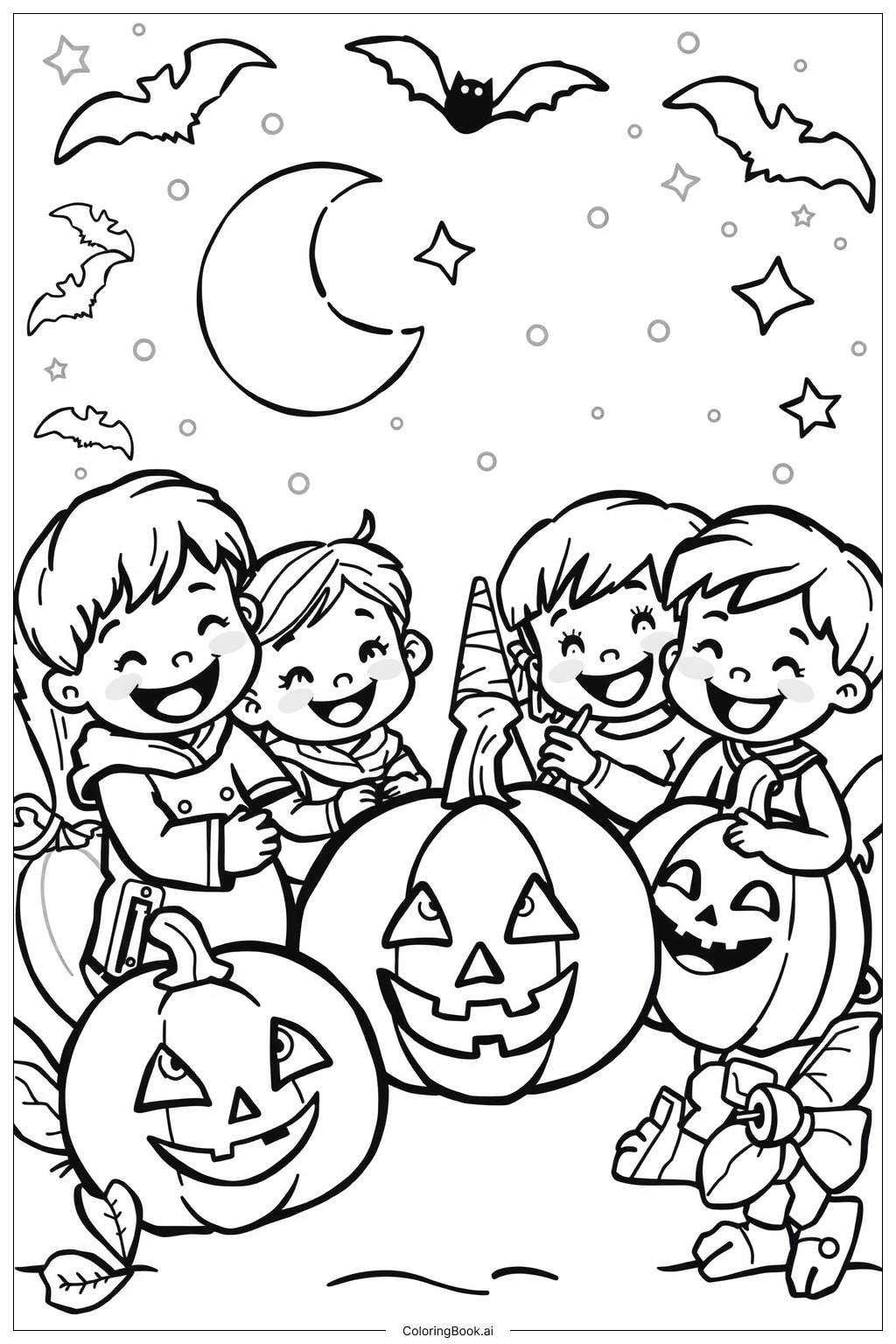
Use bright orange shades for the pumpkins to bring them to life. You can add lighter orange or yellow tones to show highlights and make the pumpkins look round. For the kids, choose a variety of colors for their clothes, such as reds, blues, greens, and purples, to make the scene lively. The carving tools can be gray or silver. Don’t forget to color the pumpkin seeds pale yellow or cream. Adding some fall colors like browns, reds, and golden tones to the background elements can create an autumn feeling. Keep the skin tones warm and natural. Use darker colors where there are shadows to add depth, especially inside the pumpkin carvings.
Coloring challenges: Which parts are difficult to color and need attention for Children carving pumpkins at Halloween coloring page?
• Pumpkin shapes and curves: Coloring the rounded pumpkins can be tricky because you need to follow their curves to make them look three-dimensional rather than flat. Adding shading on one side helps with this. • Detailed facial features: The carved faces on each pumpkin have different eyes, noses, and mouths. Coloring inside these small carved areas requires precision and focus to avoid going outside the lines. • Variety of characters: There are multiple children with different poses and clothes. Keeping their colors distinct without mixing or making the picture too busy can be a challenge. • Texture contrast: The smoothness of the pumpkins contrasts with the roughness of pumpkin seeds and carving tools. Using different coloring techniques, like blending for pumpkins and small strokes for seeds, takes practice. • Shadows and lighting: Showing shadows inside the pumpkin carvings and on the kids’ hands or faces adds realism but can be challenging to do neatly, especially for younger colorists.
Benefits of coloring books: Advantages of drawing Children carving pumpkins at Halloween coloring page
Coloring this image helps children practice fine motor skills by staying within the lines on the detailed pumpkin faces and tools. It encourages creativity as they choose colors for pumpkins, clothes, and background elements. This activity also supports focus and patience since the picture requires attention to small details. The Halloween theme makes coloring fun and relatable, helping kids connect art with seasonal traditions. Additionally, using shading techniques to show curves and shadows teaches important art concepts like light and dimension. Overall, coloring this scene offers a mix of enjoyment and skill-building for children ages 4 to 16.