Coloring tips: How to color Autumn pumpkin with leaves coloring page well?
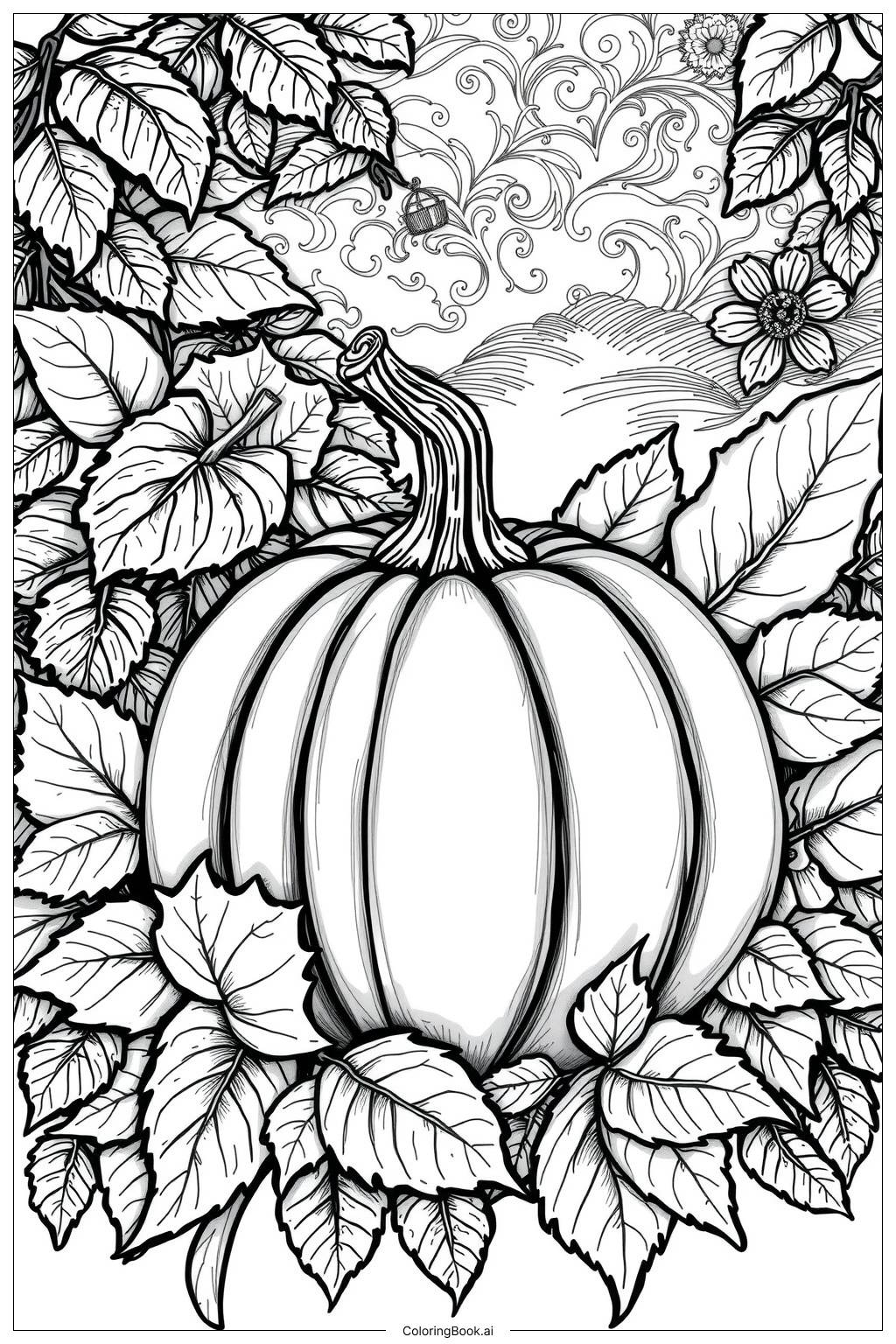
For this image, you can use warm autumn colors to bring out the feeling of fall. Color the pumpkin in bright orange shades, adding darker brown or deep orange along the ridges to give it a round, 3D effect. The stem can be colored in shades of green or brown to look natural. For the leaves, try using a variety of colors like red, yellow, gold, brown, and even some faded greens to show the changing season. You can blend different tones on each leaf to make them look more realistic. Adding lighter colors on the veins of the leaves can highlight their details. Don’t forget to color the background softly if you want, maybe with light blue or grey to represent a cool autumn sky.
Coloring challenges: Which parts are difficult to color and need attention for Autumn pumpkin with leaves coloring page?
• Pumpkin Texture: The pumpkin has several curved ridges that need careful shading to show its roundness and volume. Coloring these evenly while making the pumpkin look three-dimensional can be a challenge for beginners. • Leaf Details: The leaves have detailed veins and varied edges, which require careful attention to color without going outside the lines. Younger artists may find it tricky to stay precise on these small areas. • Color Blending: To make the image pop, blending different autumn shades on both the pumpkin and the leaves is needed. Blending colors smoothly takes practice and might be difficult for less experienced colorers. • Overlapping Leaves: Some leaves overlap each other, so determining where one leaf ends and another begins can be confusing and requires careful coloring to keep them distinct. • Stem Natural Look: The pumpkin's stem has a twisted shape that needs subtle color shifts to look realistic. Capturing that can challenge those still working on shading skills.
Benefits of coloring books: Advantages of drawing Autumn pumpkin with leaves coloring page
Coloring this autumn pumpkin with leaves image helps improve fine motor skills and hand-eye coordination, especially when working on the curved ridges and detailed leaf veins. It encourages attention to detail and patience as children carefully color within overlapping shapes. Using a warm color palette stimulates creativity and teaches color blending techniques, helping develop an understanding of shading and highlighting. This image also invites children to learn about nature and the changing seasons, making the coloring experience both fun and educational. Overall, coloring this page supports both artistic growth and seasonal awareness.