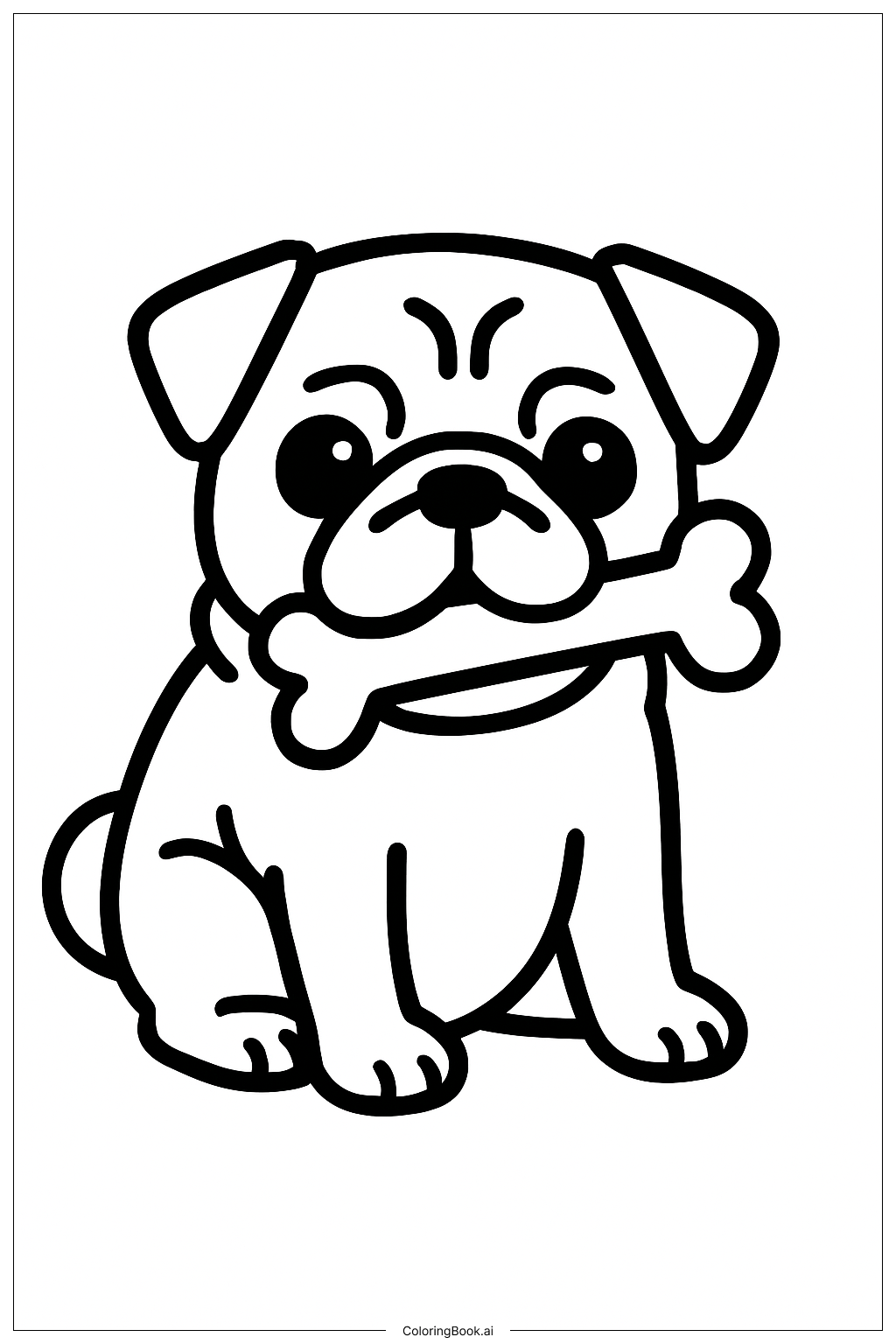
Coloring tips: How to color Pug With Bone coloring page well?
Start with the pug's body. Pugs are usually light fawn or soft tan, so try warm beige or light brown for the main coat. Use a darker brown or gray for the muzzle area and the forehead wrinkles to add depth. The eyes can be colored dark brown or black, with a tiny white dot to show a sparkle of life. The nose should be black or very dark gray. The ears look great in a slightly darker shade than the body. For the bone, use off-white, cream, or pale gray to keep it looking realistic. You can add light shadows with a pencil or light gray crayon to give the bone a rounded, three-dimensional look. The background can be left white or filled with soft colors like light yellow, sky blue, or pale green to make the pug pop. Kids can also get creative and try fun colors like purple or pink for a fantasy-style pug. Have fun and make it your own!
Coloring challenges: Which parts are difficult to color and need attention for Pug With Bone coloring page?
Coloring this pug image is a joyful activity, but a few areas may require extra care and patience. Here are the main challenges to watch out for:
• Facial Wrinkles: The pug's forehead and muzzle have many small folds and creases. Coloring these carefully with a slightly darker shade than the base coat is important. If the lines are too thick or the color goes outside the wrinkle lines, the face can look messy. Use a fine-tipped tool and go slowly.
• Small Facial Features: The pug's eyes, nose, and mouth are close together in a small area. The nose is tiny and flat, and the eyes are large but detailed. Keeping colors within the correct boundaries without smudging into neighboring areas takes steady hands and concentration.
• Curved Body Shading: The pug's round, plump body looks best when light and shadow are suggested using different tones of the same color. Applying smooth gradients or subtle darker edges on a round shape can be tricky, especially for younger colorists who are still developing control.
• Bone Texture: The bone has rounded ends and a narrow middle section. To make it look three-dimensional and not flat, colorists need to apply lighter color in the center and darker tones toward the edges. This requires understanding basic shading techniques.
• Consistent Line Work: Staying inside all the fine outline details throughout the entire image without going over the borders demands patience and focus, especially for children working on the smaller details around the pug's ears and paws.
Benefits of coloring books: Advantages of drawing Pug With Bone coloring page
Coloring this cute pug page offers a wide range of benefits for kids and adults alike. For children, it is a wonderful way to build fine motor skills as they carefully fill in the pug's wrinkles, eyes, and body. Holding a crayon and controlling color within lines strengthens hand muscles and prepares kids for writing.
Choosing colors for the pug's coat, eyes, and bone encourages creative thinking and decision-making. Kids learn that there are no wrong choices, which builds confidence and self-expression.
Focusing on a detailed image also improves concentration and patience. Completing the page gives a real sense of accomplishment, boosting self-esteem.
For older kids and adults, this page is a relaxing and mindful activity. Coloring reduces stress and helps calm a busy mind. It is a screen-free way to unwind after school or work.
Learning about how pugs look also sparks curiosity about animals and nature. Kids who love dogs will feel a special connection to this page.
Overall, this Pug With Bone coloring page is a simple, fun, and rewarding activity that supports creativity, focus, and emotional well-being for colorists of all ages.