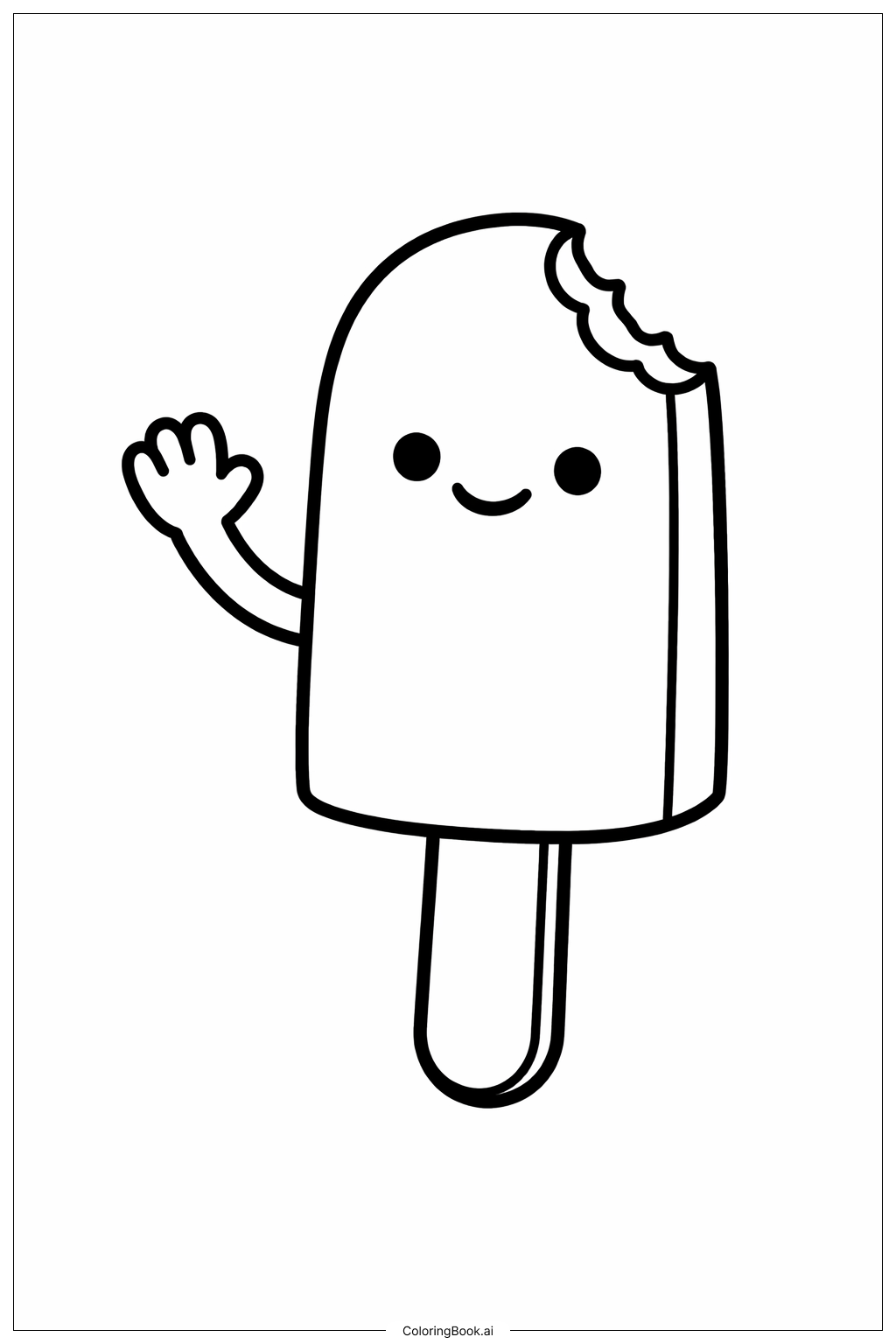
Coloring tips: How to color Waving Popsicle coloring page well?
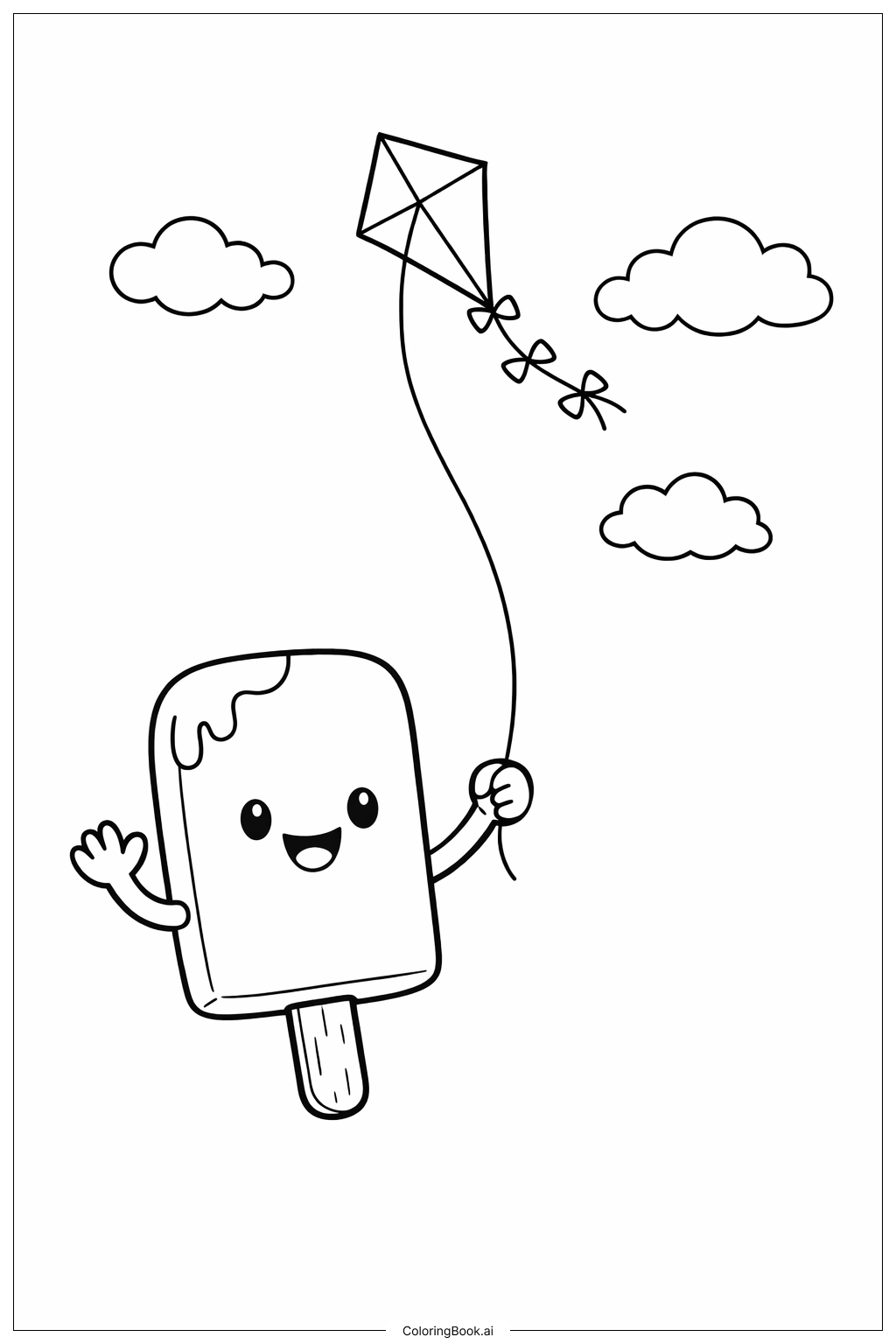
Use bright and cheerful colors to bring this popsicle to life. You can color the popsicle in shades like pink, orange, yellow, or purple to make it look tasty and fun. For the bitten part, use a lighter shade or white to show the missing bite. Color the eyes black and the smile in a simple color like red or brown. The waving hand and legs can be the same color as the popsicle body or slightly darker for contrast. The stick can be colored light brown, beige, or wood-like colors. You can also add some patterns or dots to make the popsicle more interesting.
Coloring challenges: Which parts are difficult to color and need attention for Waving Popsicle coloring page?
1. Small Details: The popsicle's eyes and smile are small and need careful coloring to keep them neat and expressive. 2. Bitten Area: Coloring the bitten section correctly can be tricky, as it requires some shading or lighter color to show the bite realistically. 3. Waving Hand: The fingers on the waving hand are small and close together, demanding careful coloring. 4. Stick Shape: The stick has rounded edges that require smooth coloring to look natural. 5. Consistent Coloring: Keeping the color consistent on the popsicle body without going outside the lines can be difficult for younger children.
Benefits of coloring books: Advantages of drawing Waving Popsicle coloring page
Coloring this popsicle page helps improve hand-eye coordination as kids carefully fill small areas like the eyes and fingers. It encourages creativity, allowing children to choose fun and bright colors. The simple shapes help build confidence in coloring with control and precision. Coloring the bitten part teaches kids about shading and how to add details. Overall, it is a joyful activity that can enhance focus and patience.