Coloring tips: How to color Poppy Playtime Broken Window With Cracks coloring page well?
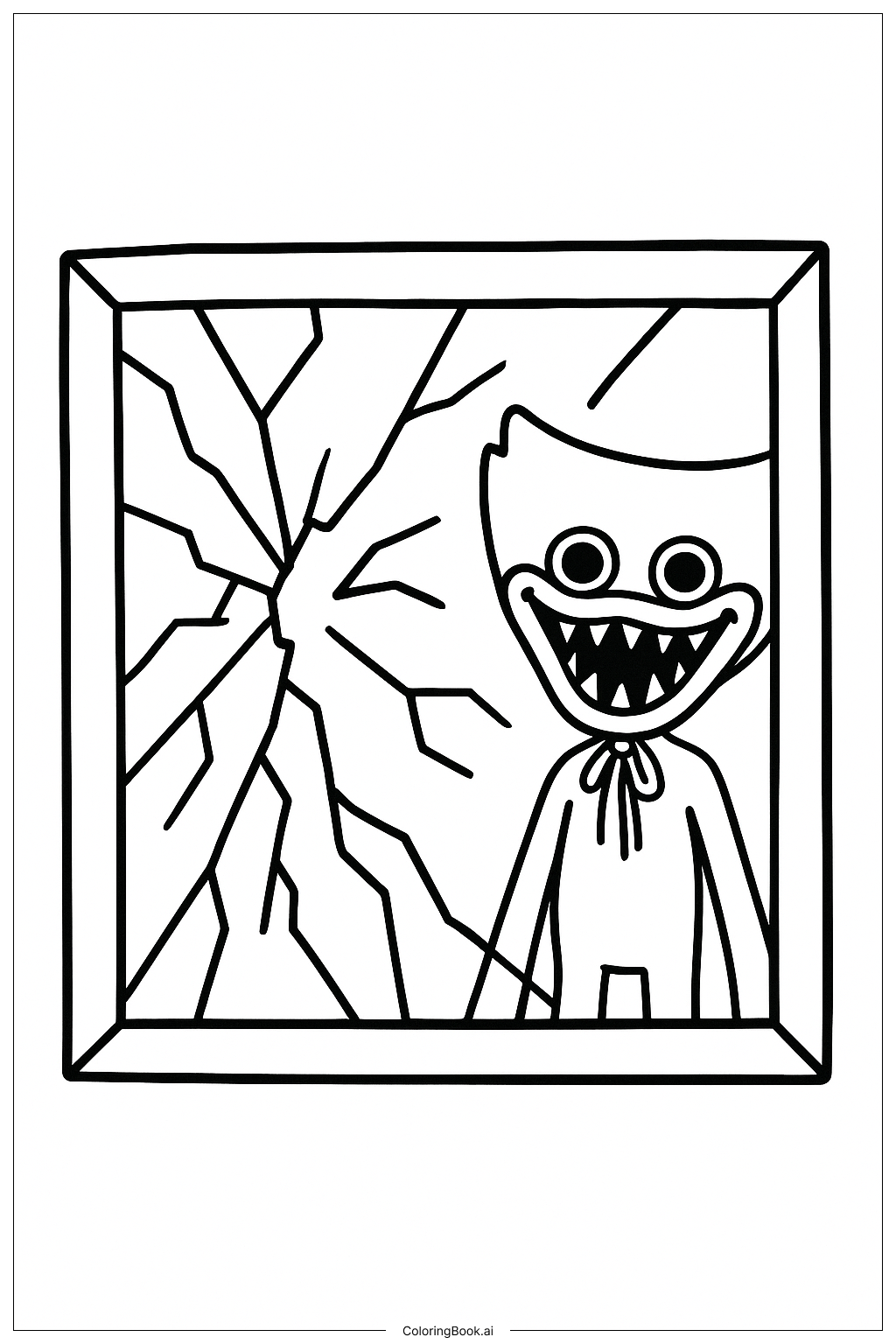
For this picture, try using a range of colors to bring the broken window to life. Use light blues, grays, and whites for the glass shards to show how light reflects off the cracks. You can add hints of silver or pale yellow to make the glass appear shiny and sharp. For the wooden frame, consider warm brown, beige, or gray tones to highlight the texture and roughness. The background behind the window can be colored darker, such as deep blues, purples, or black, to create a spooky or nighttime feel. Kids can experiment with shading the cracks to make them look realistic and emphasize the breaking effect. Try blending different colors softly to suggest shadows or light reflections on the glass pieces.
Coloring challenges: Which parts are difficult to color and need attention for Poppy Playtime Broken Window With Cracks coloring page?
• Small Detailed Cracks: The many tiny cracks and sharp lines in the broken glass require careful coloring to avoid smudging or coloring outside the lines. It challenges fine motor skills and precision. • Overlapping Shapes: Some glass fragments overlap or touch each other closely, making it harder to clearly separate colors. Coloring inside the tight spaces is tricky. • Texture Variations: Showing the difference between smooth glass and rough broken wood frame needs patience to shade and color with different strokes or pressure. • Background Complexity: The dark mysterious room behind the window includes subtle shadow shapes that must be colored carefully without overwhelming the main glass cracks. • Light and Shadow: Coloring to capture reflections, highlights, and shadows on the broken pieces takes practice in blending and choosing color tones for a realistic look.
Benefits of coloring books: Advantages of drawing Poppy Playtime Broken Window With Cracks coloring page
Coloring this broken window image helps improve hand-eye coordination and fine motor skills because of the detailed crack patterns and sharp edges. It encourages focus and patience to carefully stay within the lines and color small areas. This picture also stimulates creativity by allowing children to experiment with different shading techniques for glass and wood textures. Coloring the dark background behind the window helps develop understanding of light, shadow, and mood in art. Overall, this coloring activity enhances attention to detail while providing a fun way to explore color blending and expression.