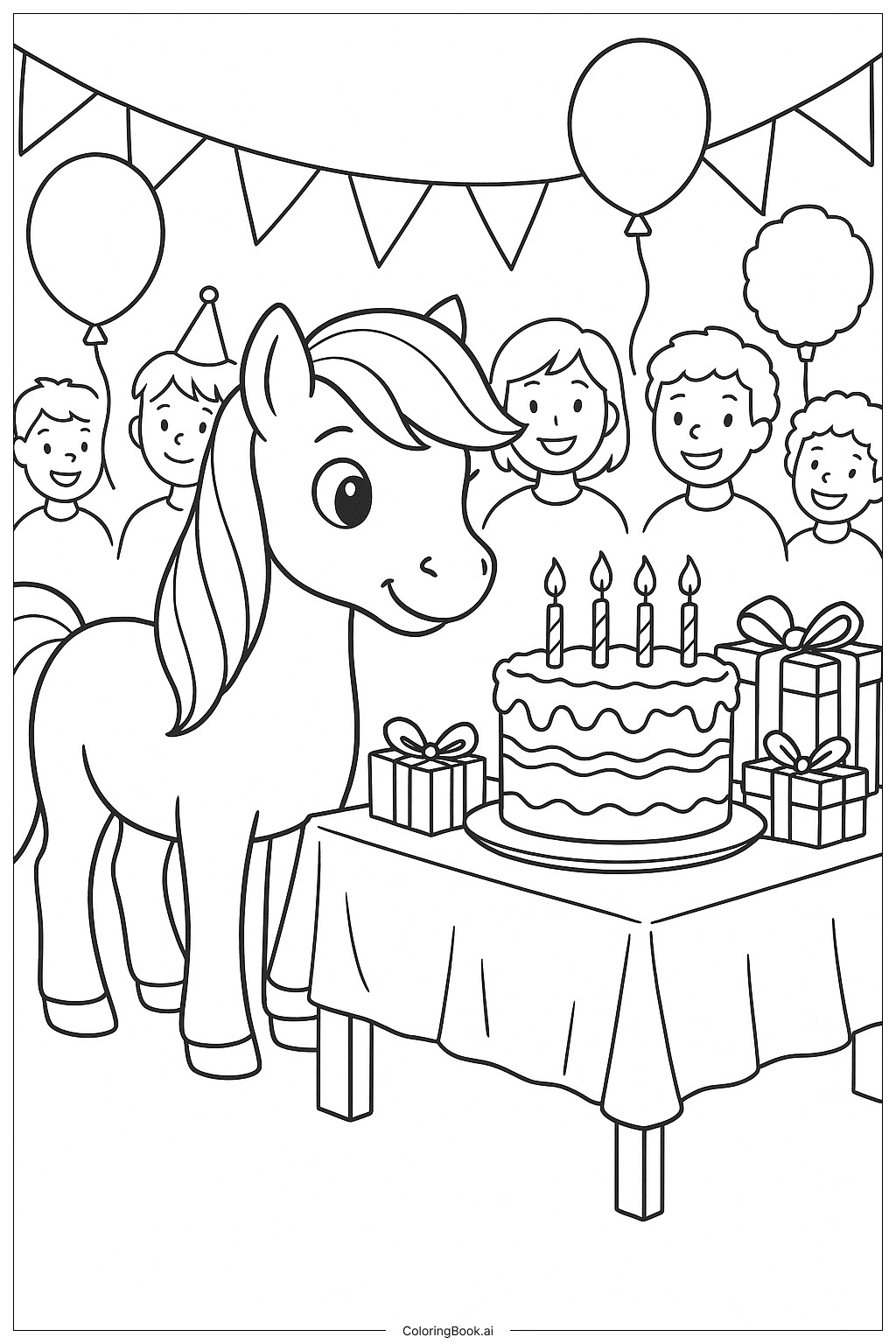
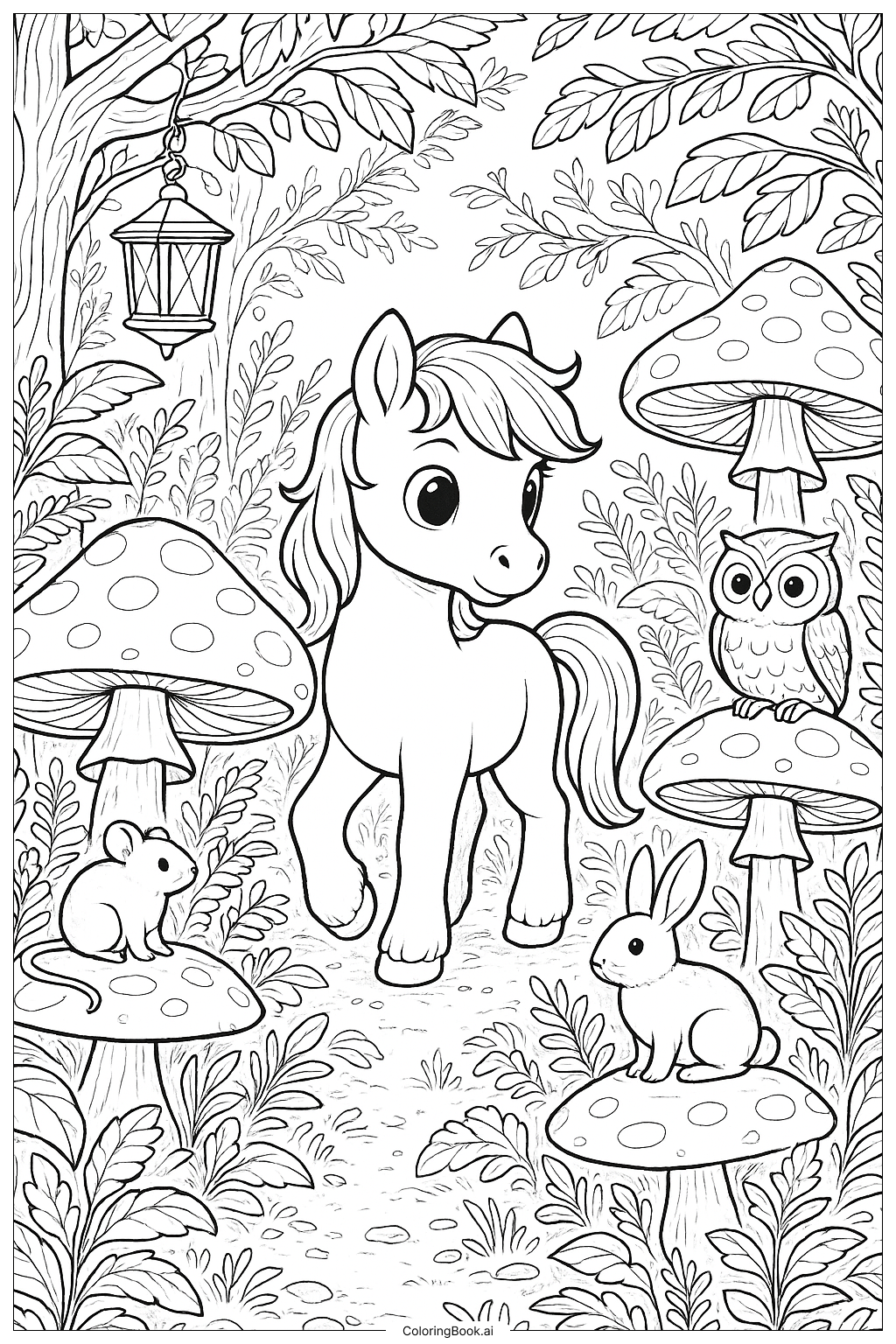
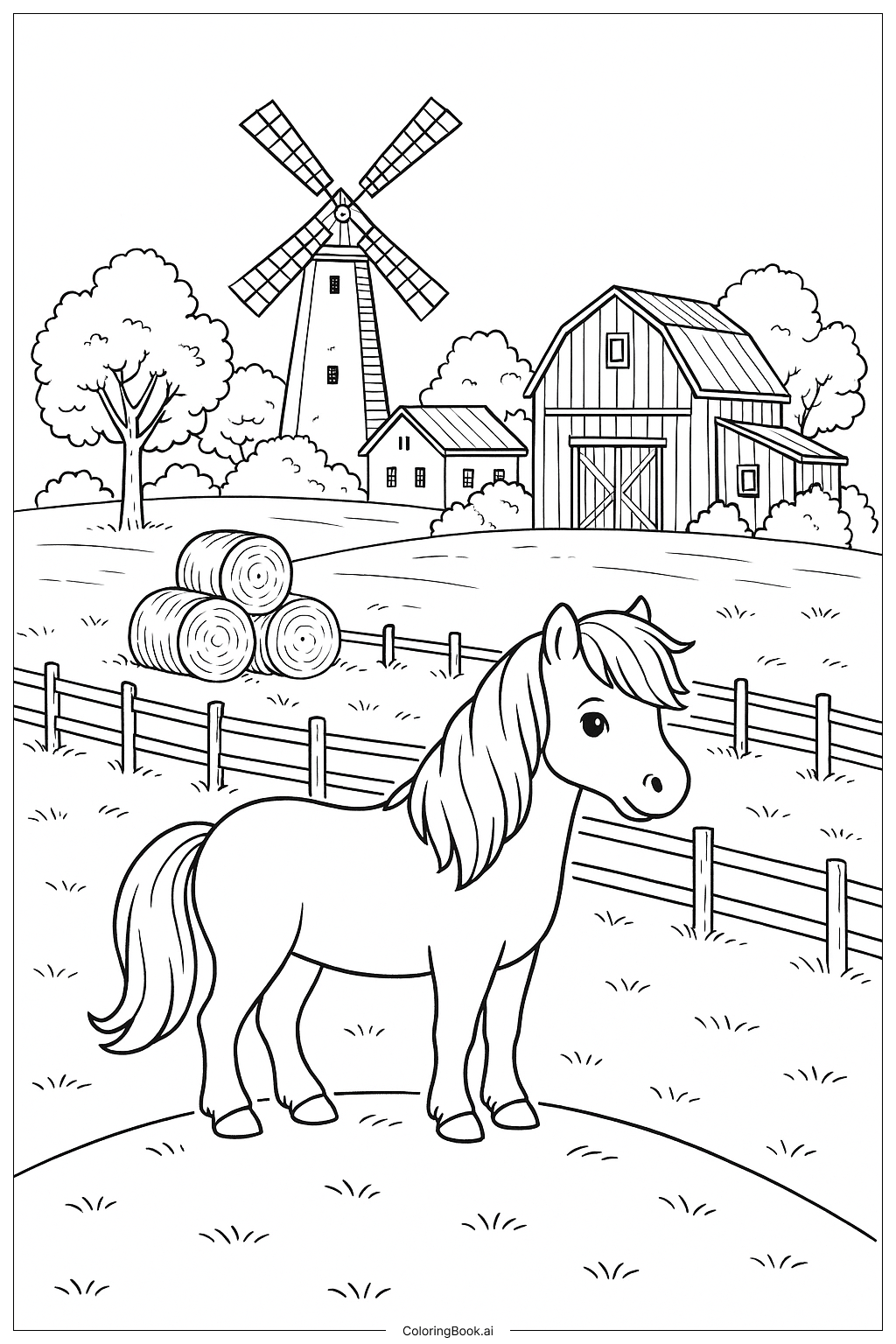
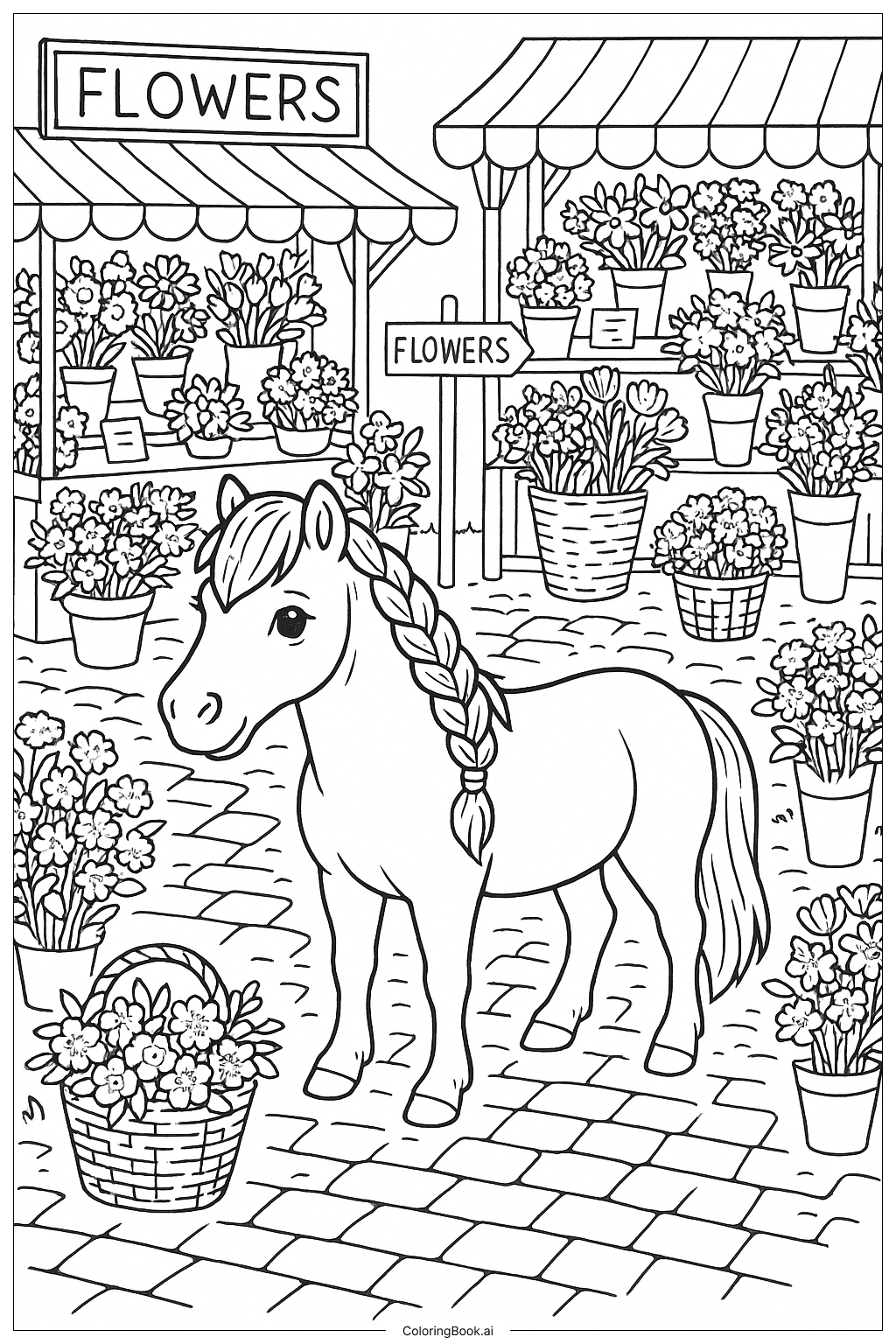
Coloring tips: How to color Pony Standing Pose coloring page well?
For this adorable pony, consider using soft, natural colors like chestnut brown, golden tan, or creamy white for the body. The mane and tail offer wonderful opportunities for creativity - try rainbow colors, pastel shades, or even magical unicorn-inspired hues like purple, pink, and blue blended together. For a realistic look, use browns, blacks, or blonde tones. The hooves can be colored in darker shades like black or dark gray. Don't forget to add rosy pink to the inner ears and perhaps some gentle shading on the cheeks for extra cuteness. Consider adding highlights to the mane and tail with lighter shades or white to create dimension and shine. You might even add small details like spots or patches to make your pony unique and special.
Coloring challenges: Which parts are difficult to color and need attention for Pony Standing Pose coloring page?
• Mane and Tail Flow: The flowing strands of the mane and tail present a moderate challenge, requiring careful attention to stay within the curved lines. Young colorists may find it tricky to color each section of flowing hair without crossing boundaries. Using the same color throughout or creating an ombre effect with multiple shades requires patience and steady hand control. Consider coloring in the direction of the hair flow for a more natural appearance.
• Leg and Body Proportions: The pony's four legs and rounded body have distinct sections that need consistent coloring to maintain a cohesive look. Keeping the color even across larger areas like the body can be challenging for younger children, as it requires sustained pressure and coverage. Switching between body and legs without smudging requires careful planning of which sections to complete first.
• Facial Features: The eyes, nose, and mouth are smaller details that demand precision and fine motor control. Coloring within these tiny spaces without going outside the lines can be difficult, especially for children still developing their hand-eye coordination. The eyes particularly benefit from multiple colors to show depth and expression.
• Creating Depth and Dimension: While not required, adding shading to show the pony's rounded form elevates the finished artwork. Identifying where shadows naturally fall under the belly, legs, and neck requires spatial understanding. Blending darker and lighter shades smoothly takes practice and color theory knowledge that may challenge beginners.
Benefits of coloring books: Advantages of drawing Pony Standing Pose coloring page
Coloring this pony helps children develop essential fine motor skills and hand-eye coordination through careful line work and detailed coloring. The various sections - from large body areas to intricate mane details - offer practice with both broad strokes and precision coloring. This activity encourages color recognition and creative decision-making as children choose their preferred palette. The friendly pony design promotes positive emotions and can be calming, helping with focus and concentration. Working on the flowing mane and tail supports patience and persistence as young artists complete more challenging sections. This coloring page also sparks imagination about horses, ponies, and animals, potentially connecting to stories, farm life, or fantasy themes. Successfully completing the page builds confidence and provides a sense of accomplishment that encourages further artistic exploration.