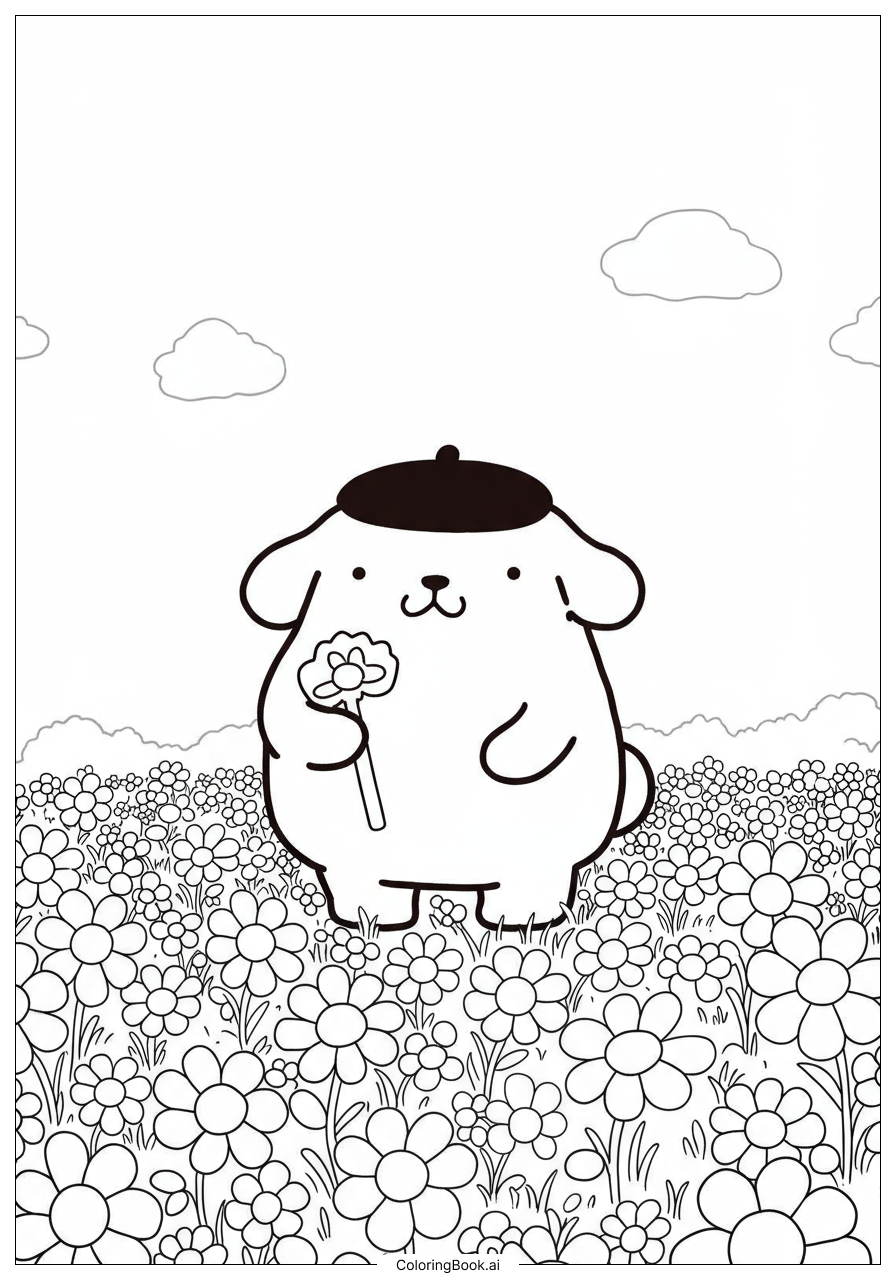
Coloring tips: How to color Pompompurin In Flower Field coloring page well?
Start with Pompompurin himself. Color his body a warm golden yellow, and use a light brown or tan shade for his beret. His ears can be a slightly deeper golden tone to add dimension. Keep his face features simple — tiny dark dots for eyes and a small pink blush on his cheeks.
For the flowers, have fun mixing bright colors. Use red, pink, purple, and orange for the tulips and daisies. Color the sunflowers in bold yellow with dark brown centers. Add green in varying shades for the stems and leaves to give the field a lush, layered feel.
Paint the butterflies in cheerful colors like sky blue, soft purple, or bright orange. Give the bees yellow and black stripes. For the background, use a light blue for the sky and soft white for the clouds. A gentle gradient of light green along the ground helps the scene feel grounded and alive. Feel free to add your own creative colors — this is your world to build!
Coloring challenges: Which parts are difficult to color and need attention for Pompompurin In Flower Field coloring page?
• Pompompurin's Round Body Shape: Pompompurin has a very smooth, rounded form with almost no sharp edges. Coloring within these soft curves without going outside the lines can be tricky, especially for younger children. Using a fine-tipped marker or a sharpened colored pencil will help you stay neat around the edges of his body and face.
• Overlapping Flowers and Stems: The flower field is packed with blooms layered on top of each other. It can be hard to tell where one flower ends and another begins. Take your time identifying each flower shape before applying color. Using contrasting colors for neighboring flowers makes each one stand out clearly.
• Small Facial Details: Pompompurin's face has very small features — tiny eyes, a little nose, and subtle blush marks. These details require a steady hand and a very fine coloring tool. Rushing through this area can result in smudges or colors bleeding into each other.
• Varied Flower Types: The scene includes multiple types of flowers, such as daisies, tulips, and sunflowers. Each flower type has its own petal shape and structure. Keeping each type visually distinct by using different color families — warm tones for sunflowers, cool tones for daisies — helps the variety of the field come through clearly.
• Background Depth and Sky: Creating a sense of distance between the foreground flowers and the background sky requires careful color choices. Lighter, cooler tones in the background and richer, warmer tones up front help give the scene a natural feeling of depth without it looking flat.
Benefits of coloring books: Advantages of drawing Pompompurin In Flower Field coloring page
Coloring Pompompurin In Flower Field offers a wide range of benefits for kids and beginners alike.
First, it helps improve fine motor skills. Carefully coloring within the lines of Pompompurin's rounded body and the small flower petals trains hand control and pencil grip in a fun, stress-free way.
Second, it encourages creativity. Choosing colors for the flowers, sky, and butterflies lets kids make their own artistic decisions. There is no single right answer, which builds confidence and creative thinking.
Third, it introduces color theory in a natural way. Deciding which flower colors look good together or how to show shadows on Pompompurin's body teaches kids about warm and cool tones, contrast, and shading without it feeling like a lesson.
Fourth, it supports focus and patience. A detailed scene like this one takes time to complete. Sitting with the page and working through each section builds attention span and a sense of accomplishment when finished.
Finally, it is simply relaxing and joyful. Pompompurin's peaceful expression and the cheerful flower field create a calming atmosphere. Spending time with this page is a wonderful way for children to unwind, express themselves, and enjoy a quiet, creative moment.