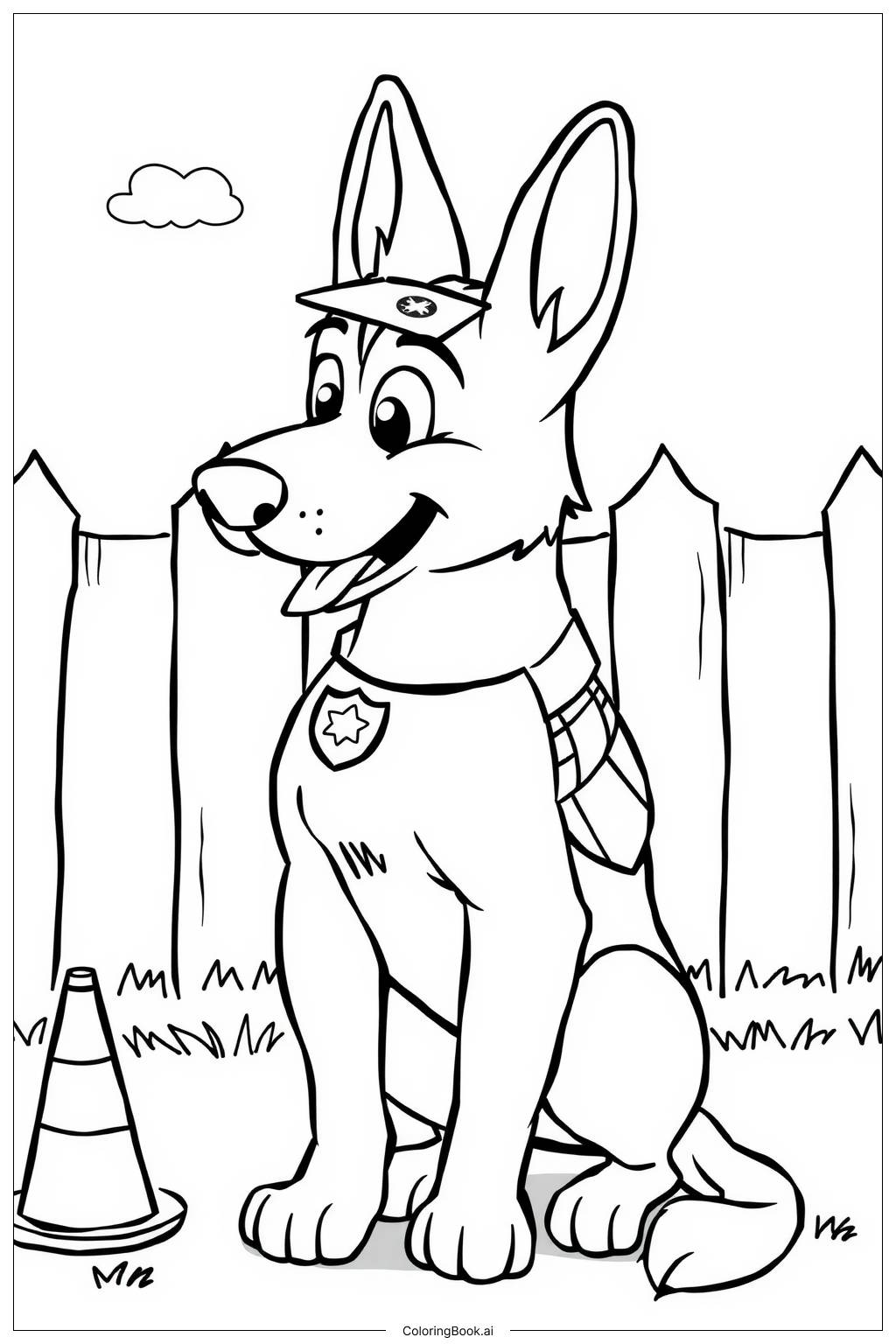
Coloring tips: How to color Police Dog German Shepherd in Action coloring page well?
Start with the German Shepherd's classic coat. Use a mix of tan, golden brown, and sandy beige for the body, with deep black or dark brown for the saddle markings along the back. The face has a dark muzzle blending into lighter tan cheeks. Use cream or white for the chest and inner legs. Color the police vest or harness in dark navy blue or black, adding silver or gold accents for patches and buckles. The leash can be bright orange or red to stand out. Color the eyes amber or golden brown for a realistic, alert look. Use light grey or green shading for the background to make the dog pop. Take your time blending the fur areas for a soft, natural texture.
Coloring challenges: Which parts are difficult to color and need attention for Police Dog German Shepherd in Action coloring page?
• Fur Texture and Layering: The German Shepherd's coat has multiple layers of color that blend from dark to light. Capturing the natural gradient from the black saddle to the tan sides requires careful layering and blending. Using colored pencils or watercolors in short, overlapping strokes will help mimic real fur without making the coat look flat or patchy.
• Facial Detail and Expression: The dog's face holds the most emotional detail, including the alert eyes, dark muzzle, and expressive ears. Coloring the face accurately means working with small, precise areas. Getting the amber eyes to look realistic while keeping the dark nose and muzzle clean takes a steady hand and patience.
• Police Vest and Harness Equipment: The K-9 vest has multiple panels, straps, buckles, and possibly badge patches. Each element needs a different shade or finish. Dark navy fabric, metallic silver hardware, and embroidered patches all sit close together, making it easy to blur boundaries. Using a fine-tipped tool helps separate these elements clearly.
• Dynamic Pose and Muscle Definition: Because the dog is shown in motion, the body has visible muscle tension and a sense of movement. Shading the muscles of the legs, shoulders, and haunches adds depth and realism. Without shading, the figure may look stiff or two-dimensional.
• Background Balance: The background should support the dog without overpowering it. Too much color in the background can distract from the focal point. Choosing soft, muted tones and applying light gradients will frame the action scene without competing with the detailed foreground.
Benefits of coloring books: Advantages of drawing Police Dog German Shepherd in Action coloring page
Coloring this Police Dog German Shepherd in Action page offers a wonderful mix of fun and learning. Kids get to explore how working dogs help keep communities safe, building early awareness of public service roles. The detailed coat of the German Shepherd introduces young colorists to color mixing and blending as they work through tan, brown, and black tones. This strengthens fine motor skills and hand-eye coordination with every careful stroke. Focusing on a complex image like this also builds patience and concentration, skills that carry over into school and daily life. Older kids and teens can challenge themselves with realistic shading and texture work, developing artistic confidence. For Adults, this page offers a calming, screen-free activity that encourages mindfulness. The sense of accomplishment after completing a detailed scene like this boosts mood and self-esteem for colorists of all ages. It is also a great conversation starter about animal training, law enforcement, and the bond between dogs and their handlers.