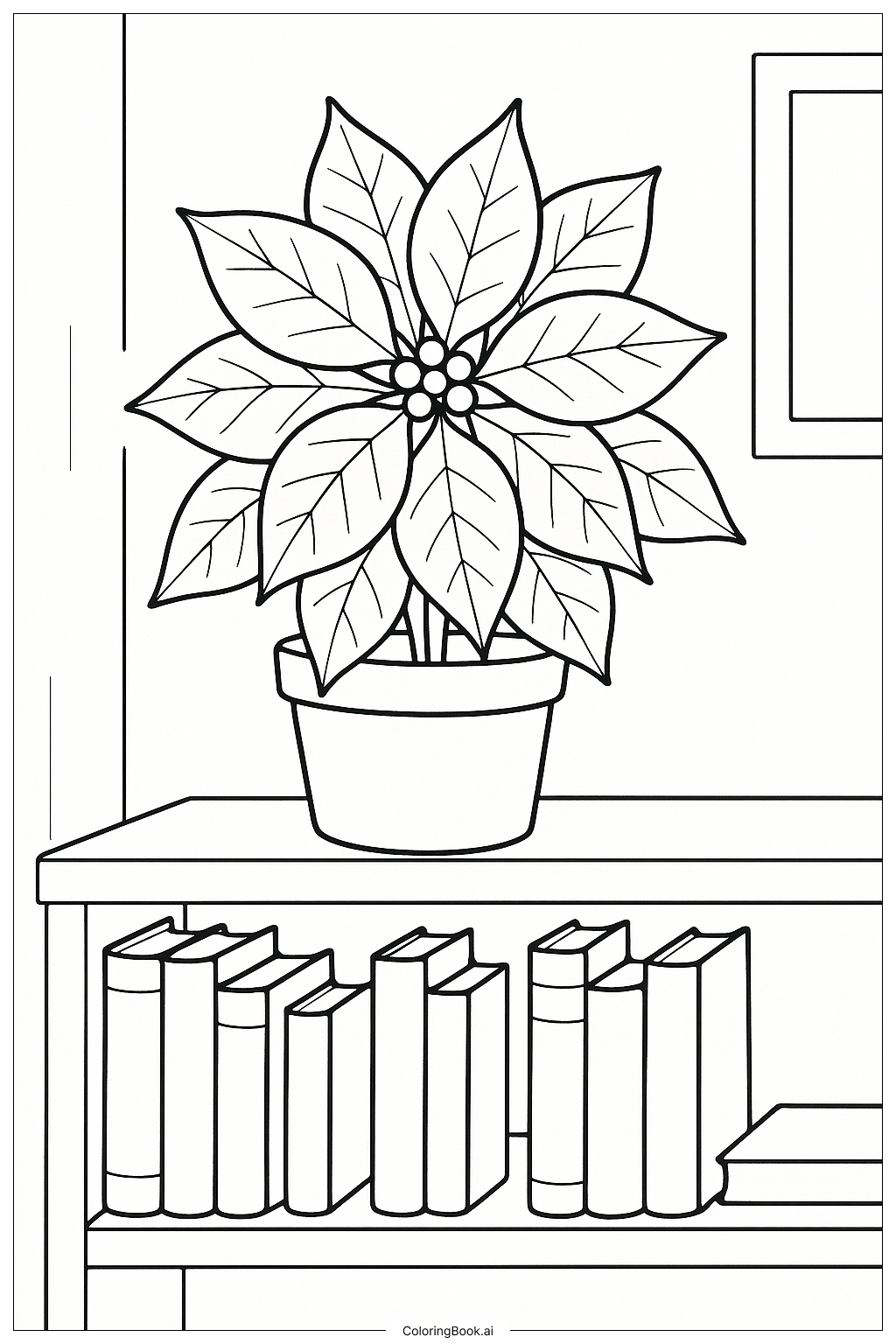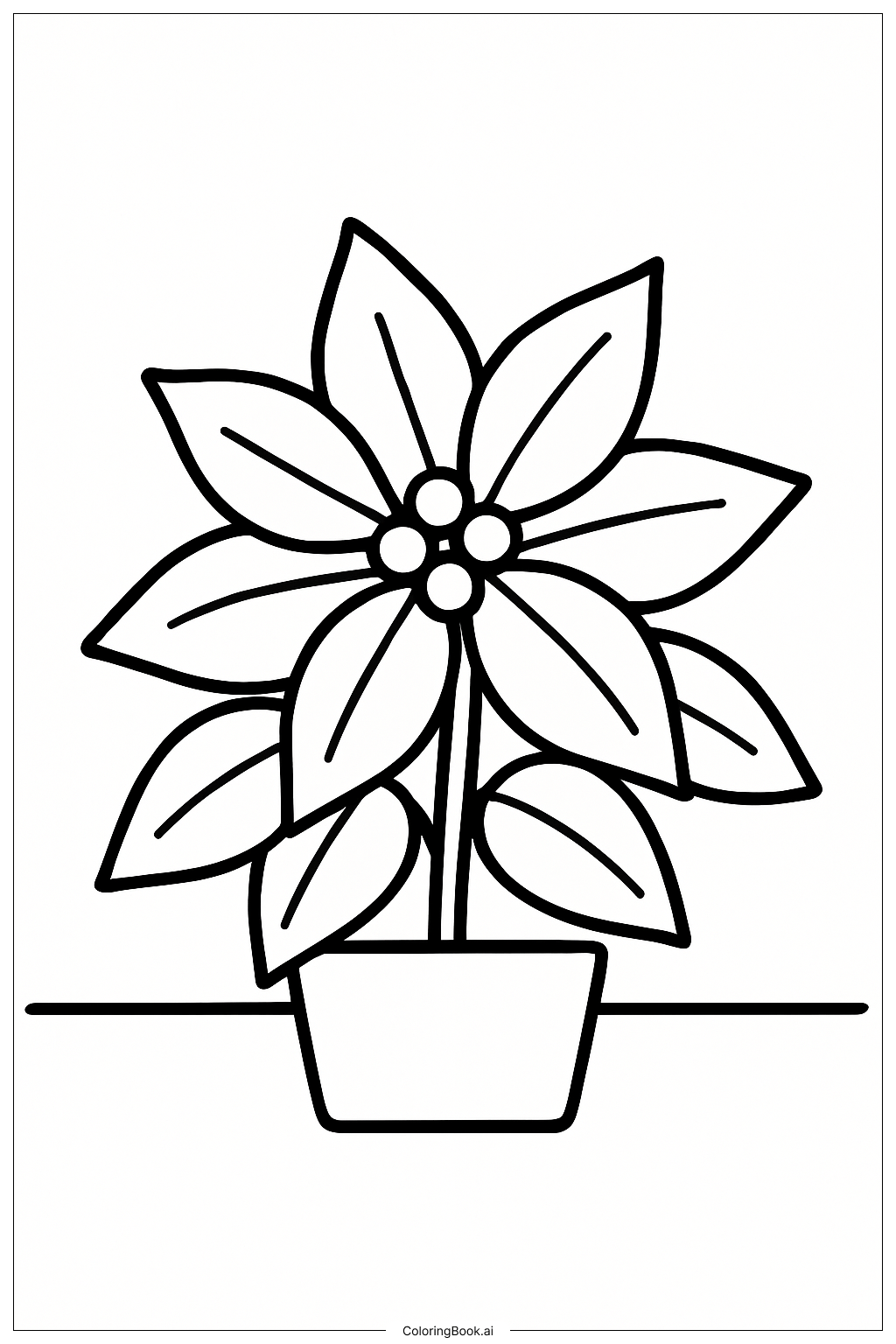
Coloring tips: How to color Small Poinsettia On A Table coloring page well?
Use bright red or deep pink colors for the large leaves near the center to represent the poinsettia's famous colored bracts. Color the smaller leaves in shades of green to show the natural foliage. The round flowers in the middle can be colored yellow or light green to stand out. For the pot, use earthy tones like brown, orange, or terracotta to keep it natural. The table can be colored in neutral tones like beige or light brown to ensure the plant is the main focus. Try blending different shades of red and green to add depth and make the plant look lively. Use gentle strokes inside the leaves to follow the veins to make it interesting.
Coloring challenges: Which parts are difficult to color and need attention for Small Poinsettia On A Table coloring page?
1. Distinguishing between the poinsettia’s red bracts and green leaves can be tricky since they are close together. Careful coloring along the lines is needed.
2. Coloring the small round flowers in the center can be a challenge because of their small size and the need to make them stand out.
3. The veins on each leaf are thin lines that require careful coloring without overlapping.
4. Keeping the coloring of the pot and table simple but realistic might be difficult to balance without overpowering the plant.
5. Blending colors to make the leaves look natural and vibrant takes patience and practice.
Benefits of coloring books: Advantages of drawing Small Poinsettia On A Table coloring page
Coloring this poinsettia image helps children learn about plants and their parts, including flowers and leaves. It improves hand-eye coordination as they stay within the lines of the leaves and petals. They also practice focusing on small details, such as the veins and small flowers. Using different colors encourages creativity and helps children understand color blending. Finally, it provides a relaxing and enjoyable activity, promoting calmness and concentration.