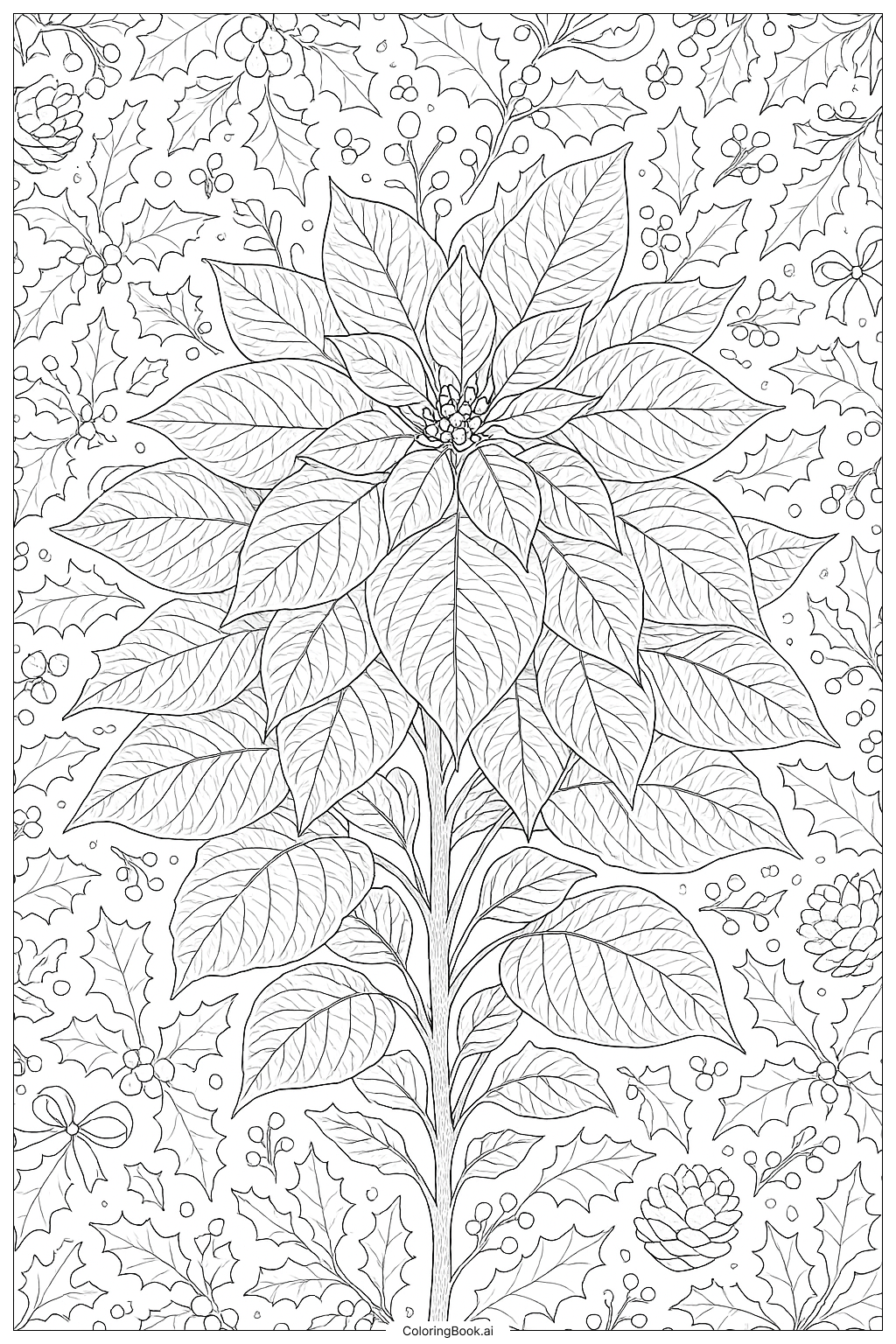
Coloring tips: How to color Poinsettia Plant With Delicate Veins coloring page well?
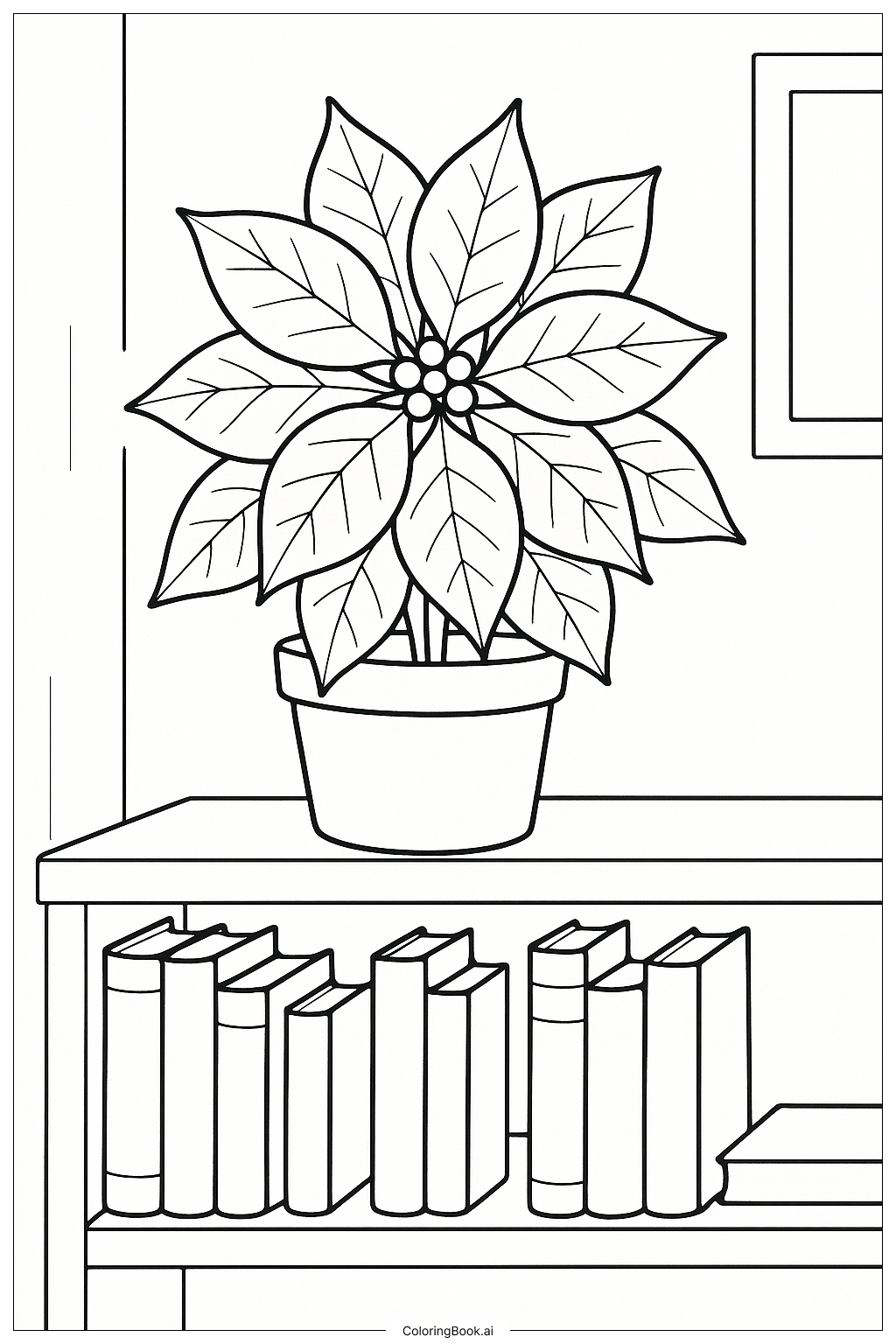
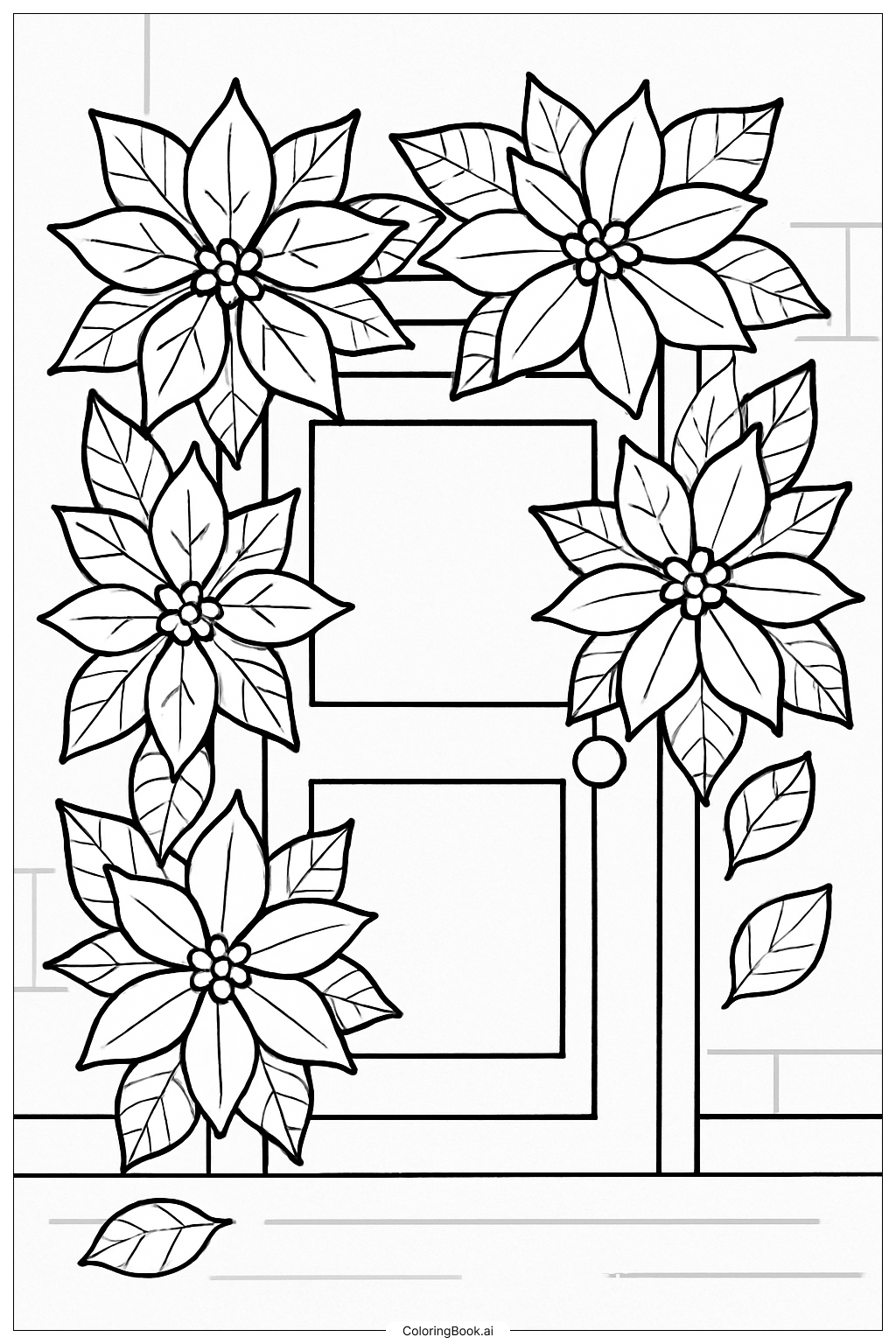
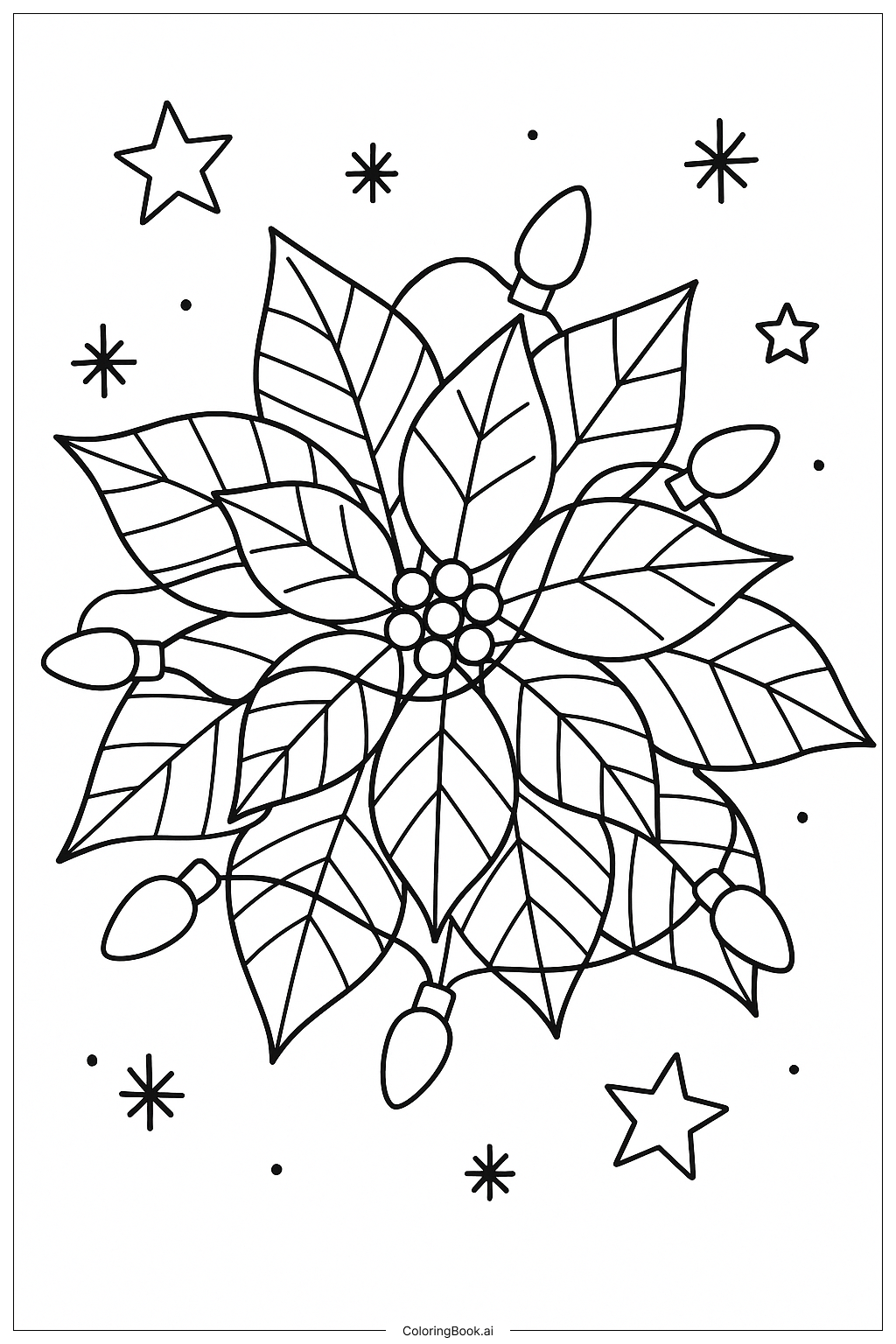
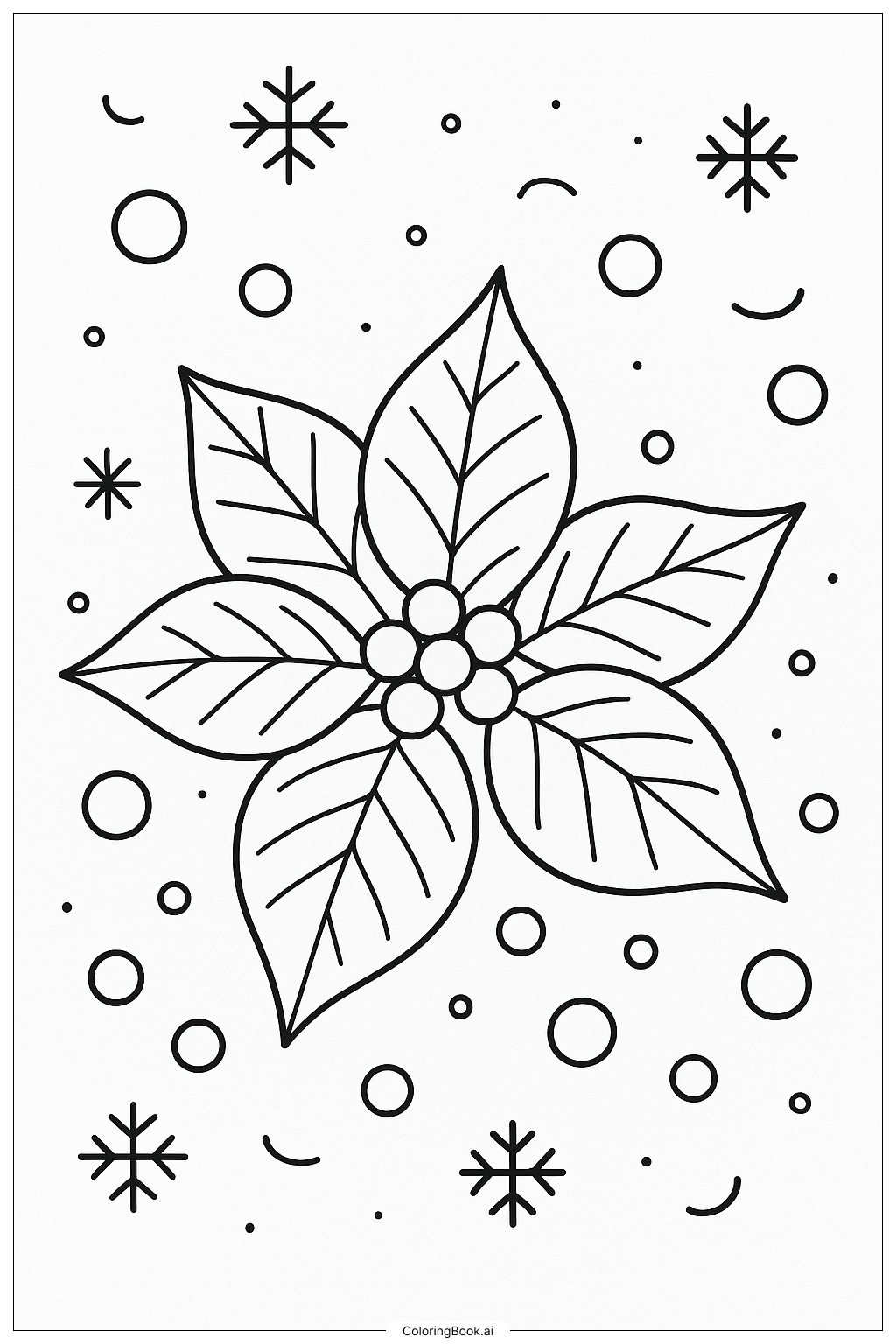
For coloring this Poinsettia, start with deep red shades for the bracts to reflect the plant’s classic look. Use different reds and even some pinks or oranges to add depth. The veins can be colored in lighter pinks or pale reds to create contrast and emphasize their delicacy. For the leaves, try using rich greens such as forest or emerald green. You can shade the veins in a lighter green or yellow-green to show their fine structure. The tiny central flowers may be left yellow or colored with soft creams and whites. Feel free to experiment with soft gradients and blending to highlight the natural beauty of the plant’s veins. This approach helps bring out the elegance of the Poinsettia with a lively yet gentle color palette.
Coloring challenges: Which parts are difficult to color and need attention for Poinsettia Plant With Delicate Veins coloring page?
• Fine Vein Details: The delicate veins on the leaves are thin and intricate, which can be hard to color neatly without going outside the lines.
• Layering Colors: The Poinsettia bracts have areas that need shading and blending, requiring careful layering of colors to create realistic depth.
• Small Central Flowers: The tiny flowers in the middle are small and detailed, posing a challenge for precise coloring.
• Vein Contrast: Choosing the right colors to make the veins stand out without overpowering the leaves demands good color balancing skills.
• Consistent Texture: Maintaining a smooth and consistent texture across both leaves and petals while keeping the veins visible can be tricky, especially for younger colorers.
Benefits of coloring books: Advantages of drawing Poinsettia Plant With Delicate Veins coloring page
Coloring this Poinsettia Plant With Delicate Veins encourages focus and fine motor skills as you carefully fill in the detailed vein patterns. It helps improve attention to small details and precision. Working with shading and blending in the leaves supports creativity and teaches color mixing concepts. The plant’s natural form promotes appreciation for botanical beauty and nature. This image is calming and engaging, making it suitable for stress relief and mindfulness. It also allows children and adults alike to practice patience and build confidence as they bring the delicate veins and textures to life with color.