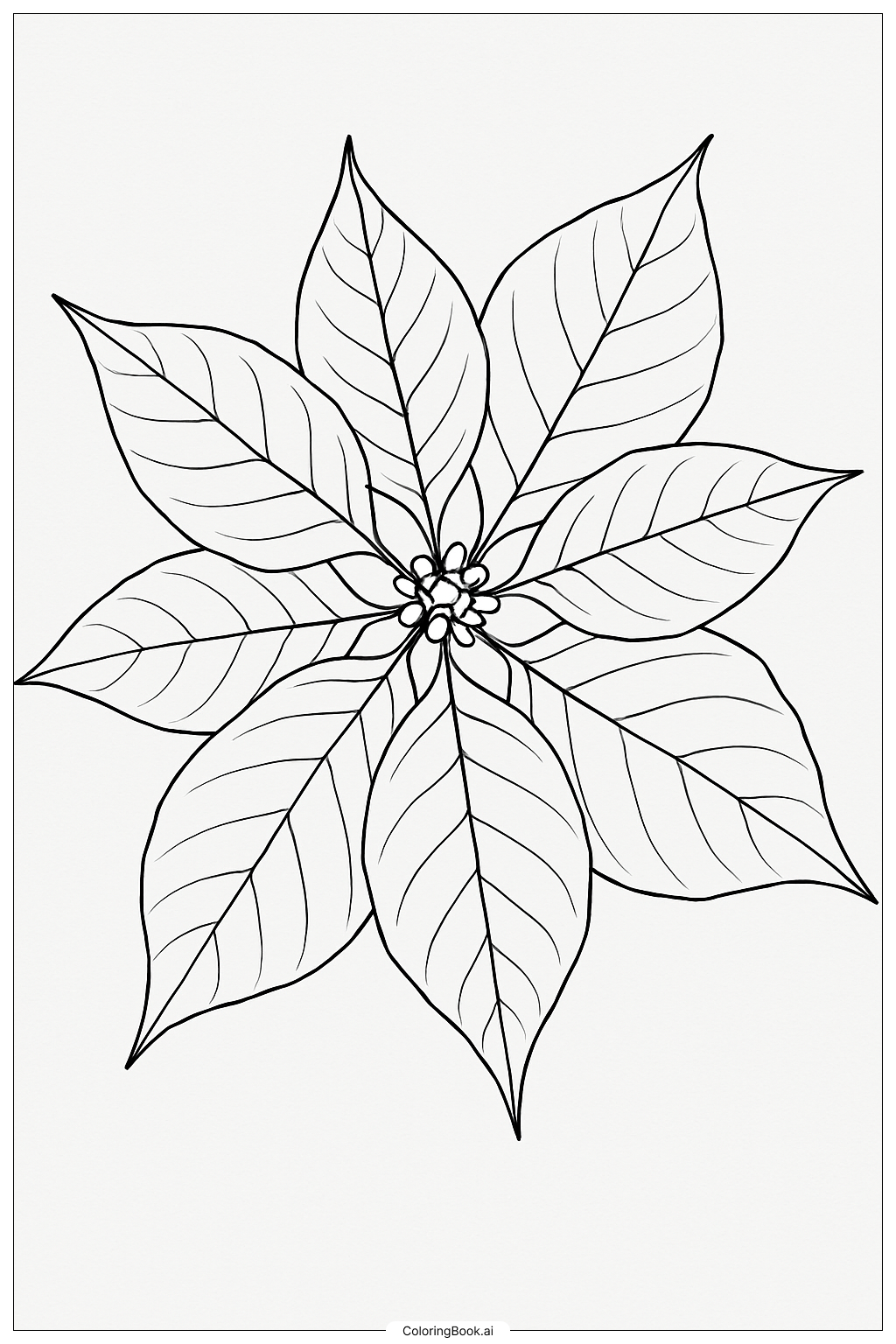
Coloring tips: How to color Large Poinsettia Leaves Outline coloring page well?
Traditional poinsettias are known for their vibrant red leaves, so start with various shades of red, from deep crimson to bright scarlet. You can add dimension by using darker reds in the shadowed areas where leaves overlap and lighter reds or pinks on the tips. For a more creative approach, try burgundy, pink, white, or even cream-colored poinsettias, which exist in nature. The central veins can be colored in a slightly lighter or darker shade than the leaf itself to make them stand out. Consider using green for some of the lower leaves to show the natural foliage beneath the colorful bracts. For added realism, blend colors gently where leaves overlap to create shadows. You might also experiment with non-traditional colors like purple, blue, or even rainbow effects for a whimsical, artistic interpretation.
Coloring challenges: Which parts are difficult to color and need attention for Large Poinsettia Leaves Outline coloring page?
• Leaf Overlap Management: The overlapping leaves create multiple layers that require careful color planning to maintain visual depth. You need to decide which leaves are in front and which are behind, then color them with appropriate shading to show this dimension. The intersections where leaves meet can be tricky, as you must keep track of which leaf continues where and avoid accidentally coloring one leaf with another's color.
• Vein Detail Precision: Each leaf contains a prominent central vein with smaller branching veins that require steady hand control and precision coloring. These thin lines can be challenging to color without going outside the boundaries. You might choose to color them differently from the leaf surface, which requires extra care and attention to detail, especially for younger children or those new to coloring.
• Consistent Color Blending: To achieve a realistic look, you may want to blend multiple shades on each leaf to show light sources and create dimension. This requires understanding color gradients and having the patience to layer colors smoothly. The large surface area of each leaf means there is plenty of space to fill, which can be time-consuming and requires maintaining consistent pressure and coloring technique throughout.
• Distinguishing Individual Leaves: With so many leaves radiating from the center, it can become confusing to keep each leaf visually distinct while maintaining a cohesive overall design. Deciding on a color scheme that allows each leaf to stand out without creating a chaotic appearance requires planning before you begin coloring.
Benefits of coloring books: Advantages of drawing Large Poinsettia Leaves Outline coloring page
Coloring this poinsettia design helps develop fine motor skills and hand-eye coordination through the precise work required for the leaf veins and edges. The repetitive nature of coloring multiple similar leaves promotes relaxation and mindfulness, making it an excellent stress-relief activity. Children can learn about plant anatomy by observing the vein structures and how leaves grow in patterns. This design encourages color theory exploration, as you can experiment with complementary colors and shading techniques to create depth. The botanical subject matter connects young artists with nature and can spark interest in gardening and plant science. For older children and adults, the complexity offers an engaging challenge that builds patience and concentration. Completing this detailed image provides a sense of accomplishment and can boost confidence in artistic abilities. The seasonal connection to poinsettias makes this a meaningful activity during holiday times, creating decorative artwork suitable for display.