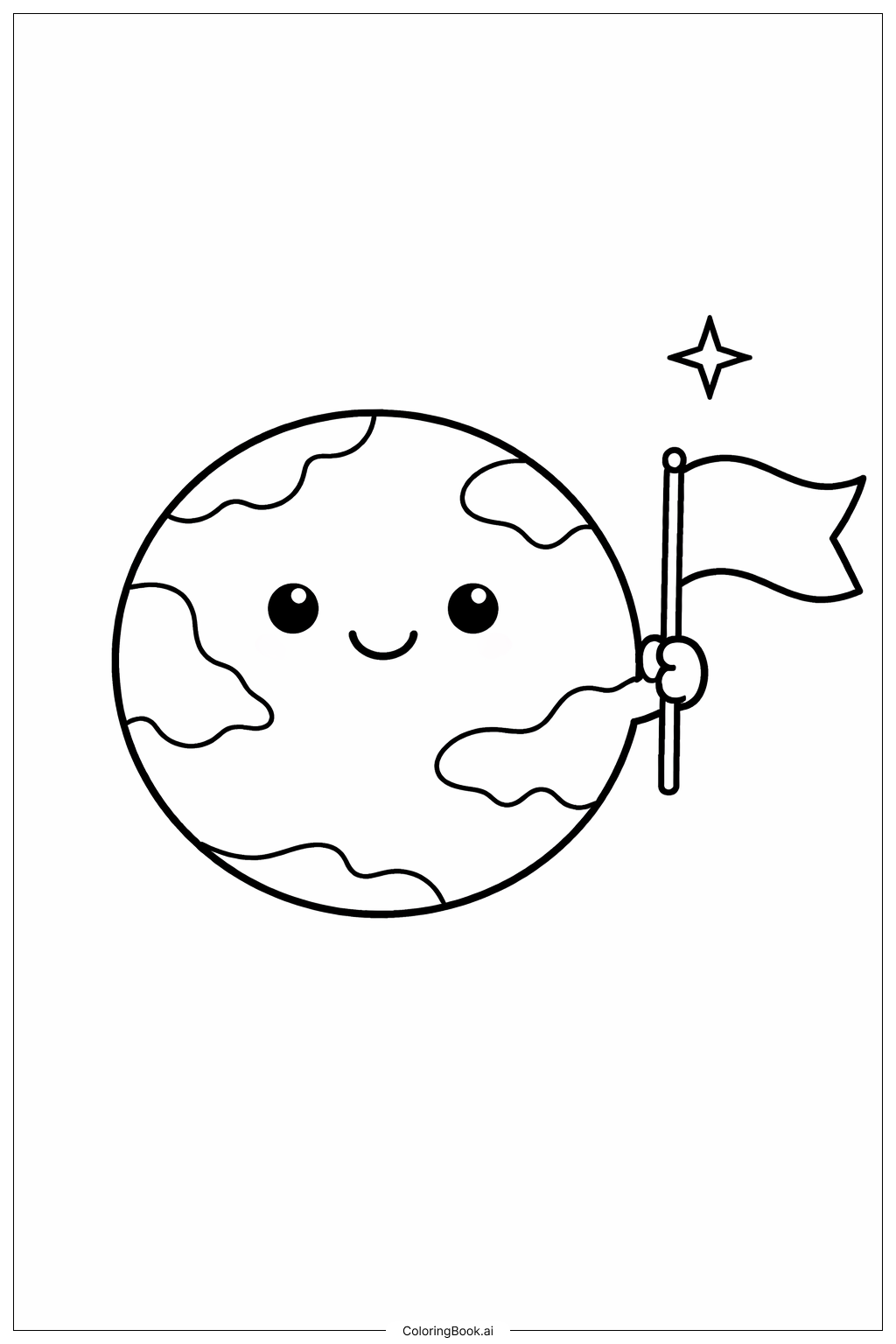
Coloring tips: How to color Waving Planet Friend coloring page well?
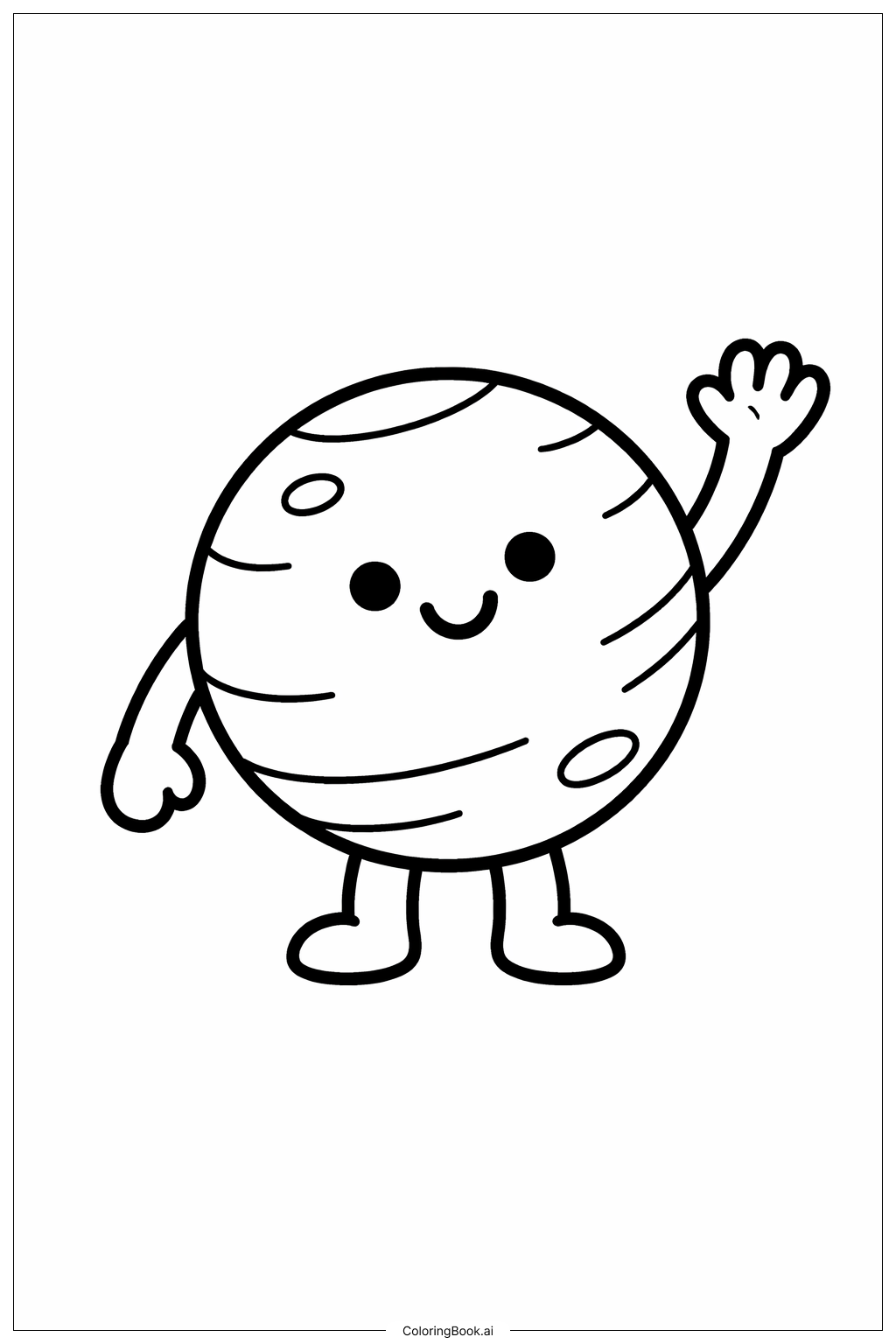
Use bright and fun colors to make the planet look cheerful and friendly. You can color the planet body in shades of blue, green, or brown to represent Earth-like colors or get creative with purples, reds, or yellows for a more imaginary look. Color the eyes black or dark brown to make them stand out, and use pink or red for the smiling mouth. The arms and legs can be colored in a lighter or darker shade than the body, or in a completely different color to add contrast. Don’t forget to color the round marks and lines on the planet to add depth and interest. Feel free to use crayons, markers, or colored pencils to create fun textures!
Coloring challenges: Which parts are difficult to color and need attention for Waving Planet Friend coloring page?
1. Keeping the round shape smooth while coloring without going outside the lines can be tricky for young children.
2. The thin lines that form the details of the planet, like craters and surface marks, require careful coloring to avoid mixing colors.
3. Coloring the waving hand needs precision, especially around the fingers, since they are close together.
4. Picking the best colors to show the planet’s features clearly can be difficult because some areas are small or close together.
5. Balancing bright and subtle colors to keep the friendly and cheerful look without making it too crowded might be challenging for kids.
Benefits of coloring books: Advantages of drawing Waving Planet Friend coloring page
Coloring this friendly planet picture helps kids improve fine motor skills by practicing careful coloring inside the lines. It encourages creativity as they select different colors for the planet and its details. The simple design allows children to feel confident about their coloring and enjoy the process. It also promotes focus and patience while working on smaller details. Finally, coloring a happy planet friend can make learning about space fun and spark an interest in astronomy.