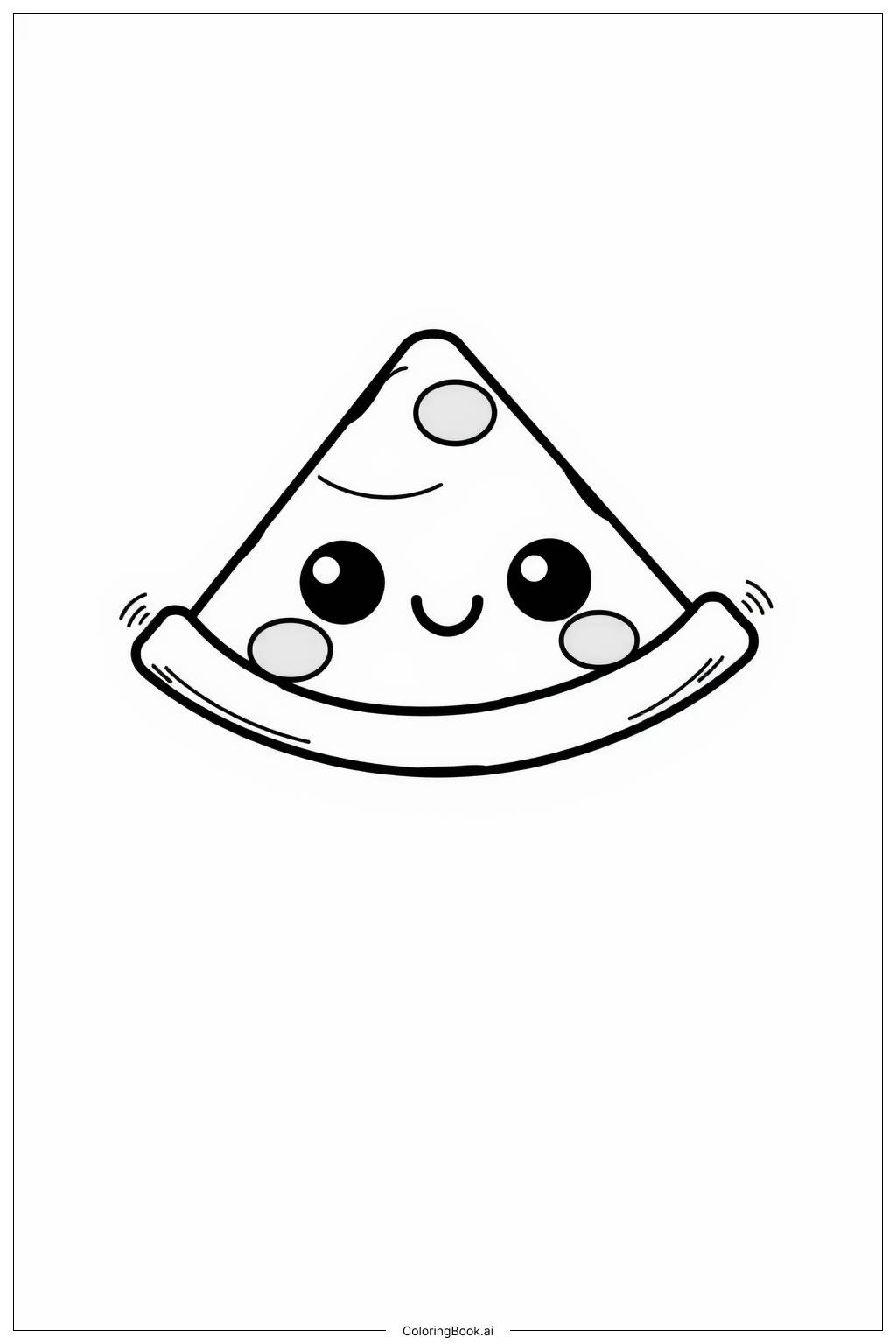
Coloring tips: How to color Kawaii Pizza Slice with a Face coloring page well?
Use warm yellows and golds for the melted cheese to make it look gooey and delicious. Color the pepperoni slices in a bright red or reddish-brown to give them a realistic look. The crust can be shaded with light browns or tans to show its baked texture. For the face, keep the eyes shiny with white highlights and use soft pink or peach tones for the cheeks to add extra cuteness. Encourage blending colors gently to create a smooth effect on the cheese and crust areas. Bright, cheerful colors will make this kawaii pizza slice very inviting.
Coloring challenges: Which parts are difficult to color and need attention for Kawaii Pizza Slice with a Face coloring page?
• Small Facial Features: The eyes, mouth, and cheeks are tiny but important for expression, so coloring within these areas without smudging can be tricky. • Cheese Texture: Capturing the melted cheese with its drippy edges requires careful shading to look gooey rather than flat. It takes patience to blend yellows and whites well. • Pepperoni Details: The pepperoni circles need consistent coloring to avoid patchiness, especially inside the small circles that represent their texture. • Crust Edges: The curved crust has subtle shadows and shapes that need different brown tones to make it look baked and three-dimensional. Using too dark or light colors can flatten it. • Line Borders: Staying inside the neat line art without crossing over is important to keep the image clean, which might challenge younger artists especially around the face and toppings.
Benefits of coloring books: Advantages of drawing Kawaii Pizza Slice with a Face coloring page
Coloring this Kawaii Pizza Slice with a Face helps children develop fine motor skills by practicing precise coloring in small areas like the eyes and pepperoni. It encourages creativity through choosing warm, inviting colors that make the food character come alive. The friendly, expressive face promotes emotional connection and fun, giving kids confidence in their artistic choices. Working with different textures like cheese and crust also teaches kids about blending and shading basics. Above all, coloring this cute pizza slice makes the activity enjoyable, motivating children to focus and improve their art skills.