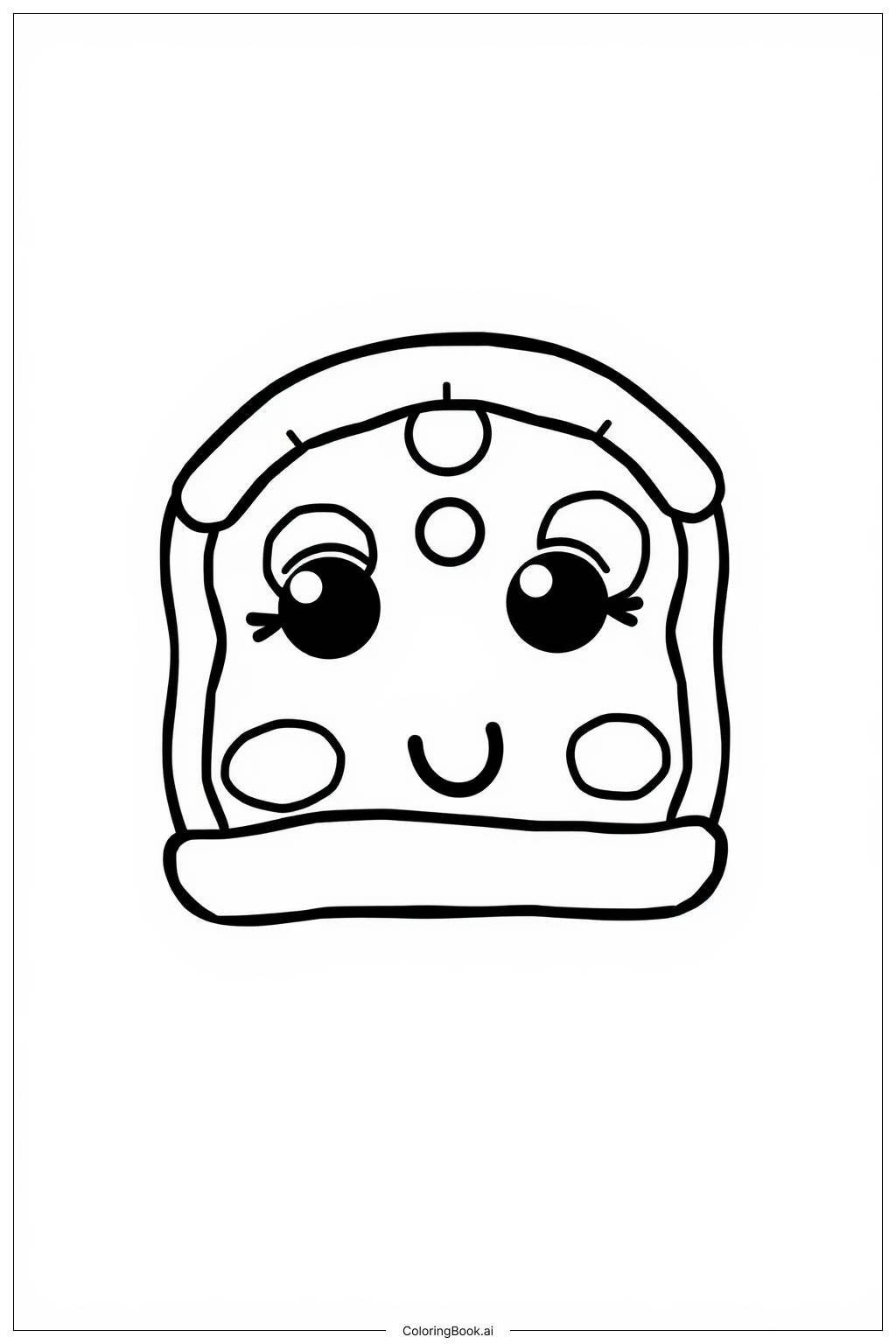
Coloring tips: How to color Kawaii Pizza Slice with a Face coloring page well?
For coloring this cute pizza slice, think about using warm and inviting tones. Color the crust in a light golden brown to show its crunchiness. The melted cheese can be colored creamy yellow or a soft orange to give it a yummy look. Pepperoni slices can be bright red with touches of dark red for depth. For the kawaii face, use gentle colors for the cheeks like soft pink or peach. The eyes can be black or dark brown with white highlights to keep them shiny and lively. Feel free to add a fun background with light pastel colors to make the pizza slice stand out.
Coloring challenges: Which parts are difficult to color and need attention for Kawaii Pizza Slice with a Face coloring page?
• Small Details: The pizza slice has many small elements, such as the pepperoni circles and the tiny spots on the cheese, which require careful coloring to stay inside the lines.
• Facial Features: Coloring the kawaii eyes and cheeks evenly can be tricky because children need to keep the areas neat to keep the friendly expression clear.
• Cheese Drips: The drips of melted cheese have curved edges and vary in width, making it harder to color smoothly without crossing lines.
• Crust Texture: Showing the difference between the crust and cheese areas needs attention to color choice and staying precise to make the crunchy crust look distinct.
• Balancing Bright Colors: Since the pizza slice uses both warm and vibrant colors, it may be challenging to balance the colors so none of them overpower the others, especially on smaller features.
Benefits of coloring books: Advantages of drawing Kawaii Pizza Slice with a Face coloring page
Coloring this kawaii pizza slice helps children practice fine motor skills by focusing on small details like the pepperoni and facial features. It encourages creativity as kids choose warm, inviting colors to make the slice look delicious and cute. The image also supports color recognition by distinguishing different parts like crust, cheese, and toppings. Coloring the happy face promotes emotional connection and can boost mood by making the child feel cheerful while working on a fun project. Finally, this activity can enhance concentration and patience, guiding young artists to complete a well-defined picture successfully.