Coloring tips: How to color Simple Pirate Ship Sailing coloring page well?
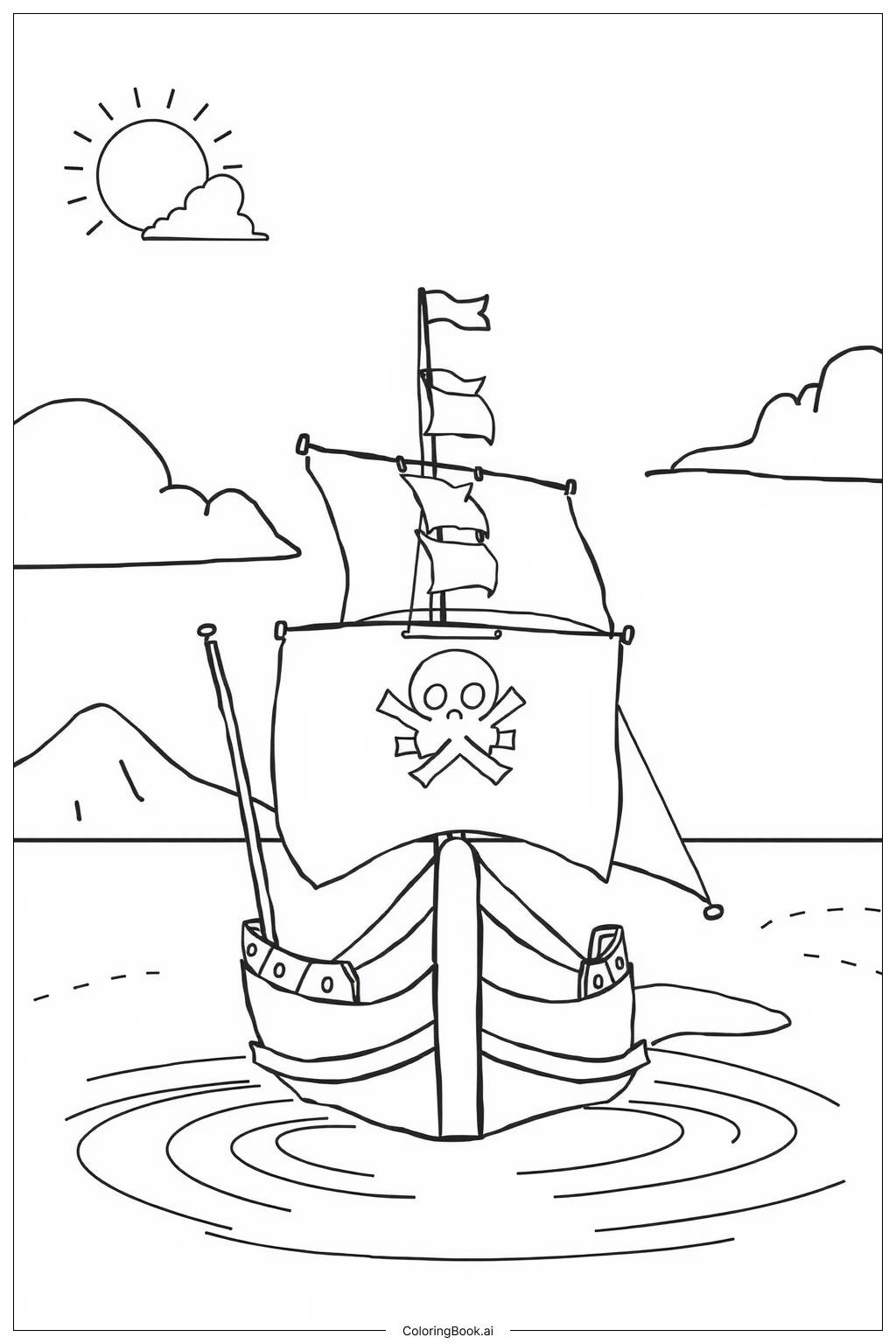
For this Simple Pirate Ship Sailing, try coloring the sail white or light beige to make the skull and crossbones stand out in black. Use shades of brown to color the wooden parts of the ship, mixing lighter and darker browns for a natural look. The pirate flag should be bold black with a bright white skull for sharp contrast. Color the water blue, adding some light blue or even green shades for waves. The sky can be a soft blue or even warm colors if you want to create a sunset scene. Feel free to add bright colors for barrels or ropes to make the picture lively and fun.
Coloring challenges: Which parts are difficult to color and need attention for Simple Pirate Ship Sailing coloring page?
• Sail Design: The skull and crossbones on the sail require careful coloring to keep the details clear and sharp since it is an important pirate symbol.
• Wooden Textures: Creating different shades on the wooden planks can be tricky for beginners who want the ship to look realistic rather than flat.
• Water Waves: Coloring the waves smoothly with different shades of blue and green demands blending skills to make the sea look natural.
• Small Details: Elements like ropes, barrels, and mast lines are thin and may require precise strokes to avoid going outside the lines.
• Contrast Balance: Balancing dark colors like black on the flag with lighter colors nearby is needed to keep the image visually appealing without parts looking too heavy or dull.
Benefits of coloring books: Advantages of drawing Simple Pirate Ship Sailing coloring page
Coloring this Simple Pirate Ship Sailing helps children develop fine motor skills as they color small and detailed parts like the flag and ropes. It encourages creativity by allowing kids to choose colors for the sea, sky, and ship, letting their imagination create different moods such as a sunset or a bright sunny day. Engaging with pirate-themed images also sparks interest in stories and history, making learning fun. Practicing shading and color blending improves attention to detail. Overall, coloring this image combines fun with skill-building and imagination development, suitable for a wide age range from younger kids to teens.