Coloring tips: How to color Pineapple On Plate coloring page well?
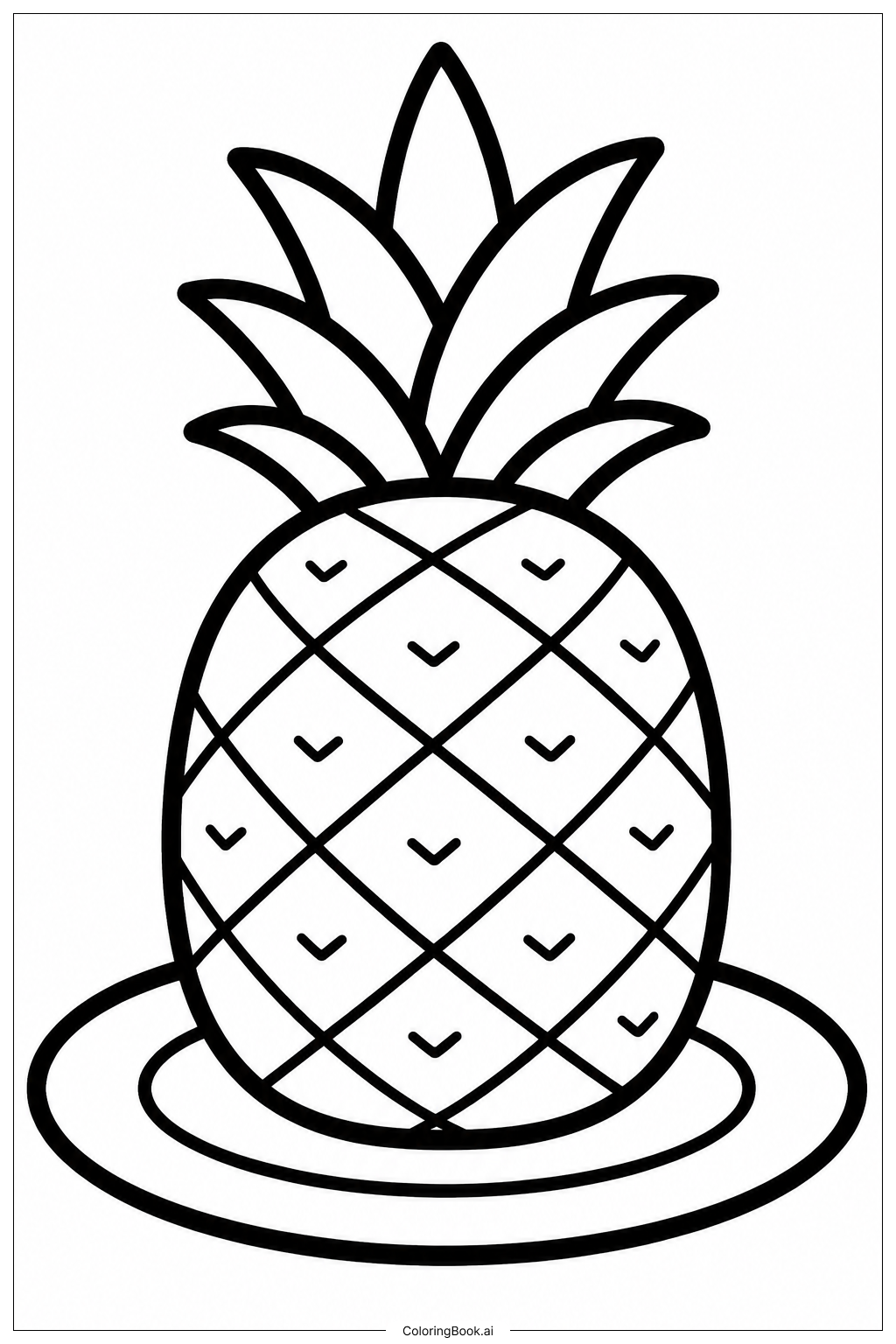
For this Pineapple On Plate, try coloring the pineapple’s rind in warm golden yellow tones with hints of light brown to show the texture. Use bright green shades for the spiky leaves to mimic the fresh crown. The plate can be colored in soft pastel tones like light blue, pale pink, or mint green to make the pineapple stand out. You might add some shadow near the base of the fruit to give it dimension. Feel free to experiment with different greens for the leaves or even add a subtle pattern to the plate for extra creativity. Remember to color lightly at first so you can layer colors for a natural look.
Coloring challenges: Which parts are difficult to color and need attention for Pineapple On Plate coloring page?
• The pineapple’s skin has many small diamond shapes that require careful coloring to keep neat lines between sections.
• Coloring the pineapple’s rind realistically means blending yellows and browns smoothly, which can be tricky for beginners.
• The spiky leaves have sharp edges, so coloring inside the lines can be challenging for younger children.
• Adding shadows on the plate and fruit to create depth requires understanding light and shade.
• Maintaining clean separation between the pineapple and the plate needs attention to detail, especially around the edges where shapes meet.
Benefits of coloring books: Advantages of drawing Pineapple On Plate coloring page
Coloring this Pineapple On Plate helps improve fine motor skills by requiring careful control to follow detailed patterns. It encourages learning about natural textures and colors found in fruits, boosting observation skills. Working on blending colors for the pineapple skin promotes artistic techniques like shading and layering. Coloring the plate and fruit separately fosters understanding of foreground and background elements. Overall, this coloring activity supports creativity while teaching children about tropical fruits and enhancing their patience and concentration.