Coloring tips: How to color Pineapple In Pot coloring page well?
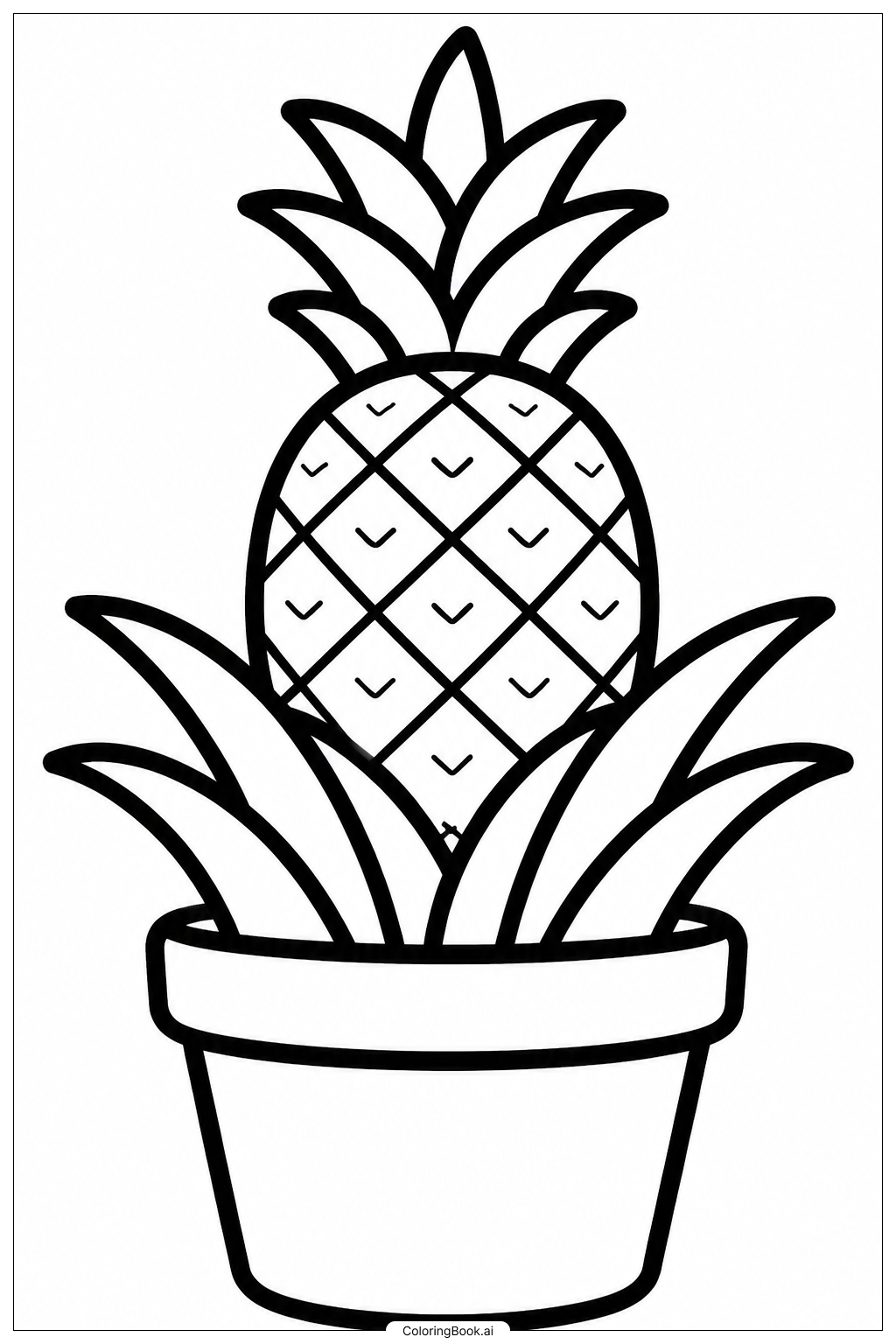
For coloring this image, try using bright and sunny colors to bring the pineapple to life. The pineapple skin can be a mix of golden yellow and orange tones to show its ripe look. The leafy crown and long leaves can be colored with different shades of green, from dark forest green to lighter lime greens, to add depth and contrast. For the pot, earthy colors like terracotta, beige, or even soft browns work well. You can also experiment with pastels for a softer look or bold colors like blue or purple to make the pot stand out. Use shading techniques to highlight the pineapple’s diamond patterns and the texture of the leaves for a fun challenge.
Coloring challenges: Which parts are difficult to color and need attention for Pineapple In Pot coloring page?
• The pineapple’s skin has many small diamond shapes, which require attention to detail to color neatly and evenly. Coloring inside these repeating shapes can be challenging for younger children.
• The leaves around the pineapple have pointed edges and varied textures, so it can be tricky to color the thin details carefully without mixing colors.
• The fruit’s crown has dense, overlapping leaves that may confuse where one leaf ends and another begins, making it important to use distinct shading.
• Shading the pot and the base of the pineapple realistically needs subtle blending of colors, which might be difficult for beginners.
• Maintaining bright, vivid colors without smudging or coloring outside the lines can be hard on the intricate parts of the plant and pot.
Benefits of coloring books: Advantages of drawing Pineapple In Pot coloring page
Coloring this image helps develop fine motor skills due to all the small details on the pineapple’s skin and leaves. It encourages focus and concentration as children try to stay within the lines of the diamond shapes and pointed leaves. The image also sparks creativity, letting kids experiment with colors to bring the pineapple and pot to life in their own unique way. Additionally, coloring this tropical fruit can teach children about plants that don’t usually grow in pots, inspiring curiosity about nature. Overall, this image is a fun way to build patience and artistic skills while learning about a delicious fruit.