Coloring tips: How to color Pineapple Hugging Coconut coloring page well?
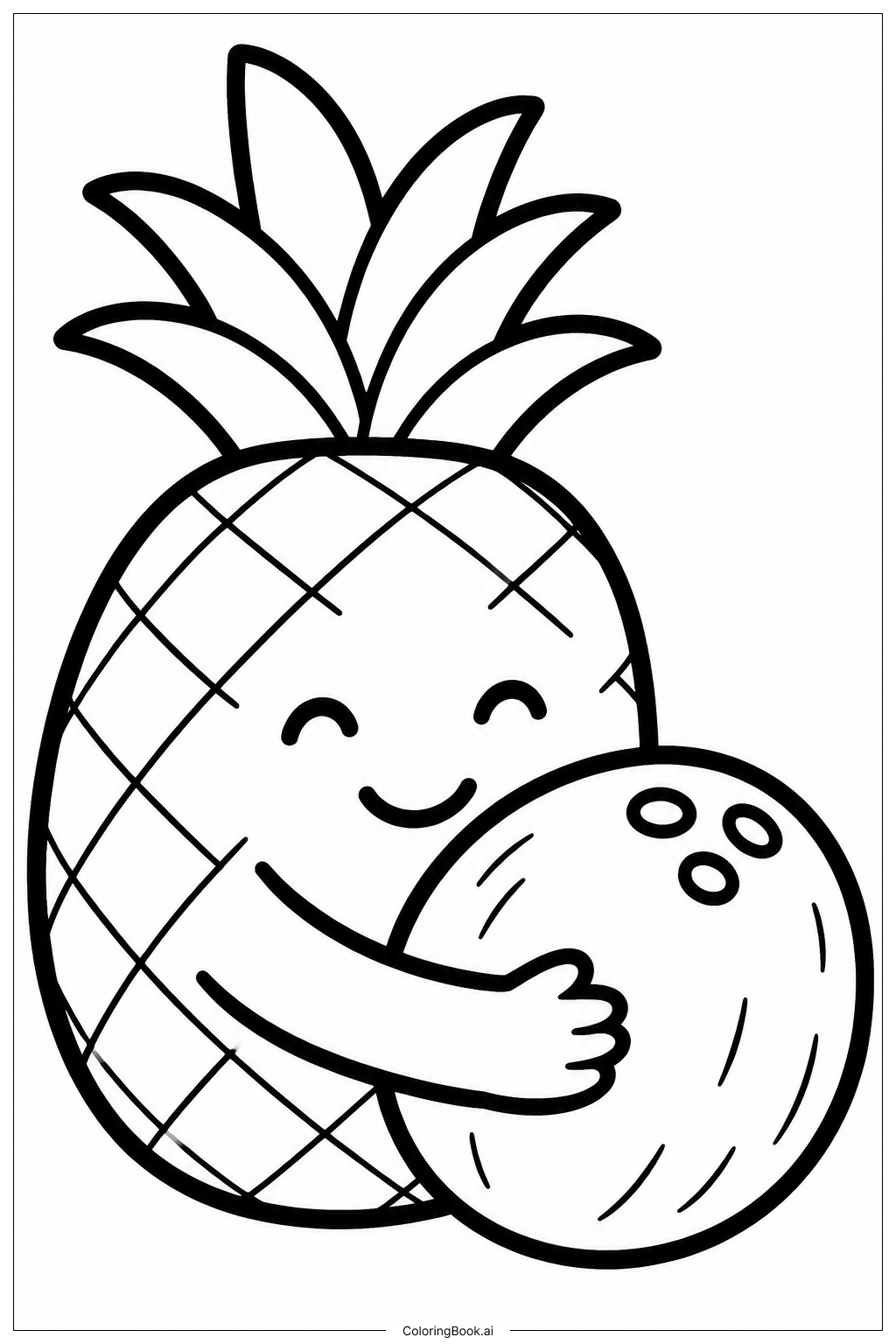
For this fun image, try using bright yellows and golden oranges for the Pineapple's textured skin to make it lively and realistic. Use various shades of green for the leaves on its crown, from light lime to deep jungle green, to add depth. The Coconut can be colored with warm browns for its rough outer shell, and a soft beige inside for contrast. Adding touches of blush pink or light peach on their cheeks will enhance their friendly expressions. You can also use blues and greens in the background to create a tropical beach vibe. Mix light and dark tones to bring out the details in the Pineapple’s texture and the Coconut’s fuzzy surface.
Coloring challenges: Which parts are difficult to color and need attention for Pineapple Hugging Coconut coloring page?
• Pineapple Texture: The Pineapple’s detailed diamond-shaped pattern requires careful coloring within small sections, which can be challenging for younger children to keep neat.
• Leaf Shading: The leaves on the Pineapple’s crown have multiple layers and points, demanding attention to shading and blending different green tones to make them look natural.
• Coconut Surface: The Coconut’s fuzzy texture includes thin fibrous lines that may be tricky to color without going outside the lines.
• Facial Features: Coloring the expressive faces without smudging or overlapping the eyes, mouth, and cheeks requires precision.
• Background Elements: The tropical leaves and flowers have multiple shapes and small details, so children should practice patience to preserve the outlines while adding colors.
Benefits of coloring books: Advantages of drawing Pineapple Hugging Coconut coloring page
Coloring this cheerful image helps develop fine motor skills as children carefully fill in the intricate Pineapple texture and the delicate Coconut fibers. It encourages creativity by allowing them to experiment with different shades of yellows, greens, and browns to bring the fruits to life. The happy expressions stimulate positive emotions and imagination, while the tropical theme introduces children to new natural elements. Completing this picture boosts concentration and patience, helping kids focus on small details. Coloring together can also promote social skills when sharing ideas about color choices and tropical settings.