Coloring tips: How to color Pinata Moon coloring page well?
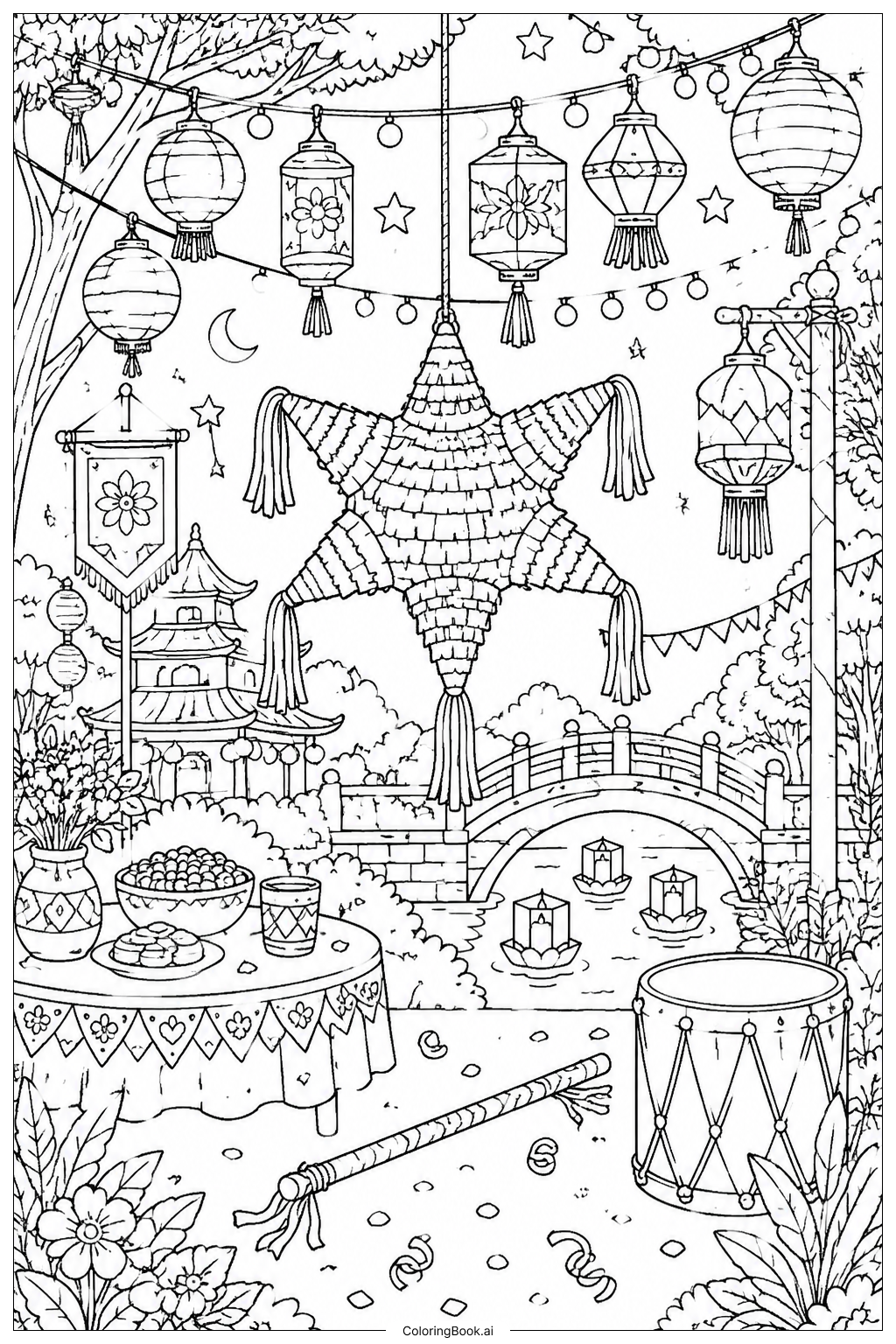
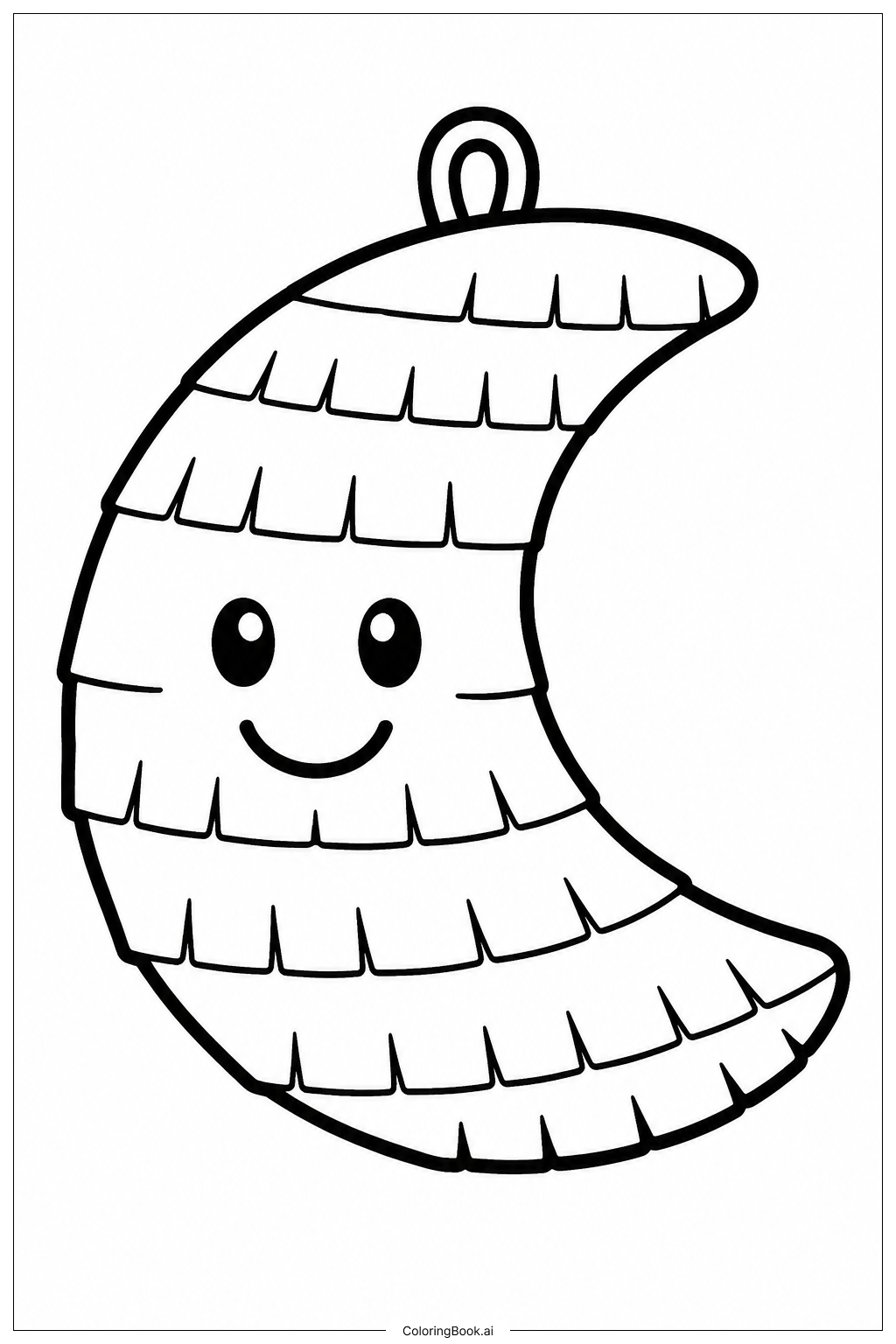
Start with the background. Use deep blue, navy, or purple for the night sky. Add lighter blue or white for the stars to make them sparkle. For the piñata moon itself, use bright and cheerful colors. Traditional piñatas use bold shades like red, yellow, green, pink, and orange. Color each fringe section a different color to make the moon look festive and fun. Use a light yellow or gold for the base of the moon shape beneath the fringe. The hanging string can be brown or tan. Do not be afraid to mix colors or add patterns inside the fringe sections. Use darker shades of each color along the edges of the fringe to give it depth and a three-dimensional look. The result will be a lively, party-ready moon bursting with color.
Coloring challenges: Which parts are difficult to color and need attention for Pinata Moon coloring page?
• Fringe Detail Work: The piñata moon is covered in rows of layered fringe, and each strip is small and closely packed. Coloring neatly within each individual fringe piece requires a fine-tipped marker or a sharpened colored pencil. Moving too quickly can cause colors to bleed outside the lines or overlap into adjacent sections, making the design look muddy rather than crisp and festive.
• Color Transitions Between Sections: The moon is divided into multiple fringe sections, and choosing colors that look good next to each other without clashing takes some planning. Young or beginner colorists may find it tricky to decide which colors to place side by side. Thinking through a color arrangement before starting will help the finished image look balanced and bright.
• Creating Depth in the Fringe: Real piñata fringe has a three-dimensional, fluffy look. Recreating this on paper means using light and shadow. Adding a slightly darker tone along the edges of each fringe strip and a lighter tone in the center helps create the illusion of volume. This shading technique can be challenging for children or beginners who are still learning how to blend colors effectively.
• Background Contrast: The night sky background needs to be dark enough to make the colorful piñata moon pop visually. Applying an even layer of dark color over a large area without streaks or uneven patches can be difficult, especially with crayons or colored pencils. Using circular strokes and gentle pressure, then building up layers gradually, will produce a smoother result.
Benefits of coloring books: Advantages of drawing Pinata Moon coloring page
Coloring this Pinata Moon page offers a wide range of benefits for children and young artists. The detailed fringe patterns help develop fine motor skills and hand-eye coordination, as coloring carefully within small sections trains the muscles in the fingers and hands. This kind of focused activity also builds patience and concentration, qualities that support learning both inside and outside the classroom. Choosing colors for each fringe section encourages creative thinking and decision-making. Kids get to experiment with color combinations and discover what looks pleasing to them, which nurtures artistic confidence and personal expression. The festive theme of the design sparks imagination and can inspire storytelling, such as imagining a party on the moon or a nighttime celebration. Completing the page gives children a satisfying sense of achievement, boosting self-esteem. The calming, repetitive nature of coloring also helps reduce stress and anxiety, making it a wonderful quiet-time activity. For older children, the shading and blending challenges offer a chance to develop more advanced art skills in a fun, low-pressure setting. Overall, this page makes creativity feel like a celebration.