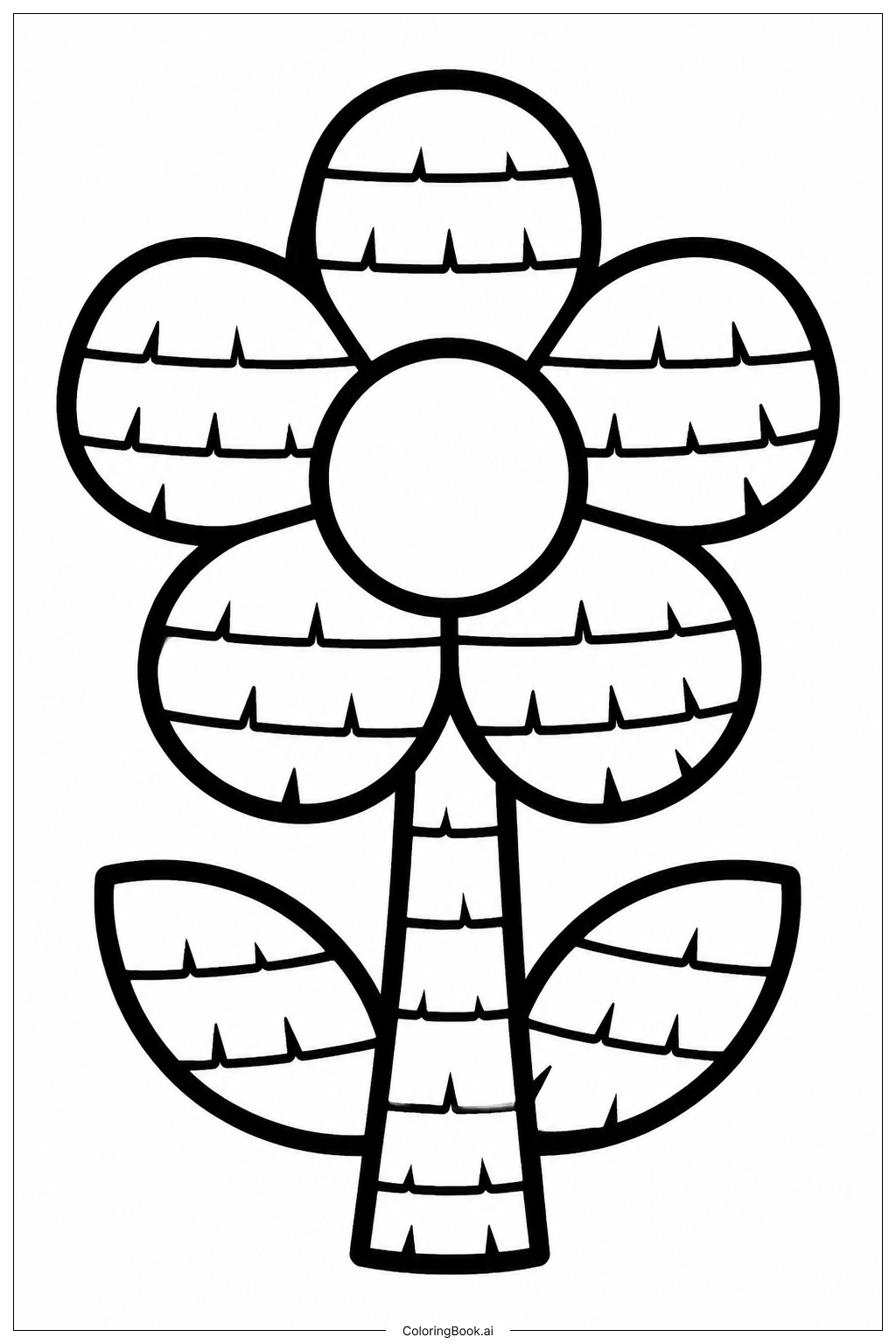
Coloring tips: How to color Pinata Flower coloring page well?
Start with the center of the flower and work your way outward to the petals. Use bright, festive colors like hot pink, sunny yellow, electric blue, and vivid orange to capture the spirit of a real pinata. Each petal can be a different color to make the image pop with energy and fun. Try alternating light and dark shades on neighboring petals so they stand out from each other. The fringe details on each petal look great in a slightly deeper shade of the same color. For the streamers and ribbons at the bottom, use contrasting colors to make them lively. If there is a face in the center, use warm skin tones or bright colors to give it a cheerful, festive look. Do not be afraid to mix colors and experiment — this image is all about celebration and joy!
Coloring challenges: Which parts are difficult to color and need attention for Pinata Flower coloring page?
• Fringe and Tassel Details: Each petal is lined with tiny fringe-like strips that closely mimic the paper tassels on a real pinata. These small, tightly packed lines require a fine-tipped colored pencil or marker to fill in neatly. Rushing through this area can result in colors bleeding into neighboring sections, so patience and a steady hand are essential.
• Petal Layering and Depth: The flower has multiple overlapping layers of petals arranged in a circular pattern. Keeping each layer visually distinct requires careful color selection. Using tones that are too similar across layers can flatten the image, making it look one-dimensional. Planning your color palette before you start will help each layer stand out clearly.
• Symmetry and Color Balance: Because the design is largely symmetrical, repeating colors in a balanced way across the petals is tricky. If one side of the flower uses very different shades than the other, the image can feel uneven. It helps to lay out your chosen colors in order before coloring to ensure a pleasing, consistent pattern around the bloom.
• Small Facial Features: If the image includes a face at the center, the eyes, mouth, and any small expressions involve very tight spaces. Overfilling these tiny areas can make the face look smudged or unclear. Using a sharp pencil tip and coloring lightly at first before building up color will give you the best results.
• Streamer and Ribbon Sections: The flowing ribbons and streamers at the base of the pinata flower can have curving outlines that are tricky to color within cleanly. Following the curve of each ribbon with smooth, directional strokes will keep your coloring looking polished and intentional.
Benefits of coloring books: Advantages of drawing Pinata Flower coloring page
Coloring this Pinata Flower page offers a wide range of benefits for kids and adults alike. For younger children, tracing the many petals and fringe details helps develop fine motor skills and builds hand-eye coordination. Choosing colors and planning a color scheme across the layered petals encourages creative thinking and decision-making in a low-pressure, fun setting.
For older kids, the detailed fringe textures and symmetrical layout offer a satisfying challenge that builds focus and patience. Staying within the small fringe lines trains concentration and attention to detail, skills that carry over into school and everyday tasks.
For adults, coloring this festive design is a wonderful way to unwind. The repetitive motion of filling in each petal and tassel strip has a calming, almost meditative quality that helps reduce stress and quiet a busy mind. The bright, celebratory colors of a pinata theme also naturally boost mood and bring a sense of playfulness to the activity.
Across all age groups, completing this image gives a real sense of accomplishment. Watching a detailed, intricate page transform into a vibrant, colorful artwork builds confidence and pride. Sharing the finished page with others adds a social and joyful dimension to the experience, making this Pinata Flower coloring page as rewarding as it is fun.