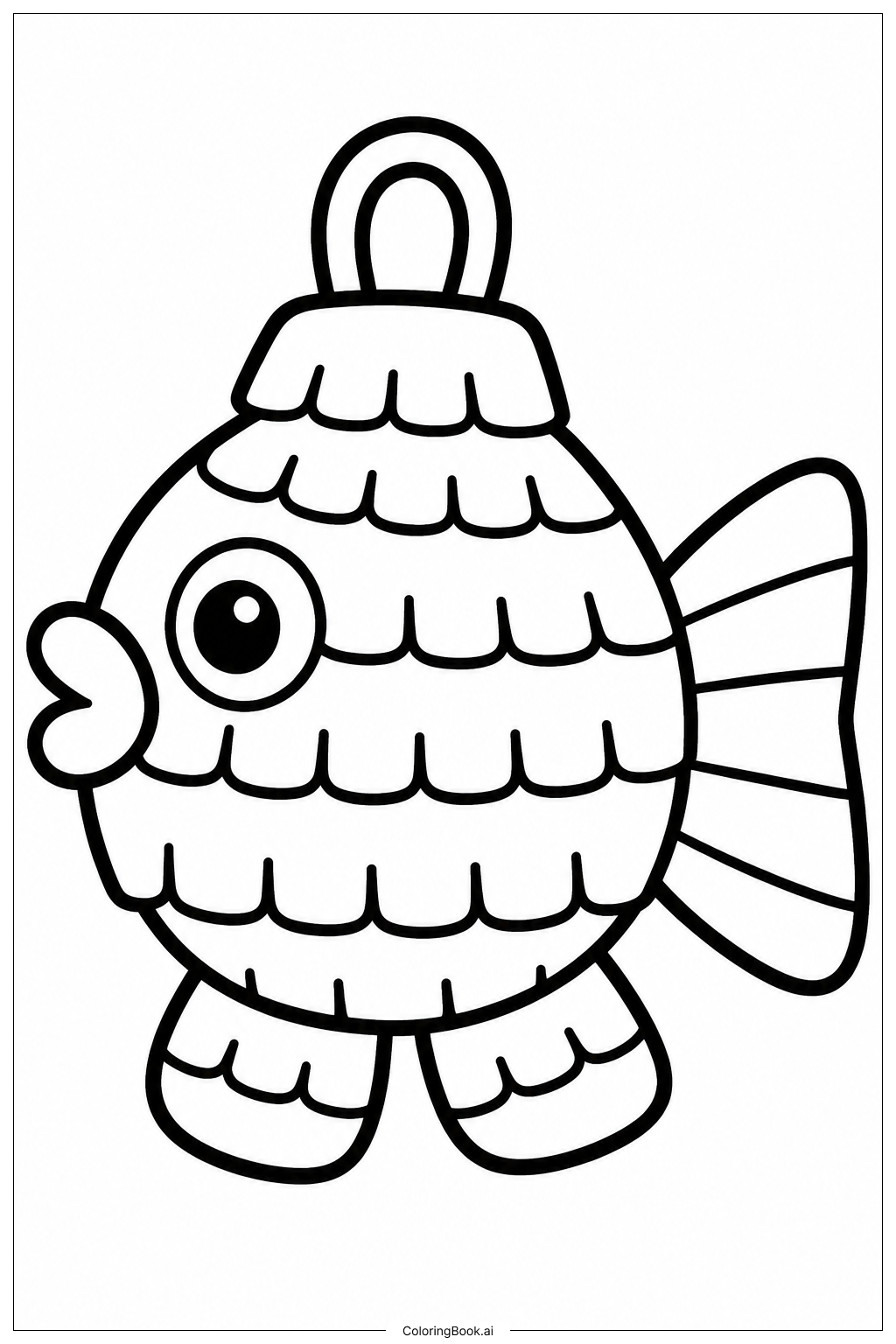
Coloring tips: How to color Pinata Fish coloring page well?
Start with the body of the Pinata Fish by choosing bold, festive colors like hot pink, bright yellow, electric blue, and vivid orange. Each fringe section can be a different color to capture the look of a real piñata. Use red or coral for the fins and tail to make them pop. The large eyes look great with a dark outline and a bright iris — try purple or green. Add white highlights to the eyes and body to give the fish a shiny, lively look. For a more magical feel, try rainbow gradients across the fringe layers. Younger kids can keep it simple with one color per section, while older kids can blend shades for a more detailed result. Light pencils or crayons work well for large areas, while fine-tip markers are great for small details in the fringe and fins.
Coloring challenges: Which parts are difficult to color and need attention for Pinata Fish coloring page?
• Fringe Layer Separation: The Pinata Fish is covered in overlapping fringe rows that resemble tissue paper streamers. Keeping each layer visually distinct requires careful color choices and clean borders between sections. If neighboring fringes are too similar in tone, the layers can blend together and lose definition. Choosing alternating or contrasting colors for each row helps maintain clarity.
• Small Fringe Tips: Each individual fringe strip ends in a tiny pointed or rounded tip. These small details are easy to color outside of, especially for younger children. Using a fine-tip marker or a sharpened colored pencil helps stay within the lines and adds a neat, polished finish to each piece.
• Eye and Face Details: The large expressive eyes have multiple layers — an outer circle, an iris, a pupil, and a highlight dot. Coloring each layer with precision requires patience and a steady hand. Rushing through the eyes can make the face look flat, so take time with this area for the best result.
• Fins and Tail Texture: The fins and tail feature flowing decorative lines that divide them into smaller segments. Deciding on a color scheme for these areas while keeping them harmonious with the body is a challenge. Too many colors can look chaotic, while too few may make these sections seem dull.
• Overall Color Harmony: With so many separate sections and textures across the body, fins, and face, creating a cohesive color palette is the biggest challenge. Planning the colors before starting — perhaps sketching a quick color map — helps ensure the finished fish looks festive and balanced rather than random.
Benefits of coloring books: Advantages of drawing Pinata Fish coloring page
Coloring this Pinata Fish page offers a wide range of fun and developmental benefits for children of all ages. The intricate fringe layers and detailed fins encourage fine motor skill development, helping kids build hand strength and pencil control that support writing and other precision tasks. Choosing colors for each section sparks creativity and allows children to express their own unique style — no two finished fish will look the same. The repetitive motion of coloring within the fringe rows promotes focus and patience, making it a calming and meditative activity. For younger children, the large round body provides satisfying areas to fill in, building confidence and a sense of accomplishment. Older kids can challenge themselves with blending, shading, and creating gradient effects across the fringe layers, developing more advanced artistic skills. The festive piñata theme also opens up conversations about celebrations, cultural traditions, and creativity. Overall, this page combines the joy of a party theme with the mindful, screen-free benefits of coloring — making it a wonderful activity for kids at home, in school, or at a party.