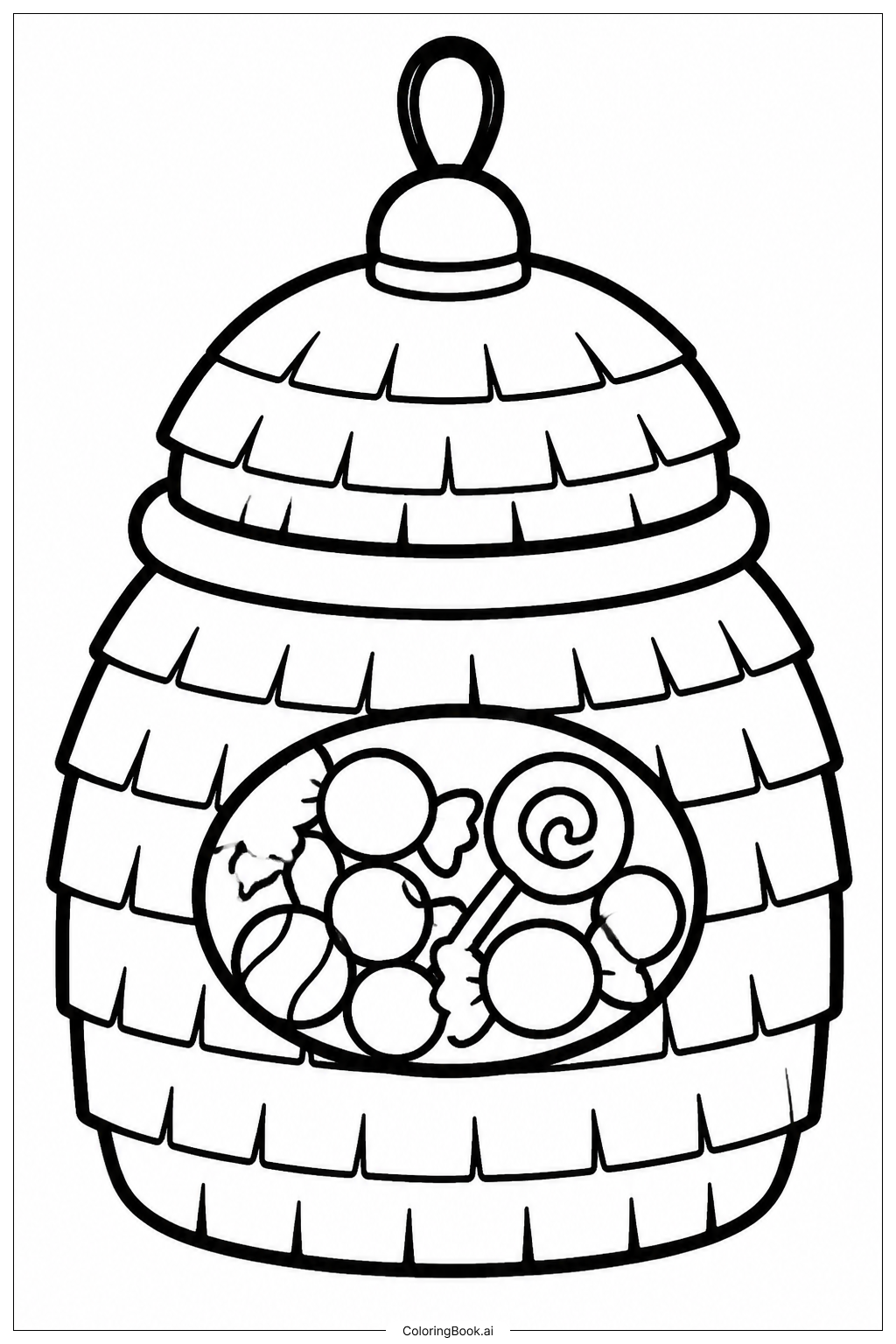
Coloring tips: How to color Pinata Candy Jar coloring page well?
When coloring the Pinata Candy Jar, start with bright and cheerful colors like reds, yellows, blues, and greens to bring the festive spirit alive. You can use different colors for each layered strip on the pinata body to show its paper texture. The candies can be colored in vibrant shades such as purples, oranges, pinks, and blues to make them stand out. For the jar’s facial features, try warm tones like orange or pink for the cheeks and white or light blue for the eyes’ sparkle. Feel free to color the ribbons in metallic gold or silver tones to add some shine. Remember, mixing light and dark shades will give more depth and make the image more interesting for kids ages 4 to 16.
Coloring challenges: Which parts are difficult to color and need attention for Pinata Candy Jar coloring page?
• Intricate Details: The pinata has many small patterns such as dots, stripes, and jagged edges that require careful coloring within tight spaces.
• Candy Variety: Different shapes of candies need distinct coloring to make them easily recognizable and visually fun.
• Facial Expression: Coloring the eyes and mouth precisely is important to keep the pinata’s friendly and joyful expression clear.
• Layered Paper Texture: The overlapping layers of the pinata need thoughtful color choices to create contrast and a sense of dimension.
• Ribbon Strings: The thin ribbons on top can be challenging to color neatly due to their narrow shapes and flowing lines.
Benefits of coloring books: Advantages of drawing Pinata Candy Jar coloring page
Coloring this Pinata Candy Jar helps develop fine motor skills as children practice staying within the lines of various small sections. It encourages creativity by allowing kids to choose bright colors and experiment with color combinations. The image promotes focus and patience because of the detailed patterns and layers that need attention. It also introduces children to festive themes, making coloring a fun way to learn about celebrations. Additionally, working on facial features like the eyes and mouth helps improve hand-eye coordination and artistic expression.