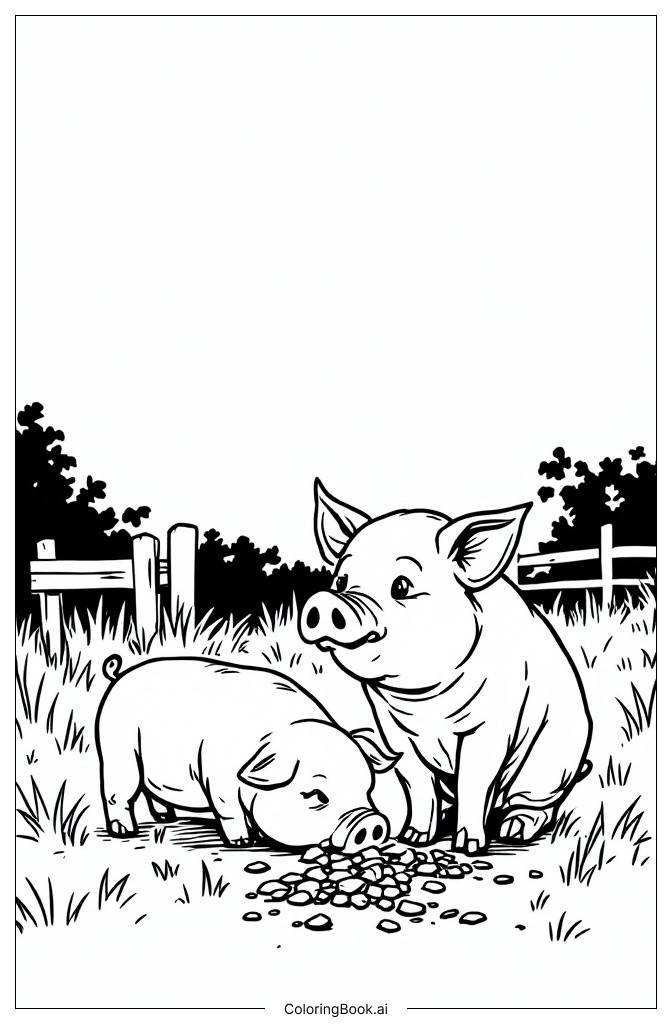
Coloring tips: How to color A Pig Eating on the Farm coloring page well?
Start with the pig's body using a soft pink shade. You can add a slightly darker pink to the ears, snout, and belly to give the pig a rounder, cuter look. Use a warm brown or tan for the wooden feeding trough and fence. Fill the food in the trough with yellows, oranges, and greens to look like fruits and vegetables. Color the grass a bright green and the hills a softer, lighter green in the background. Use a cheerful yellow for the sun. Add small splashes of red, purple, and yellow to the flowers for a lively pop of color. Feel free to use your favorite colors to make the farm feel warm and happy. There is no wrong way to color this scene, so have fun and make it your own!
Coloring challenges: Which parts are difficult to color and need attention for A Pig Eating on the Farm coloring page?
• Pig's Rounded Body Shape: The pig has a very round, full body with smooth curved lines. Staying neatly within these curves can be tricky, especially for younger colorists. Take your time with the edges and use short, careful strokes to keep the color inside the lines.
• Small Facial Details: The pig's face includes a round snout with nostrils, two small eyes, and expressive lines that show its happy mood. These areas are tiny and close together, making it easy to accidentally color outside the lines or mix up sections. Use a fine-tipped coloring tool for the face to get clean, precise results.
• Wooden Trough Texture: The feeding trough is made of wood planks, which means it has narrow sections separated by lines. Coloring each plank individually while keeping a consistent wood tone takes patience. Try using two shades of brown, alternating slightly between planks, to give it a realistic and interesting look.
• Background Depth and Layering: The farm background includes hills, a fence, grass, flowers, and a sky. Balancing the colors so the background does not overpower the pig in the foreground requires some planning. Use lighter, softer shades for distant hills and sky, and save the brighter, bolder colors for the pig and objects up front.
• Curly Tail and Fine Lines: The pig's small curly tail is one of the tiniest details on the page. Coloring it carefully without smudging nearby areas can be a challenge. A sharp pencil or a fine marker works best here to keep the curl looking neat and separate from the body.
Benefits of coloring books: Advantages of drawing A Pig Eating on the Farm coloring page
Coloring this fun farm pig scene offers a wonderful range of benefits for kids and anyone who picks up a crayon or colored pencil. First, it helps build fine motor skills. Carefully filling in the pig's round body, tiny snout, and detailed fence lines trains the small muscles in the hands and improves hand-eye coordination. Second, it encourages creativity. Choosing colors for the pig, the trough, the grass, and the sky lets colorists express their imagination and make the scene uniquely their own. Third, it teaches children about farm life in a playful and engaging way. Seeing a happy pig eating on a farm sparks curiosity about animals and where food comes from. Fourth, the act of coloring is calming and focused. It helps children slow down, concentrate, and find a quiet sense of peace. This kind of mindful activity is great for reducing stress and improving attention span. Finally, completing a finished, colorful picture builds confidence and gives a real sense of pride and accomplishment. It is a simple, joyful activity the whole family can enjoy together.