Coloring tips: How to color Sun And Plant Photosynthesis coloring page well?
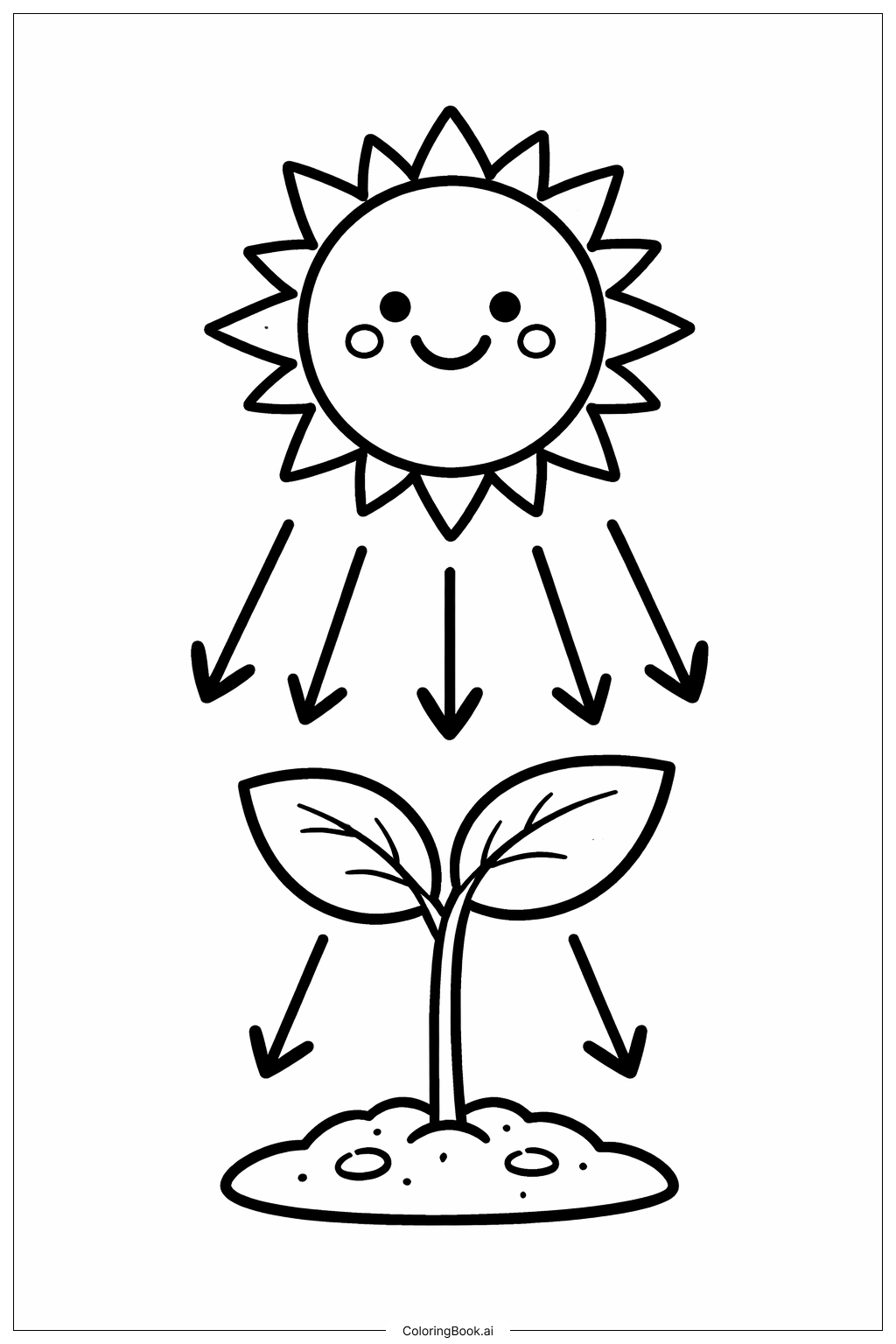
Use bright yellow and orange shades to color the sun, giving it a warm and cheerful look. For the sun’s rays, you can use lighter yellow or even light orange to create a glowing effect. Color the plant’s leaves with shades of green, such as light green for new leaves and darker green for mature parts. The stem can be a medium green or light brown to show growth. The soil can be colored brown, with some darker spots to show texture. Try to stay inside the lines for a neat picture, and feel free to mix colors to add life and variety.
Coloring challenges: Which parts are difficult to color and need attention for Sun And Plant Photosynthesis coloring page?
1. Coloring the sun’s rays evenly can be tricky because they are thin and long, so careful coloring is needed to avoid going outside the lines. 2. The arrows pointing from the sun to the plant and from the plant to the soil are narrow, requiring steady hand control to fill in cleanly. 3. Coloring the plant leaves may be challenging when trying to show depth with different shades of green in small areas. 4. The soil has small dots and details which need attention to avoid over-coloring or missing spots. 5. Keeping the sun's face expressions neat while coloring around the eyes and mouth may require slow and careful work.
Benefits of coloring books: Advantages of drawing Sun And Plant Photosynthesis coloring page
Coloring this picture helps children learn about photosynthesis in a fun way. It encourages focus and patience as they color different parts carefully. Using bright colors like yellow and green can make the image lively and interesting. Coloring the sun and plant improves hand-eye coordination. It also boosts creativity as kids choose shades and combine colors. Moreover, this activity supports learning about nature, the role of the sun, and plant growth.