Coloring tips: How to color Pets Visiting Vet coloring page well?
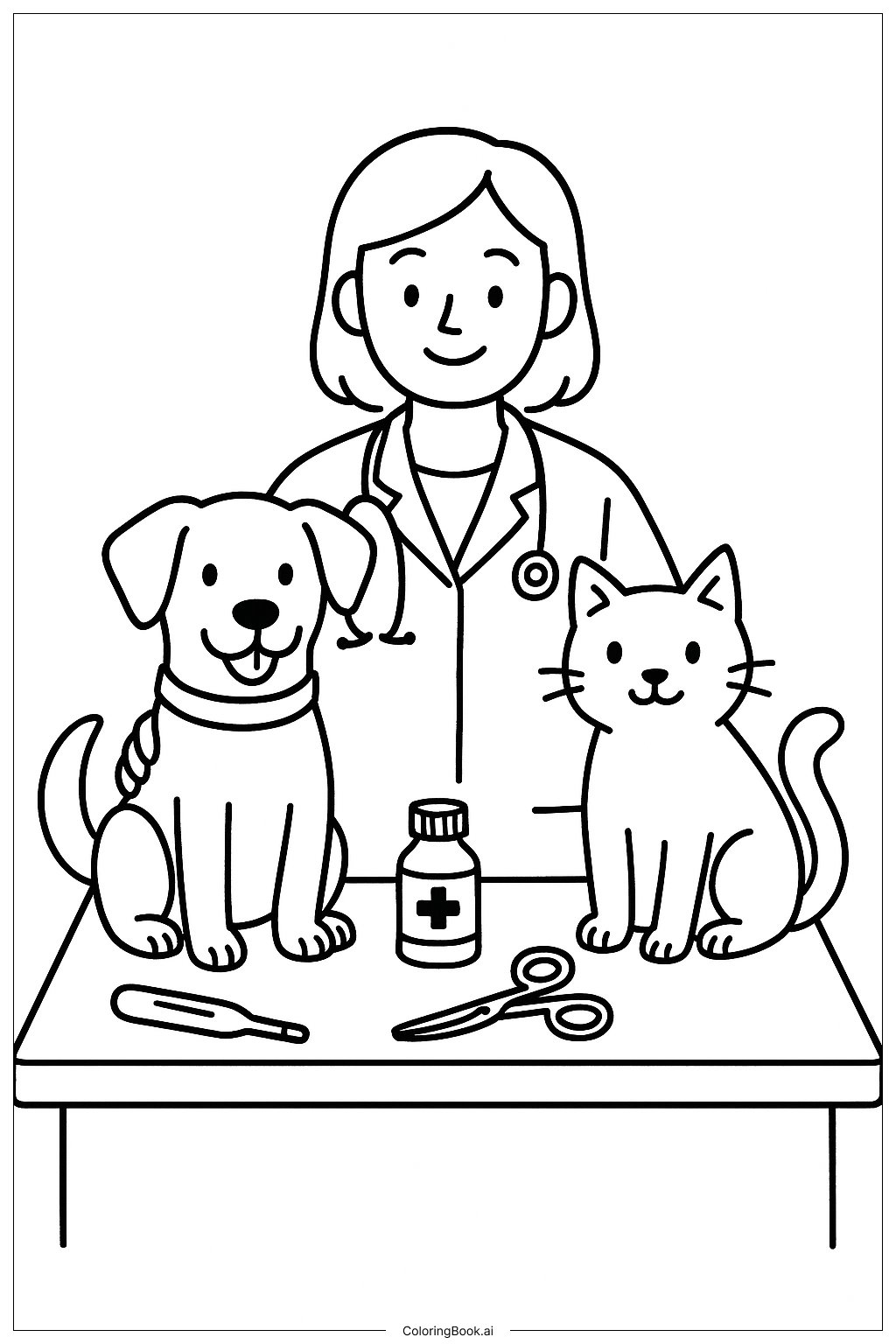
Use bright colors for the dog and cat to make them look lively. You can color the dog in shades of brown, black, or white, and the cat with different patterns like stripes or spots. The vet's coat can be white or light blue, and the stethoscope can be gray or black. The table can be brown or gray. Color the medicine bottle in bold colors like red or blue to make it stand out. Don’t forget to color the tools carefully to add more detail.
Coloring challenges: Which parts are difficult to color and need attention for Pets Visiting Vet coloring page?
1. Coloring the small details like the face features of the pets and the vet can be tricky because of their size.
2. The vet’s stethoscope and the tools on the table have thin parts that need careful coloring to avoid going outside the lines.
3. Coloring the pets with patterns or different colors takes patience to make the pets look natural and realistic.
4. Keeping the colors inside the lines, especially around the pets’ tails and the vet's hair, can be challenging.
5. Balancing bright and soft colors to create a nice, friendly scene requires attention.
Benefits of coloring books: Advantages of drawing Pets Visiting Vet coloring page
Coloring this picture helps kids learn about pets and vets. It improves children’s focus and hand-eye coordination when they color the small and big parts. Coloring fun animals like dogs and cats can make children happy and encourage them to care for pets. It also helps develop creativity as kids choose colors and patterns for the animals and the vet’s outfit. Finally, it teaches patience and attention to detail when working on the small parts of the picture.