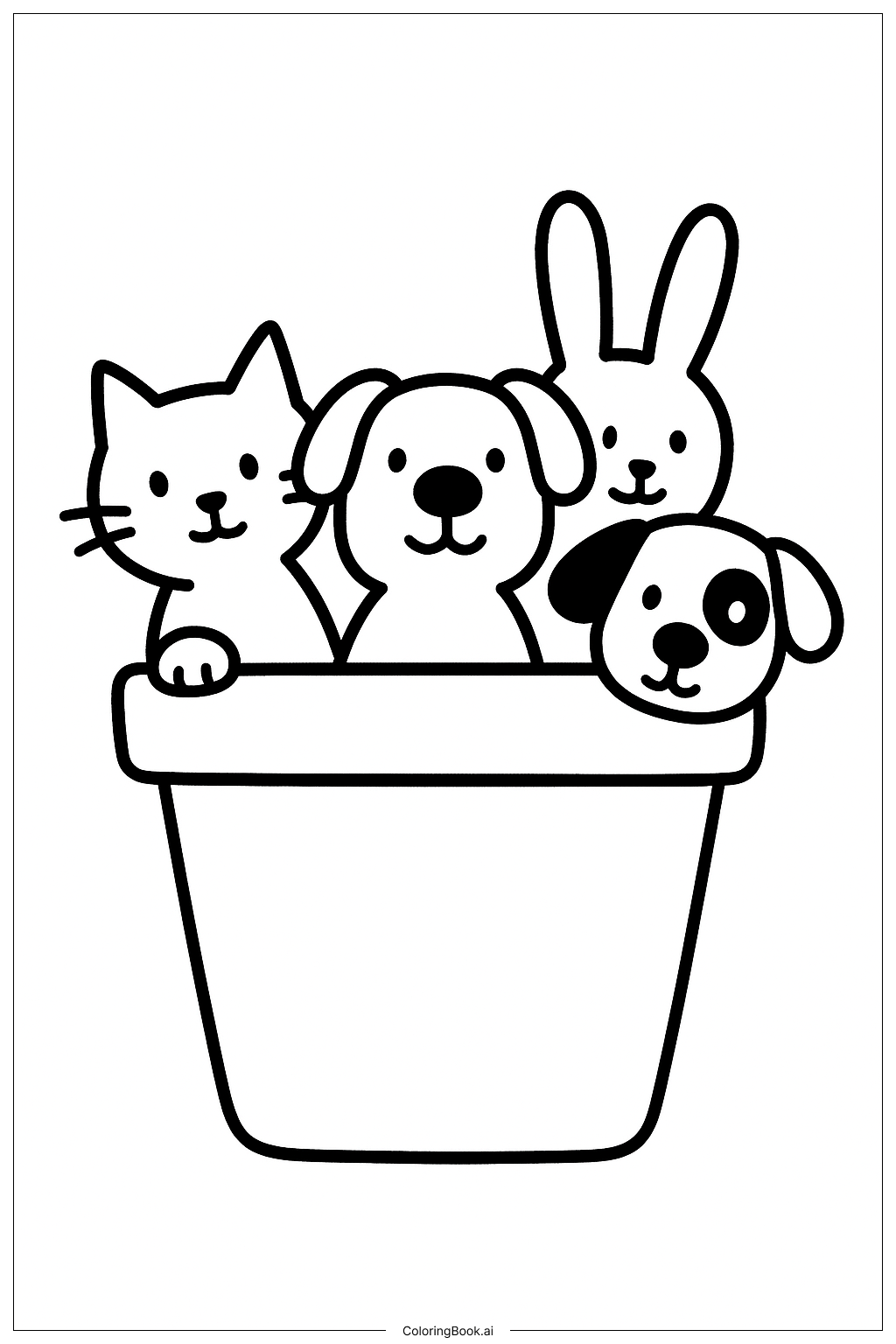
Coloring tips: How to color Pets Hiding Behind Plant coloring page well?
For coloring this picture, you can use shades of green for the plant leaves to make them look fresh and lively. Try using different greens like light green and dark green to show the shadows and highlights on the leaves. For the pets, choose colors that match real animals, such as orange and white for a cat, brown and black for the dog, and soft gray or white for the rabbit. You can also add some color to the background or floor to make the scene more vivid. Using bright colors will help the pets stand out behind the plant. This coloring page works well with crayons, colored pencils, or markers.
Coloring challenges: Which parts are difficult to color and need attention for Pets Hiding Behind Plant coloring page?
• Plant Leaf Details: The many overlapping leaves can make it tricky to color without mixing the edges. Careful coloring is needed to keep each leaf clear and distinct.
• Hidden Pet Parts: Since only parts of the pets are visible, it can be challenging to decide which color to use where the body is partially hidden.
• Small Spaces: The paws and eyes peeking from behind the plant are small and require precise coloring to avoid going outside the lines.
• Color Contrast: Balancing bright pet colors with the green plant to make sure the animals do not blend into the leaves might be difficult for some colorers.
• Shading Effects: To give depth to the leaves and pets, light shading or multiple colors might be needed — a task that can be hard for younger children.
Benefits of coloring books: Advantages of drawing Pets Hiding Behind Plant coloring page
Coloring this image helps children practice fine motor skills by filling in small spaces like the pets’ eyes and paws with accuracy. It also encourages creativity as kids choose colors for the plant and animals, experimenting with natural and imaginative hues. The picture’s simple shapes and clear lines make it perfect for younger children to build confidence coloring within boundaries. Additionally, coloring animals hiding behind a plant can spark curiosity about nature and pets, fostering observation skills. Overall, it’s a fun way to develop focus, hand-eye coordination, and color recognition.