Coloring tips: How to color Pets Exploring Backyard Pond coloring page well?
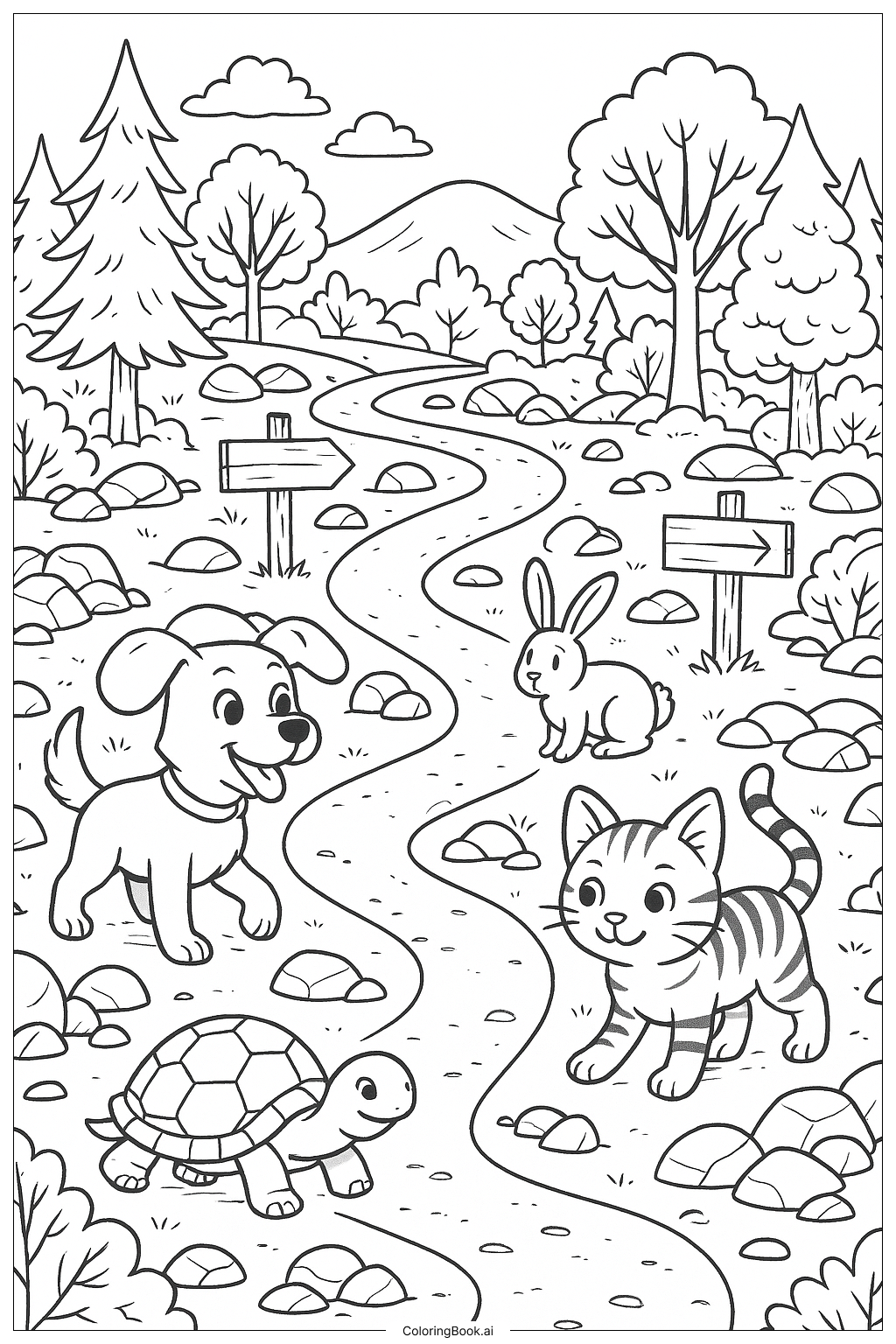
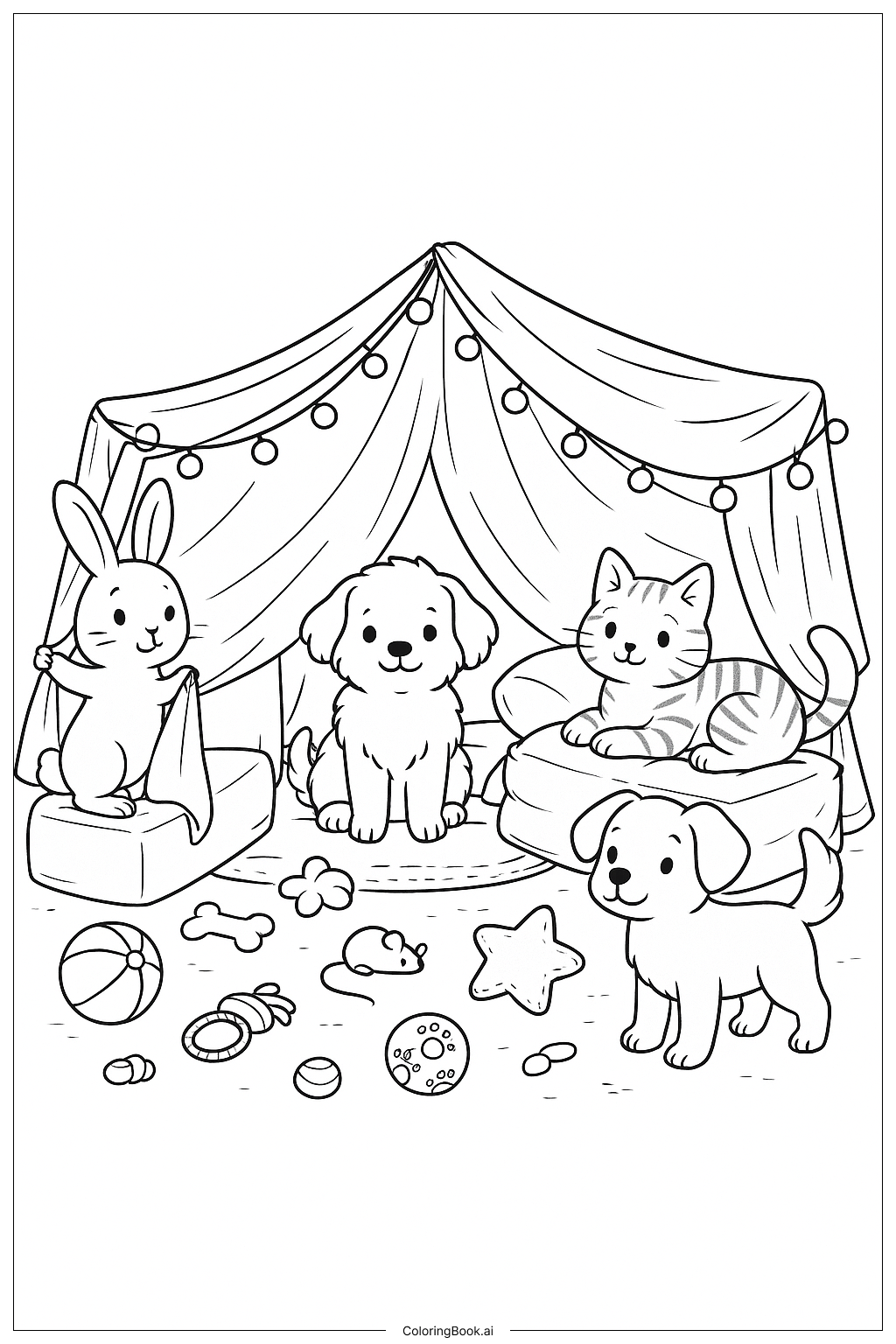
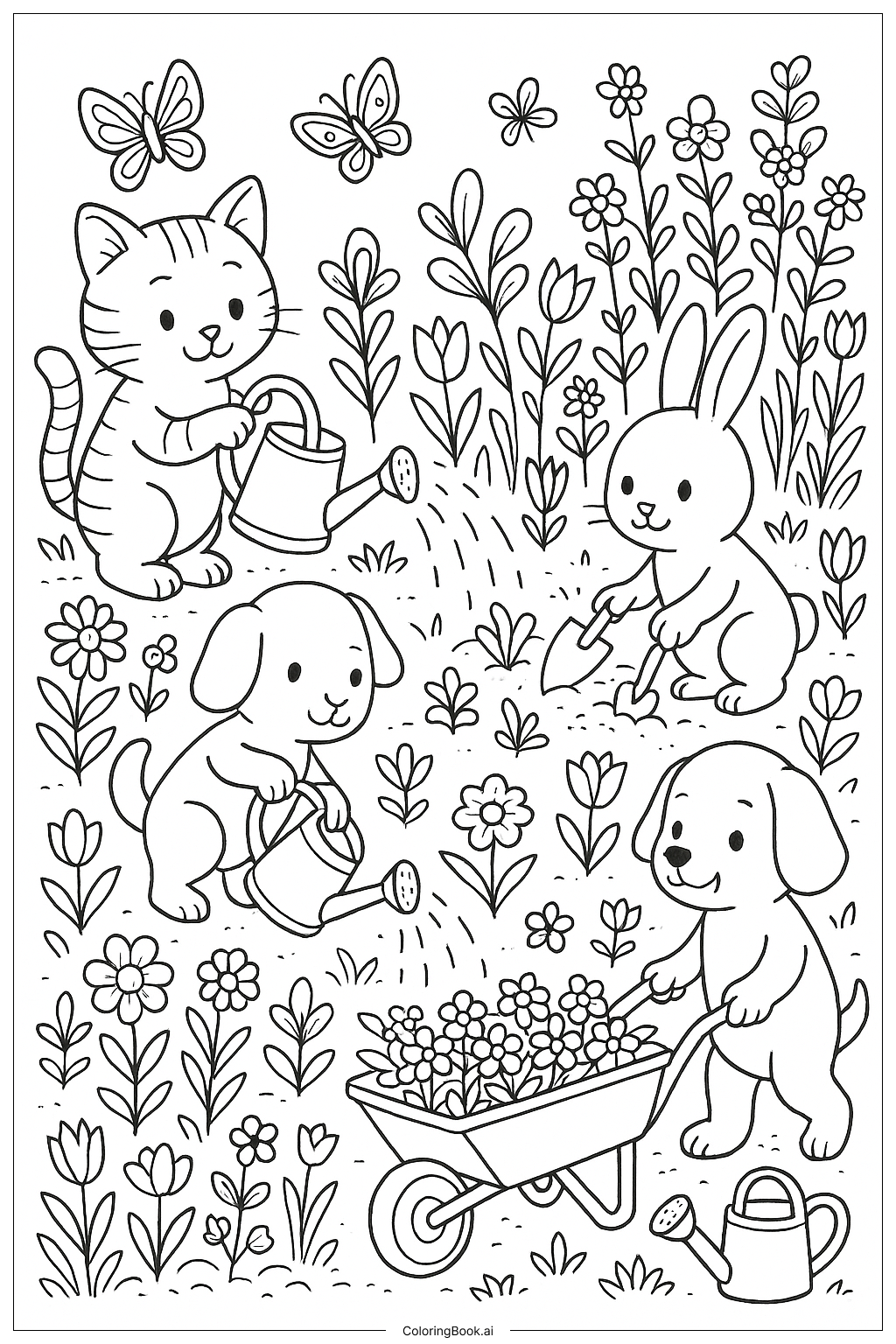
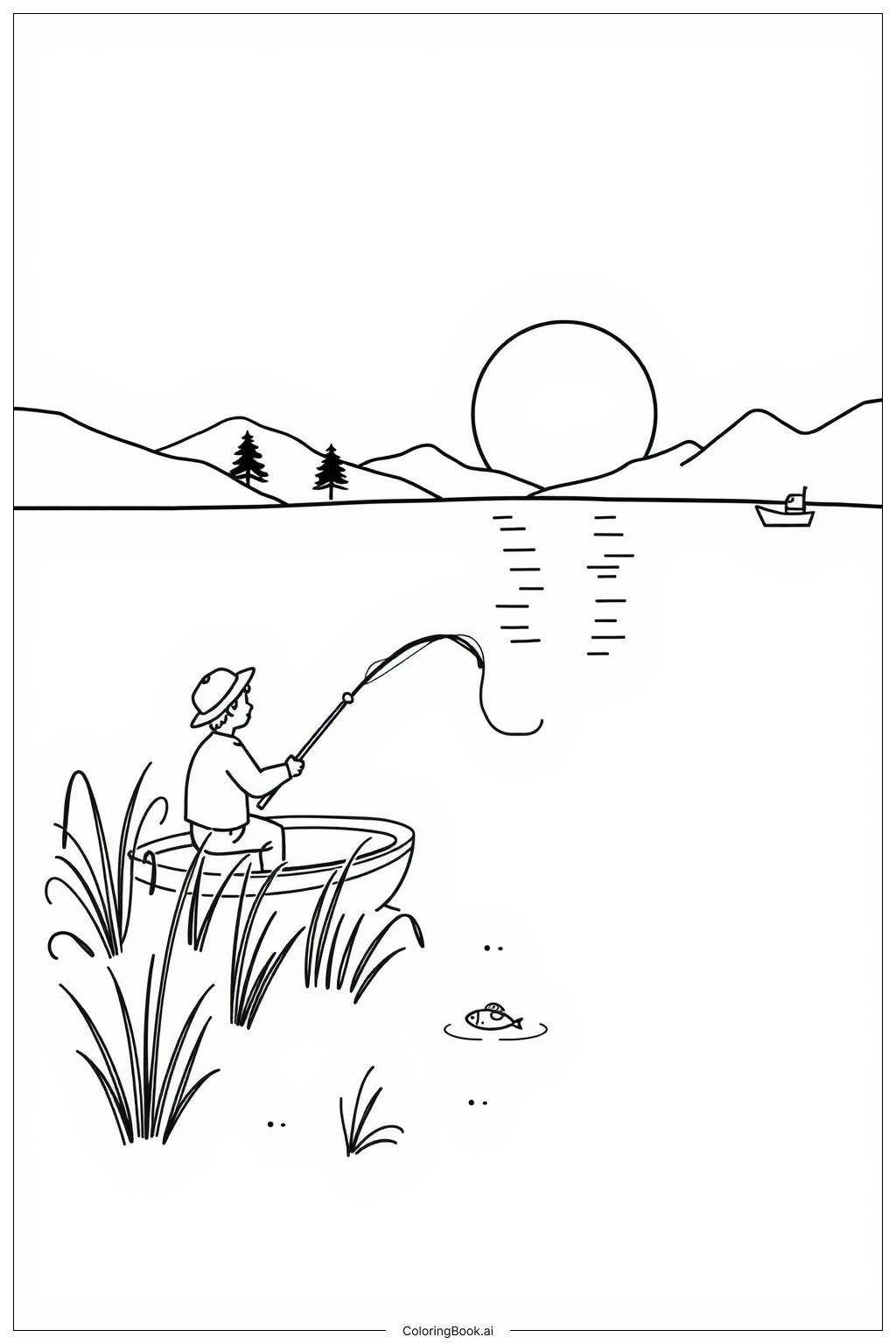
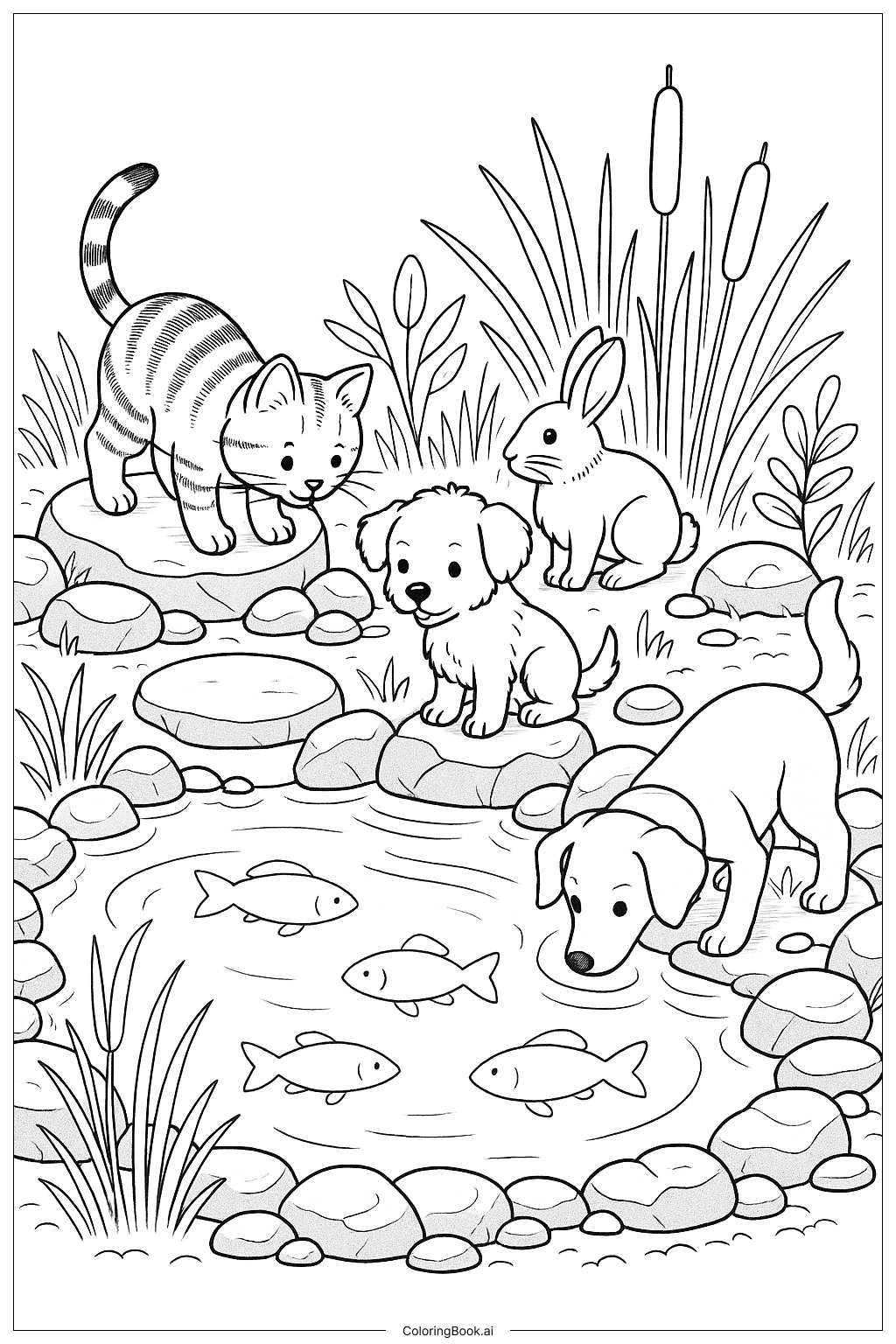
Start with the background elements like the fence and plants using soft greens and warm browns. Use a bright, grassy green for the lily pads and leafy reeds. Color the pond water in shades of light blue and teal, adding a bit of white to show reflections and ripples. For the fish, try orange, yellow, or red to make them pop beneath the surface. Give the dog a warm golden, brown, or white coat, and color the cat in gray, orange, or black stripes. Use natural tan and gray tones for the rocks and pebbles. Bright colors work well for the butterfly and flowers to bring the scene to life. Take your time with small details like the water ripples and leaves to make the image feel lively and full of nature.
Coloring challenges: Which parts are difficult to color and need attention for Pets Exploring Backyard Pond coloring page?
• Water Texture and Reflections: The pond surface includes ripple lines and subtle reflection details that can be tricky to color. Blending light blue with white or pale gray helps suggest movement. Keeping the water area smooth while still showing depth takes patience and a gentle hand.
• Animal Fur and Texture: Both the dog and cat have implied fur texture through short lines and curves. Coloring in the direction of the fur strokes gives a more realistic look. Using two or three shades of the same color adds dimension. This technique can be challenging for younger colorists but very rewarding.
• Small Detailed Elements: Tiny features like pebbles along the pond edge, fish scales beneath the water, and flower petals near the shore require careful work with fine-tipped colored pencils or markers. Staying inside small outlines without going over nearby areas demands focus and a steady hand.
• Overlapping Plants and Reeds: The reeds and leafy plants layered around the pond edge can overlap in complex ways. Deciding which leaf is in front and which is behind helps guide color choices. Using lighter shades for background plants and deeper greens for foreground ones creates a natural sense of depth.
• Balancing the Overall Color Palette: With animals, water, plants, rocks, and a fence all in one scene, keeping colors balanced and harmonious can be a challenge. Choosing a consistent color mood, like warm and sunny or cool and calm, helps tie the whole image together without making any one area feel too loud or out of place.
Benefits of coloring books: Advantages of drawing Pets Exploring Backyard Pond coloring page
Coloring this backyard pond scene offers a wide range of benefits for children and adults alike. The peaceful nature setting helps reduce stress and encourages a calm, focused state of mind. As colorists work through the scene, they naturally practice fine motor skills by carefully filling in small areas like pebbles, fish, and flower petals.
Children develop creative thinking as they choose colors for the animals, water, and plants. There are no wrong choices, which builds confidence and a sense of ownership over their artwork. Deciding how to color the dog or cat also sparks imagination and storytelling.
The scene introduces kids to elements of nature, including pond life, garden plants, and backyard animals. This gentle connection to the natural world can spark curiosity about the environment and living creatures.
For older colorists, the layering of plants, water texture, and animal fur provides a satisfying challenge that improves color blending and shading skills. Completing a detailed scene like this brings a strong sense of accomplishment.
Overall, this coloring page combines creativity, relaxation, and learning into one enjoyable activity that the whole family can share.