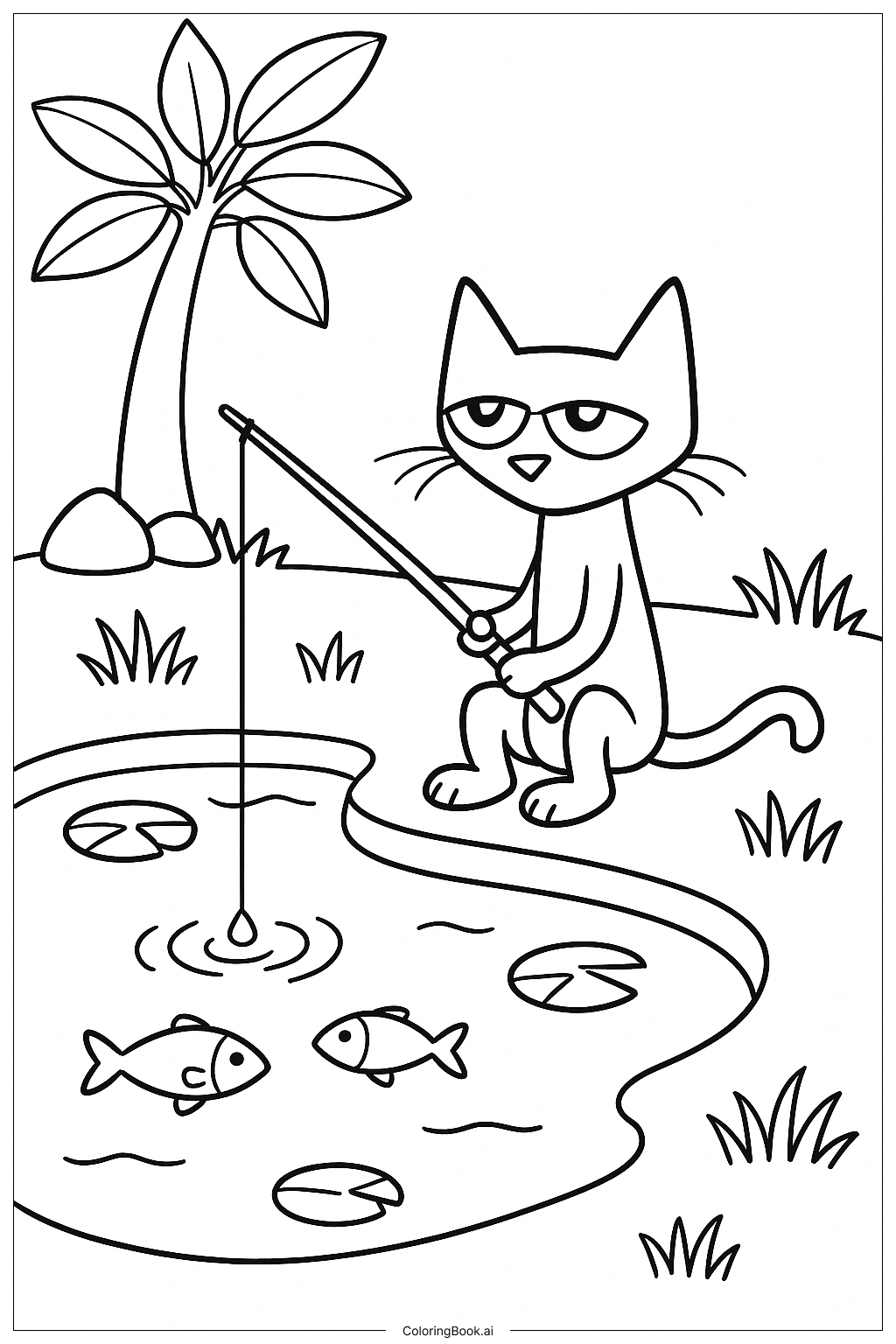
Coloring tips: How to color Pete The Cat Fishing By The Pond coloring page well?
Start with Pete the Cat himself. Use his classic blue fur to fill in his body. His eyes can be done in white with dark pupils to give him that cool, laid-back look. Color his fishing rod brown or tan, and make the fishing line a light gray. The bobber looks great in red and white. For the pond, use soft shades of blue and add a little green near the edges where the water meets the grass. The cattails work well in brown and green. Color the lily pads a rich green, and try bright green or yellow-green for the frog. Use warm yellows and light blues for the sky. Add different shades of green to the grass and background trees to make the scene feel alive and full of depth. Try blending light and dark greens for a more natural look.
Coloring challenges: Which parts are difficult to color and need attention for Pete The Cat Fishing By The Pond coloring page?
• Pete's Blue Fur Shading: Coloring Pete's fur evenly can be tricky. His entire body is one solid color, but getting a smooth, consistent blue without streaks or gaps takes patience. Young colorists should use light, even strokes and may want to go over the same area two or three times to build up a rich, solid color without pressing too hard.
• Water Texture and Depth: Making the pond look like real water is one of the harder parts of this image. Water is not just one flat blue. Colorists need to blend at least two or three shades of blue and add hints of green near the edges. Leaving small white areas can suggest light reflecting on the surface and give the water a more realistic feel.
• Small Details Like the Bobber and Hook: The fishing bobber is a small object with two distinct colors, red on top and white on the bottom. Keeping the colors clean and separate inside such a tiny shape requires a fine-tipped pencil or marker and a steady hand. Younger children may find this part especially challenging.
• Background Layering: The background includes trees, sky, clouds, and grass all layered together. Coloring these elements without letting the colors bleed into each other needs careful attention to borders. Starting with lighter colors first and working toward darker tones helps keep each section clean and distinct.
• Frog and Lily Pad Details: The frog and lily pads are small but important parts of the scene. Using different shades of green for each helps them stand out from one another. Adding a tiny bit of yellow to the frog and a darker outline green to the lily pads makes the details pop without crowding the image.
Benefits of coloring books: Advantages of drawing Pete The Cat Fishing By The Pond coloring page
Coloring this Pete the Cat fishing scene offers a wonderful mix of fun and learning for kids. Because Pete is a beloved character, children feel excited and motivated to engage with the page from the start. That natural enthusiasm helps build focus and the ability to sit with a task from beginning to end.
The variety of elements in this image, from Pete's fur to the water, grass, trees, and small creatures, gives children lots of practice with color mixing and selection. Choosing different shades of green for the frog, lily pads, and background plants builds early color theory skills in a hands-on way.
Working on the fine details, like the bobber, the fishing line, and the frog, helps strengthen hand-eye coordination and fine motor skills. These are the same muscle movements children use when learning to write.
The peaceful outdoor setting also makes this page calming to color. Spending quiet time on a nature scene can reduce stress and give children a chance to slow down and be present in a creative activity.
Finally, completing the full image gives kids a real sense of pride and accomplishment. It teaches them that patience and steady effort lead to a finished result they can be proud of, a lesson that goes well beyond the coloring page itself.