Coloring tips: How to color Person Fishing coloring page well?
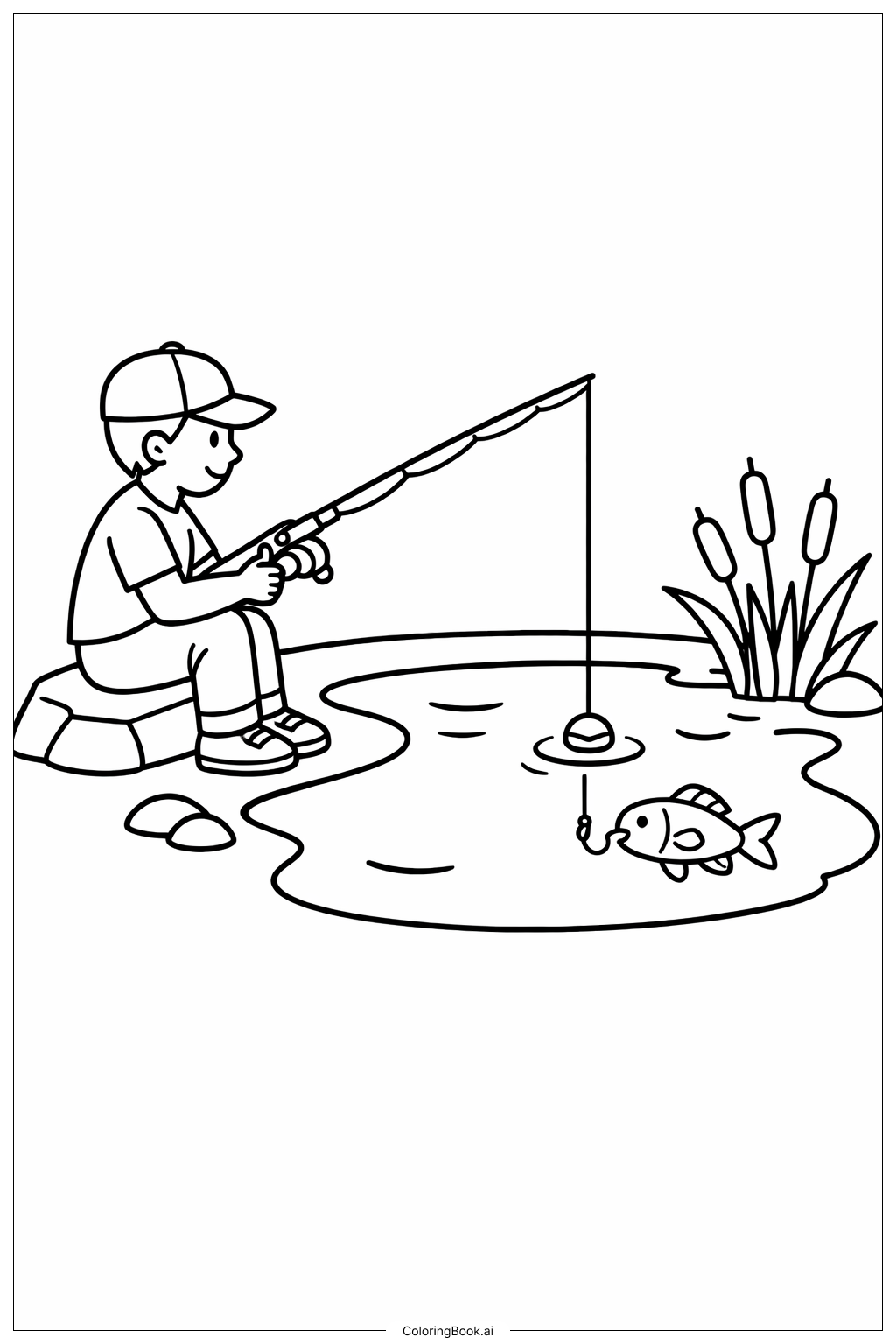
Start with the sky and water using soft shades of blue. Use light blue or aqua for the calm water surface, and add gentle white highlights to suggest ripples. Color the figure's clothing in earthy tones like tan, brown, or olive green to give an outdoor feel. A warm brown or sandy color works well for the wide-brimmed hat. Use green in different shades for the reeds, grasses, and background trees. The fishing rod can be a warm wood-brown or dark gray. The bobber is a great detail to make pop — try bright red and white. The tackle box or bucket can be any fun color the child likes, such as blue, yellow, or orange. Encourage young colorists to blend light and dark shades of the same color to add depth to the water and land. Keep the horizon soft and light to create a sense of open space and a peaceful outdoor setting.
Coloring challenges: Which parts are difficult to color and need attention for Person Fishing coloring page?
• Fishing Rod and Line: The fishing rod is long and thin, and the fishing line extending from its tip is very fine. Staying within such narrow lines requires a sharp pencil or a thin-tipped marker. Young colorists may find it tricky to color right up to these delicate edges without going over them. Taking it slow and using a light hand helps a lot.
• Water Texture and Ripples: Coloring water convincingly is one of the harder challenges in this scene. The ripple lines on the surface are close together and curved, making it easy to color outside them. To get a natural look, try using two or three shades of blue and blending them gently. Coloring in the direction of the ripples can also help the water feel more realistic.
• Figure Details and Clothing Folds: The person has small clothing details like collar edges, sleeve creases, and pocket lines. These tight areas need careful attention, especially where the arm meets the rod. Using a fine-tipped tool in these spots makes it easier to stay inside the lines and bring the character to life.
• Background Depth and Layering: The scene has a foreground, middle ground, and background. Keeping these layers visually separate using lighter colors in the distance and stronger colors up front can be a challenge for younger colorists. It takes planning to make the background trees or hills look far away while the reeds and ground feel close.
• Small Accent Details: The bobber, tackle box, and any small plants along the bank are tiny features. These need patience and a fine tool to color neatly without blending into neighboring areas.
Benefits of coloring books: Advantages of drawing Person Fishing coloring page
Coloring this peaceful fishing scene brings a wide range of benefits for children and young learners. The calm, outdoor theme naturally encourages a relaxed and focused mindset, helping to reduce stress and build patience — two qualities that are very useful in everyday life.
Working on the fine details of the fishing rod, water ripples, and small background elements helps strengthen fine motor skills and hand-eye coordination. These skills are directly connected to handwriting and other hands-on activities at school.
Choosing colors for the sky, water, clothing, and natural surroundings also sparks creative thinking. Children learn to make color decisions, experiment with shading, and discover how different tones can create mood and depth in a scene.
The nature-based setting introduces kids to the idea of the outdoors in a fun and engaging way. It can inspire conversations about fishing, lakes, rivers, and wildlife, encouraging curiosity about the natural world around them.
For older children and teens, the layered background and detailed textures offer a satisfying artistic challenge that builds confidence and attention to detail. Completing the full scene gives a real sense of accomplishment.
Overall, this coloring page is a wonderful mix of relaxation, creativity, and learning — making it a great activity for both quiet solo time and shared family moments.