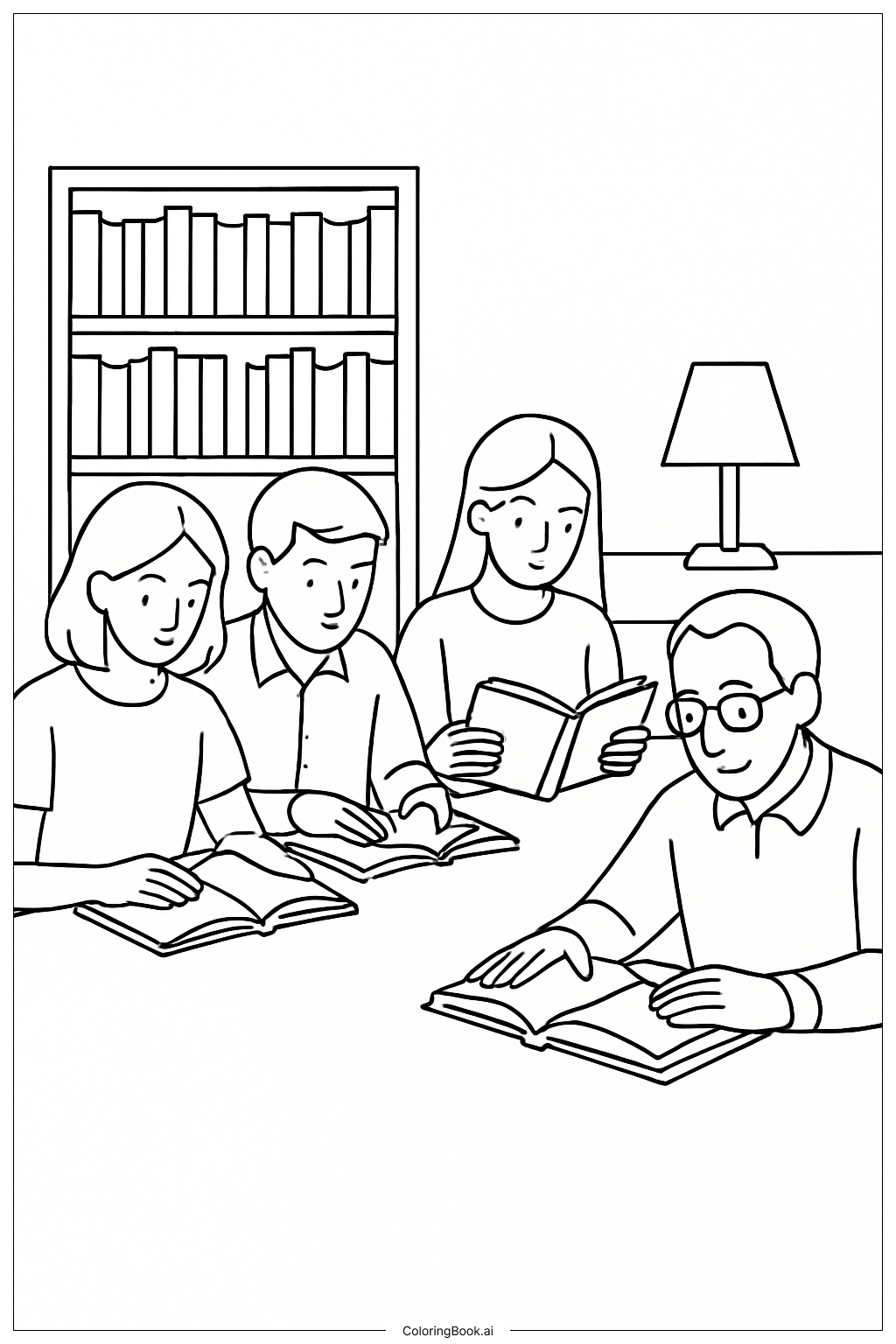
Coloring tips: How to color People Reading Books In Library coloring page well?
For coloring this image, use warm and inviting colors. Choose different shades for the books, like red, blue, green, and yellow, to make the library vibrant. The people can be colored with various skin tones and hair colors to represent diversity. Bright colors can be used for their clothing, while the lamp could be a soft yellow to create a warm glow. The bookshelves can be brown or gray to resemble wood or metal. Don’t forget to add some decorations or plants in the background to make it more lively!
Coloring challenges: Which parts are difficult to color and need attention for People Reading Books In Library coloring page?
1. **Details in Clothing**: The clothing of each person has folds and patterns. Kids may find it tricky to color these areas accurately to show texture and depth.
2. **Shadows and Highlights**: Understanding how to add shadows under the lamp and on the faces can be difficult. Kids might struggle with where to put darker and lighter shades.
3. **Color Blending**: Some kids might find blending colors for skin tones or hair challenging. Choosing the right combinations to achieve a natural look can take practice.
4. **Background Elements**: The background with bookshelves and the lamp may have intricate details. Coloring them without overlapping onto the people can be a bit tricky. It requires careful control of color application.
5. **Creating a Theme**: Deciding on a color scheme that fits the cozy, reading vibe of the library can also be a challenge. Kids might need help to pick complementary colors that enhance the overall feel of the image.
Benefits of coloring books: Advantages of drawing People Reading Books In Library coloring page
Coloring this image offers many benefits. First, it enhances creativity as children make choices about color combinations. They can express their unique styles through the colors they choose. Second, coloring helps improve fine motor skills. Kids practice holding and using coloring tools, which is great for their hand-eye coordination. Third, it encourages focus and concentration. As they concentrate on the details, children learn patience and the importance of completing tasks. Additionally, this scene promotes a love for reading and libraries, reinforcing positive associations with books. Finally, sharing their finished artwork can boost confidence and encourage discussion about stories.