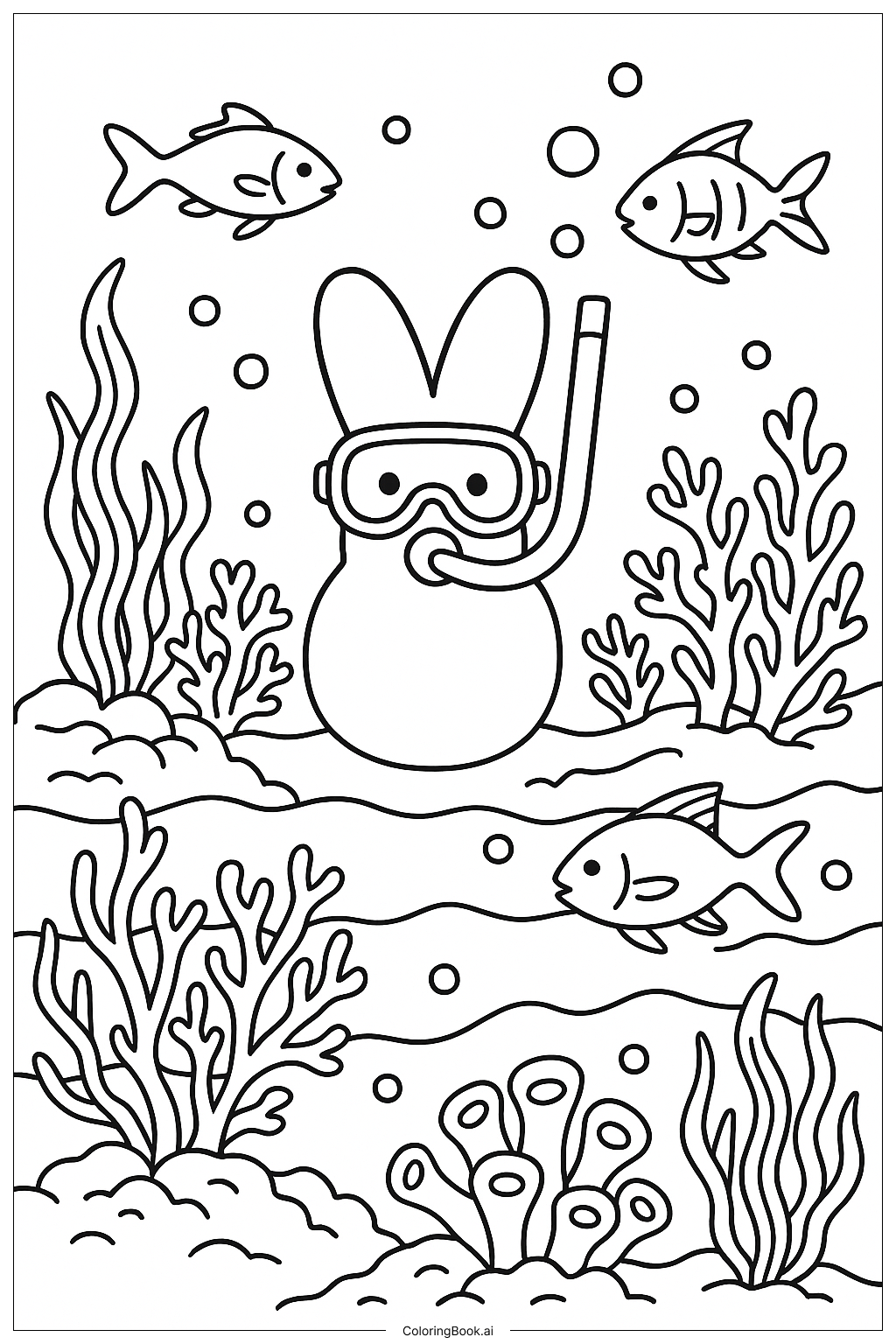
Coloring tips: How to color Peep Underwater Scene coloring page well?
When coloring this underwater scene, try using bright blues and greens for the water to create a lively ocean feel. The fish can be in a rainbow of colors like orange, yellow, red, or purple to make them stand out. For Peep, you might choose a light yellow or soft orange to keep it cheerful and warm. Use different shades of green and brown for the seaweed and ocean plants to add natural variety. Don’t forget to add touches of pink or red for starfish and coral to give contrast. You can use blues and whites for bubbles to make them look shiny and transparent. Think about blending colors lightly to show the watery environment. Have fun mixing colors and try not to stay inside every line to give a playful look.
Coloring challenges: Which parts are difficult to color and need attention for Peep Underwater Scene coloring page?
• Small detailed elements: The image contains tiny fish and seaweed strands that require careful coloring to avoid going outside the lines.
• Layering water and creatures: Showing the sense of underwater depth means coloring transparent water around fish and bubbles, which can be tricky.
• Color blending: Achieving a realistic water effect involves blending different shades of blue and green smoothly, which may be challenging for beginners.
• Repetitive patterns: The coral and seaweed have similar shapes repeated, so it takes patience to color each one distinctly.
• Maintaining bright contrasts: It can be hard to balance bright sea creatures with darker background elements without colors clashing or becoming muddy.
Benefits of coloring books: Advantages of drawing Peep Underwater Scene coloring page
Coloring this underwater scene helps children improve their fine motor skills as they work on small details and careful brush strokes. It encourages creativity by inviting them to explore a variety of colors and experiment with mixing shades. The image also introduces kids to marine life, sparking curiosity about nature and ocean environments. Working on this picture can develop concentration and patience, especially when blending colors and adding depth. Finally, finishing the coloring boosts confidence and satisfaction, motivating children to take on more complex artistic projects.