Coloring tips: How to color Peep Medieval Castle coloring page well?
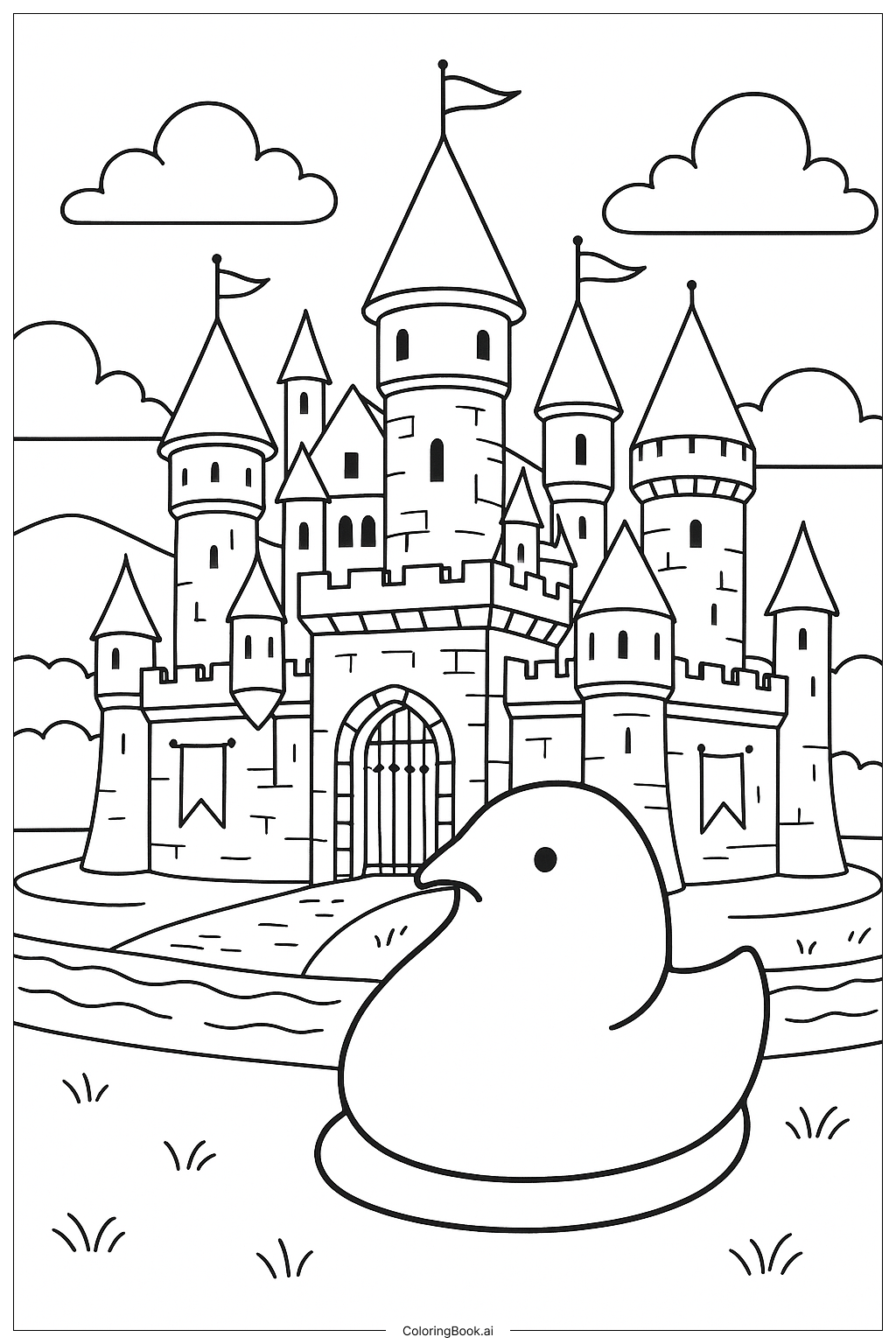
Start with the sky and background hills using light shades of blue and soft greens to set a cheerful, storybook mood. For the castle walls, try cool grays or warm sandy beige tones to give the stone a realistic feel. Use darker gray or brown to shade the crevices between the stone blocks, adding depth and texture. The turrets and battlements look great in a slightly darker shade than the main walls. Color the flags in bold, bright colors like red, yellow, or blue to make them pop. For Peep, use the character's classic colors to keep things familiar and fun. The drawbridge can be done in warm browns, like wood. Add extra detail to the arched windows with dark interiors to suggest depth. Encourage kids to experiment freely — a purple castle or a rainbow sky is always a wonderful choice too!
Coloring challenges: Which parts are difficult to color and need attention for Peep Medieval Castle coloring page?
• Stone Wall Texture: The castle walls are covered in detailed stone block patterns. Coloring each block individually takes patience and a steady hand. Using two slightly different shades of gray or beige for alternating blocks can make the texture look more realistic without feeling too repetitive. Younger children may prefer to simply fill the wall sections as one solid color, which works just as well.
• Small Architectural Details: Features like narrow arrow-slit windows, crenellated battlements, and arched gateways are small and closely spaced. Staying within these tight areas requires a fine-tipped pencil or thin marker. Taking it slow and working from the top of the page downward helps avoid accidentally smudging already colored sections.
• Depth and Shading: Creating a sense of three-dimensional depth on flat towers and walls can be tricky. Adding a slightly darker shade along the edges of each tower and a lighter tone in the center helps suggest that the towers are rounded. This technique takes a bit of practice but makes the finished image look impressive.
• Background Balance: The rolling hills, clouds, and open sky behind the castle need to feel like a background and not compete visually with the castle itself. Using softer, lighter tones for the background and bolder tones for the castle in the foreground helps establish a clear sense of distance.
• Peep Character Accuracy: Coloring Peep consistently with the character's recognizable look while making sure those colors stand out against the castle backdrop can be a fun challenge. Choosing contrasting colors for Peep versus the castle walls helps the character remain the clear focal point of the scene.
Benefits of coloring books: Advantages of drawing Peep Medieval Castle coloring page
Coloring this Peep Medieval Castle page offers a wonderful mix of fun and learning for kids of all ages. Working through the castle's detailed stonework helps build fine motor skills and trains steady hand control, which supports handwriting and other everyday tasks. Choosing colors for towers, flags, and backgrounds encourages creative decision-making and self-expression, giving children a sense of ownership over their artwork. The scene's variety of shapes and textures — from smooth hills to rough stone blocks — keeps young minds engaged and sharpens visual attention to detail. Coloring familiar character Peep in a new and imaginative setting sparks storytelling and imaginative play, encouraging kids to dream up their own castle adventures. Sitting down to color also promotes focus and patience, offering a calming screen-free activity that helps children unwind. For older kids, the challenge of shading walls and creating depth introduces early concepts of light and perspective in art. Whether tackled solo or shared with friends and family, this page is a relaxed, rewarding creative experience that builds confidence and leaves everyone with something to be proud of.