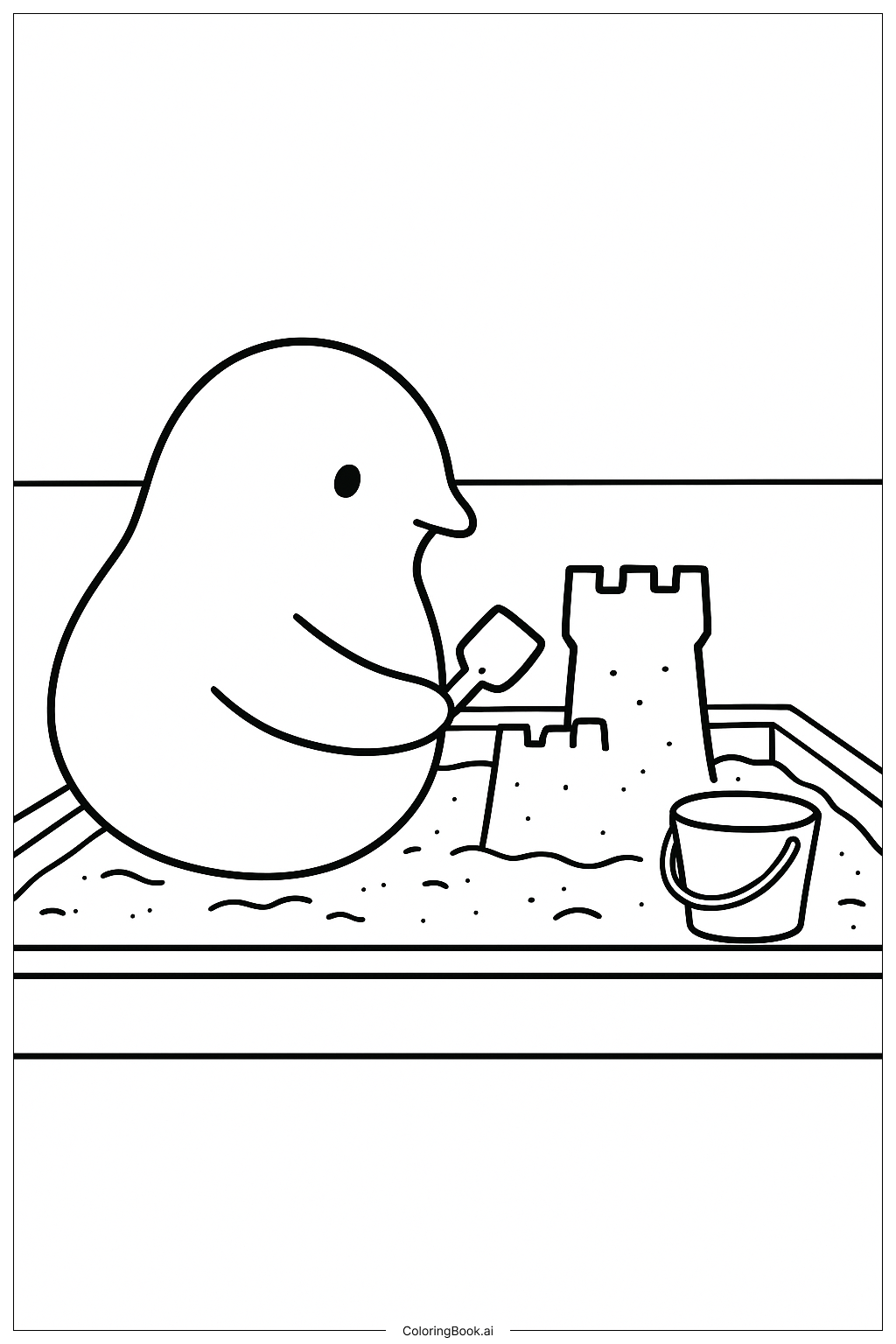
Coloring tips: How to color Peep in Sandbox coloring page well?
Start with Peep's body using a bright, sunny yellow. Use a slightly darker golden yellow for the small feather details and shading around the edges to give Peep a soft, fluffy look. Color the beak and feet with a warm orange. For the sandbox, use light tan or sandy beige for most of the sand, and add a touch of light brown in shadowed areas to show depth. The wooden frame of the sandbox looks great in medium brown or warm chestnut. If there is a small shovel or stick, try a bright red or blue to make it pop. The background can be left white for a clean look, or you can add a soft light blue sky and a hint of green grass around the sandbox to bring the outdoor setting to life. Keep the overall palette warm and cheerful to match Peep's playful personality.
Coloring challenges: Which parts are difficult to color and need attention for Peep in Sandbox coloring page?
• Coloring Peep's Fluffy Body: Peep is small and round, so staying inside the tight curved outline can be tricky, especially for younger colorists. Getting the yellow to look soft and fluffy rather than flat takes a bit of care. Try using light, circular strokes and adding a slightly deeper yellow at the edges to create a gentle three-dimensional effect without making the color look muddy.
• Sand Texture and Depth: Sand may seem simple, but making it look realistic is a real challenge. The sandbox area has uneven mounds and smooth patches that need different shades of beige and tan. If everything is colored the same shade, the sand will look flat. Using at least two or three tones — light, medium, and a hint of shadow — helps the sandbox feel full of texture and dimension.
• Wooden Frame Details: The sandbox frame has straight edges and grain-like lines. Coloring wood convincingly means layering warm brown tones and following the direction of any lines in the outline. Younger children may find it hard to stay within narrow wooden borders while also trying to vary the color slightly for a natural wood effect.
• Small Facial Features: Peep's eyes and beak are tiny, making them one of the most delicate parts of the page to color. A fine-tipped colored pencil or marker is almost essential here. One slip can easily cover the eye outline entirely, so a steady hand and patience are important for getting these small features just right.
• Balancing the Overall Color Composition: Since yellow is the main color for Peep and sandy tan fills most of the background, the page risks looking washed out if not planned carefully. Choosing a contrasting color for any small props or the sandbox frame helps create visual balance and keeps the scene lively and engaging.
Benefits of coloring books: Advantages of drawing Peep in Sandbox coloring page
Coloring this Peep in Sandbox page brings a wonderful mix of fun and learning for kids of all ages. Peep is a familiar, friendly character, so children feel comfortable and excited to pick up their colors and dive right in.
Working on the sandy textures and Peep's fluffy feathers helps children develop fine motor skills and hand-eye coordination. Choosing colors for the sand, the wooden frame, and Peep's bright body encourages creative thinking and color awareness.
Because the scene is set outdoors in a sandbox, it also sparks conversations about nature, outdoor play, and the sensory experience of sand — making it a great activity to pair with real-world exploration.
For younger children, the simple, bold outlines make it easy to follow along and feel a sense of achievement when the page is complete. For older kids, the challenge of adding texture and depth to the sand and wood gives them a chance to practice more advanced coloring techniques.
The quiet, focused nature of coloring also supports emotional calm and mindfulness. Sitting down with this cheerful scene gives children a peaceful, screen-free way to unwind while still being creative. Finishing the page builds confidence and pride, and the completed artwork makes a wonderful keepsake or display piece.