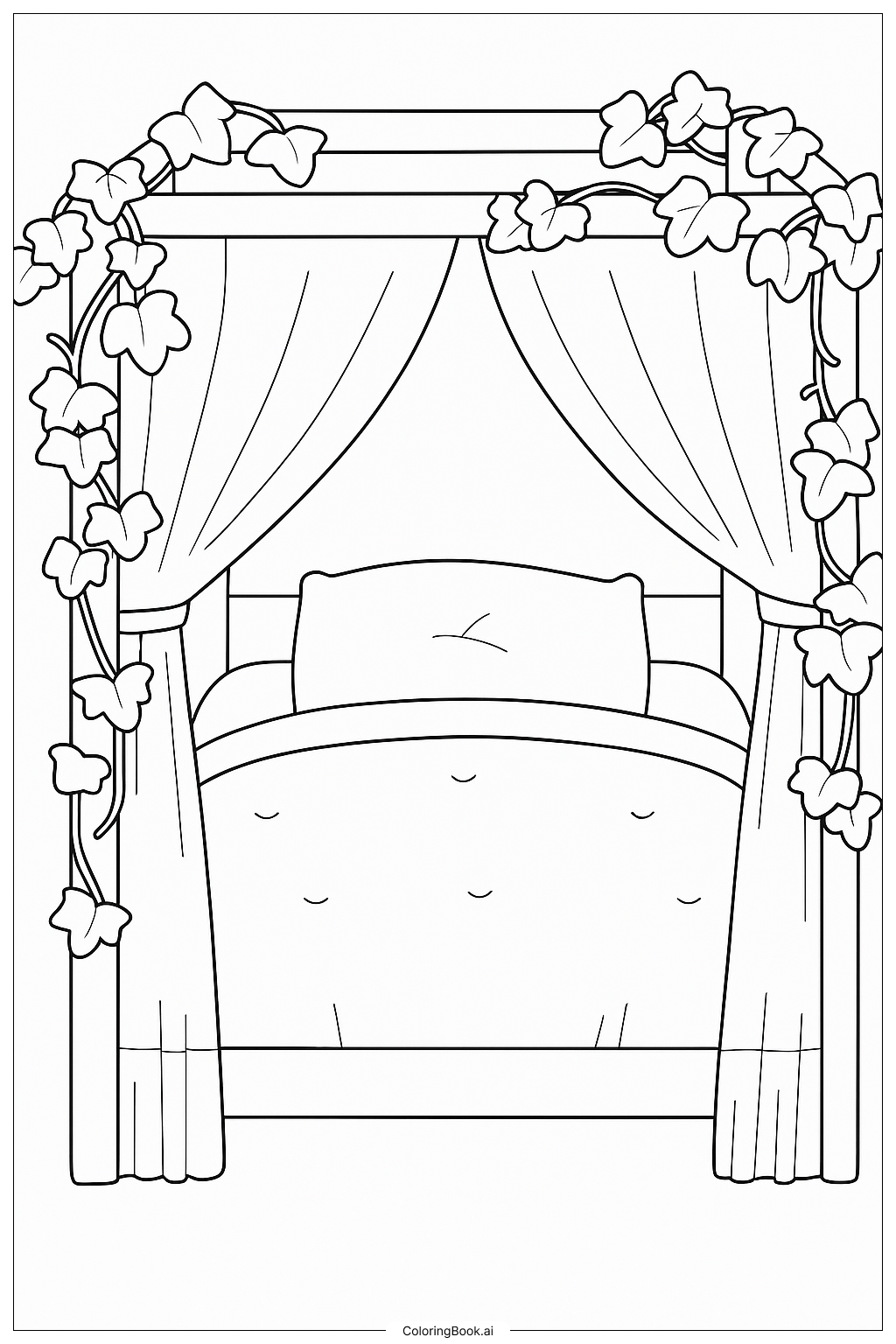
Coloring tips: How to color Canopy Bed With Ivy coloring page well?
Start with the ivy leaves. Use different shades of green — light green for young leaves and dark green for older ones — to make the vines look full of life. Add a tiny bit of yellow to some leaves for a sun-kissed effect. Color the bed frame and headboard in warm wood tones like tan or chestnut brown. For the curtains, try soft lavender, pale pink, or creamy white to keep the dreamy mood. The blanket and pillow can use pastel colors like mint, baby blue, or peach. If there are small flowers in the ivy, color them in bright yellow or purple to make them pop. For the Paper Duck, use its classic yellow body with an orange beak. Keep the background light — a soft sky blue or warm ivory works well to let all the details shine.
Coloring challenges: Which parts are difficult to color and need attention for Canopy Bed With Ivy coloring page?
• Ivy Leaf Details: The ivy vines are packed with many small overlapping leaves. Staying inside the lines on each tiny leaf takes patience and a fine-tipped colored pencil or marker. It is easy to accidentally color over a nearby leaf, so take your time and work from one section to the next.
• Shading the Canopy Curtains: The flowing curtains have folds and curves that create natural shadows. To make them look realistic, you need to use at least two shades of the same color — a lighter tone for the raised areas and a darker tone for the folds. Blending these smoothly can be tricky for beginners.
• Bed Frame and Headboard: The headboard often has carved or decorative patterns. Keeping each section of the pattern a consistent color without bleeding into neighboring sections requires a steady hand and careful control of your coloring tool.
• Balancing Green Tones Across the Vines: Because ivy covers a large area of the image, it is challenging to use enough variety in your greens without making the whole picture look flat or muddy. Planning which leaves get light green, mid green, and dark green before you start will help the composition feel balanced.
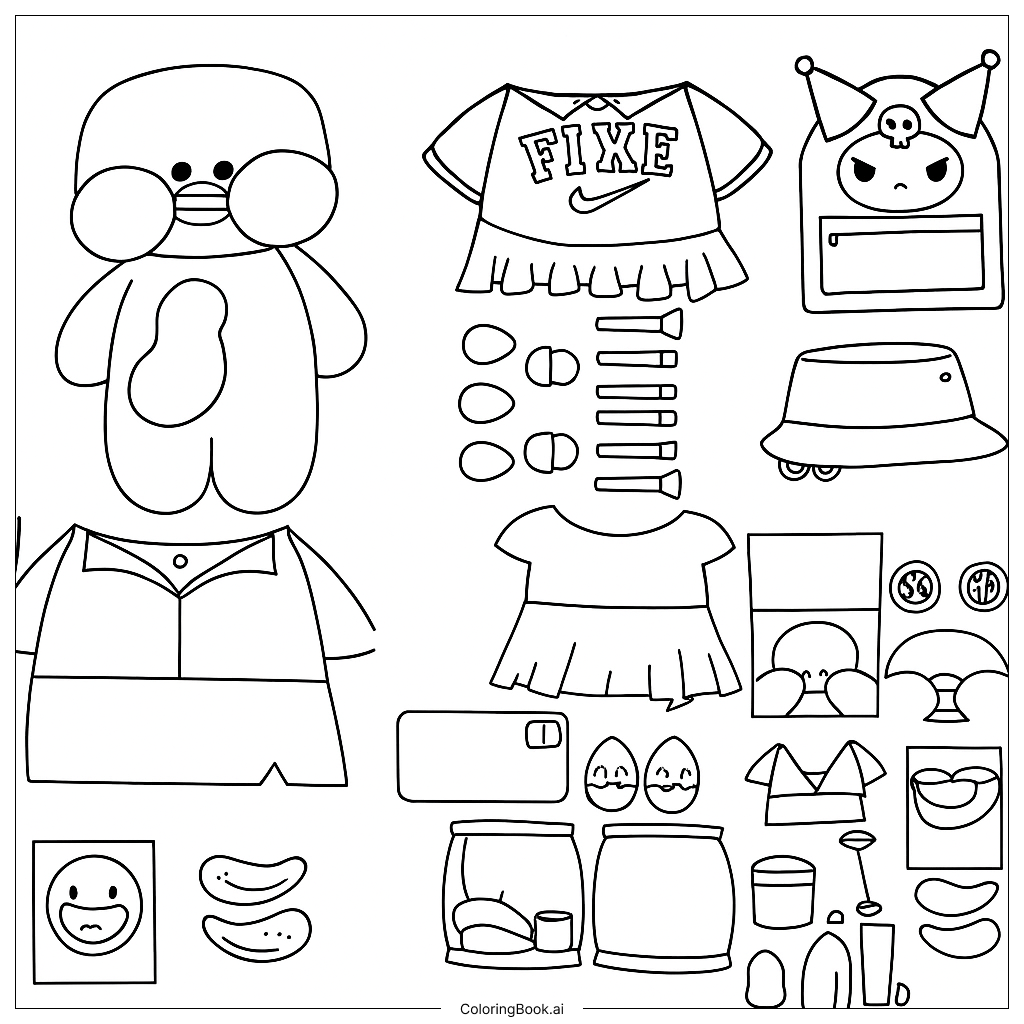
• Keeping the Paper Duck the Star: With so much detail around the bed and ivy, the Paper Duck can get visually lost. Make sure the duck's yellow is bright and bold enough to stand out clearly against the greens and neutral bed tones, so it remains the focal point of the scene.
Benefits of coloring books: Advantages of drawing Canopy Bed With Ivy coloring page
Coloring this Paper Duck canopy bed scene offers a wonderful mix of fun and learning for kids and adults alike. Working through the many ivy leaves builds fine motor skills and hand-eye coordination. Choosing color combinations for the curtains, blanket, and vines encourages creative thinking and helps develop a natural sense of color harmony. Because the image has both large open areas and small detailed sections, it is great for all skill levels. Younger children can focus on the big shapes like the blanket and curtains, while older kids and adults can challenge themselves with the leaf details and shading. The peaceful, fairy-tale setting of a cozy bed surrounded by nature makes the coloring experience feel calm and relaxing, which is a great way to unwind after a busy day. Completing a detailed scene like this also builds patience and focus, skills that are useful far beyond the coloring page. Sharing the finished artwork with family or displaying it on a wall can give a real sense of pride and accomplishment.