Coloring tips: How to color Palm Leaf Tropical Fish coloring page well?
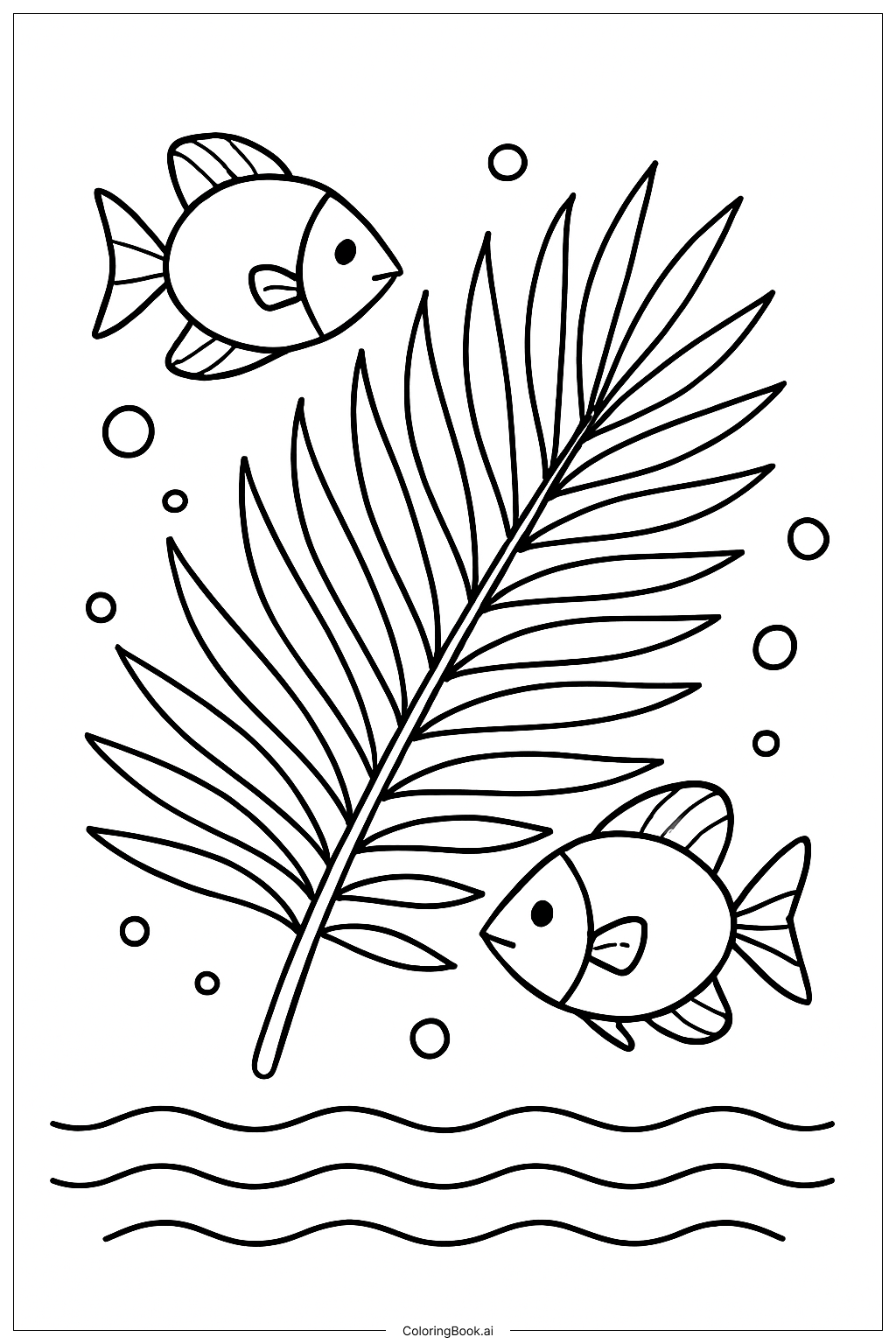
Start with the fish before moving to the leaves. For the fish, try warm tropical colors like orange, yellow, and red. You can add stripes or spots on the scales to make it look more realistic. Use a bright color like turquoise or coral for the fins and tail. For the palm leaves, go with deep and light greens to show depth. Mix two shades of green on each frond — darker along the edges and lighter toward the center. Color the bubbles light blue or leave them white for a clean look. A soft blue or teal background can make the whole scene feel like an underwater tropical paradise. Kids can keep colors simple and bold, while older colorists can try blending and shading for a more realistic effect.
Coloring challenges: Which parts are difficult to color and need attention for Palm Leaf Tropical Fish coloring page?
• Fish Scale Patterns: The overlapping scale details on the fish body require careful attention. Each scale is small and closely packed, making it tricky to stay within the lines. Using a fine-tipped marker or a sharpened colored pencil will help you fill each scale neatly without bleeding into the next one.
• Fin and Tail Gradients: The flowing fins and wide tail look best when colored with a smooth gradient — transitioning from one color to another. Achieving this effect without harsh color breaks can be challenging, especially for younger colorists. Practice blending two similar shades gently to create a soft, natural fade.
• Palm Leaf Shading: The long fronds of the palm leaves have many narrow sections divided by parallel lines. Coloring each section individually while maintaining consistent shading across the full leaf takes patience. Alternating light and dark green in a rhythmic pattern helps bring the leaves to life.
• Balancing Busy Details: The scene combines the fish, palm leaves, and floating bubbles all in one frame. Keeping the overall color balance harmonious — so that no single element overpowers the others — requires planning ahead. Choose a color palette before you start and make sure the fish, leaves, and background each use tones that complement one another.
• Small Bubble Details: The tiny bubbles scattered around the scene are small and easy to accidentally color over. Handle them last or use a white gel pen to restore any bubbles that get filled in by mistake.
Benefits of coloring books: Advantages of drawing Palm Leaf Tropical Fish coloring page
Coloring this Palm Leaf Tropical Fish page offers a wide range of benefits for kids and adults alike. The detailed scale patterns on the fish help build fine motor skills and hand-eye coordination, as colorists must control their tools carefully within small spaces. Working through the palm leaf fronds encourages patience and focus, two skills that are valuable both in school and everyday life. Choosing colors for a tropical scene sparks creativity and imagination — kids get to decide what their own version of a tropical fish looks like. The process of planning a color palette teaches basic color theory in a fun, hands-on way. For older colorists, blending and shading on the fins and leaves offers a satisfying artistic challenge. The nature-inspired theme also gently introduces children to tropical ecosystems, making learning feel playful. Overall, spending time with this page is a calming, screen-free activity that reduces stress and brings a sense of accomplishment when the final piece is complete.