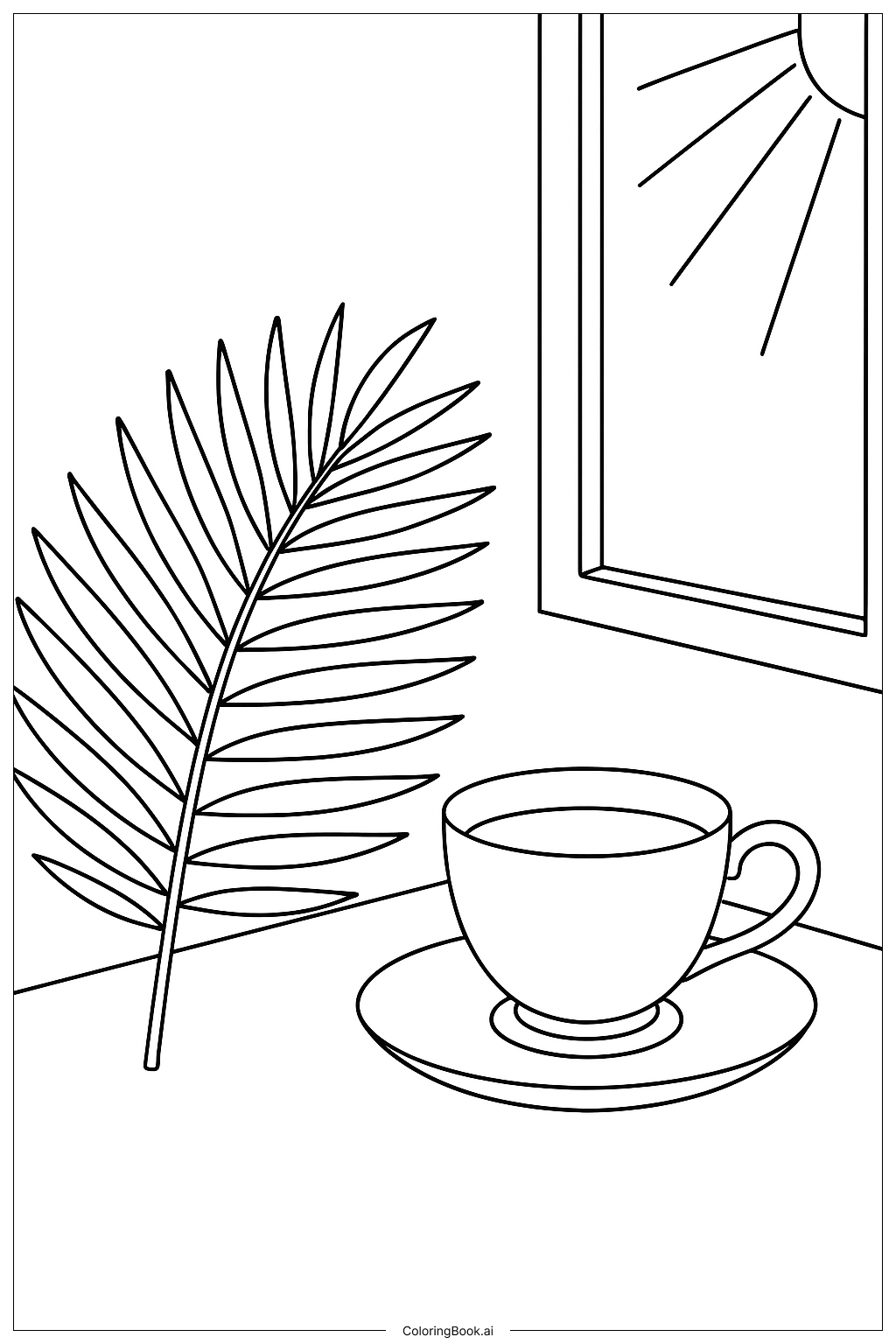
Coloring tips: How to color Palm Leaf Tea Cup Still Life coloring page well?
Try using cool green shades for the Palm Leaf, like forest green, lime, and olive, to bring a natural feel. The tea cup can be colored with soft pastel tones such as light blue, pale pink, or lavender to create a gentle contrast. For the background, consider warm beige or light cream colors to enhance the peaceful mood. Add shading to the curved parts of the cup and the veins of the leaf to give a 3D effect. Experiment with blending different greens on the leaf to show its texture. Keep your strokes gentle and flowing to match the calmness of the image.
Coloring challenges: Which parts are difficult to color and need attention for Palm Leaf Tea Cup Still Life coloring page?
• Palm Leaf Texture: The leaf has many slim, narrow leaflets that need careful coloring to stay within the lines and show the delicate texture. Coloring them evenly without mixing colors too much can be challenging.
• Leaf Veins Detail: Capturing the central vein and veins of the palm leaf while coloring requires attention to fine lines and shading to give a natural look.
• Smooth Surface of the Tea Cup: The cup’s curved shape means you must shade carefully to create a rounded, realistic effect. Flat coloring can make the cup look two-dimensional.
• Small Handle Shape: The handle is a small but detailed part that needs precise coloring to avoid overlapping onto the background or cup body.
• Balancing Contrast: Choosing colors to show distinction between the green leaf and the pale tea cup without overwhelming the calm feel of the piece takes planning and patience.
Benefits of coloring books: Advantages of drawing Palm Leaf Tea Cup Still Life coloring page
Coloring this image helps develop fine motor skills by requiring attention to small details like the leaflets and cup handle. It encourages focus and patience as you add shading and texture to improve realism. Working with natural shapes like leaves helps build observation skills and appreciation for the environment. The calming subject matter also promotes relaxation and mindfulness during coloring. Moreover, experimenting with blending shades and contrasts in this image can enhance your understanding of color harmony and light effects.