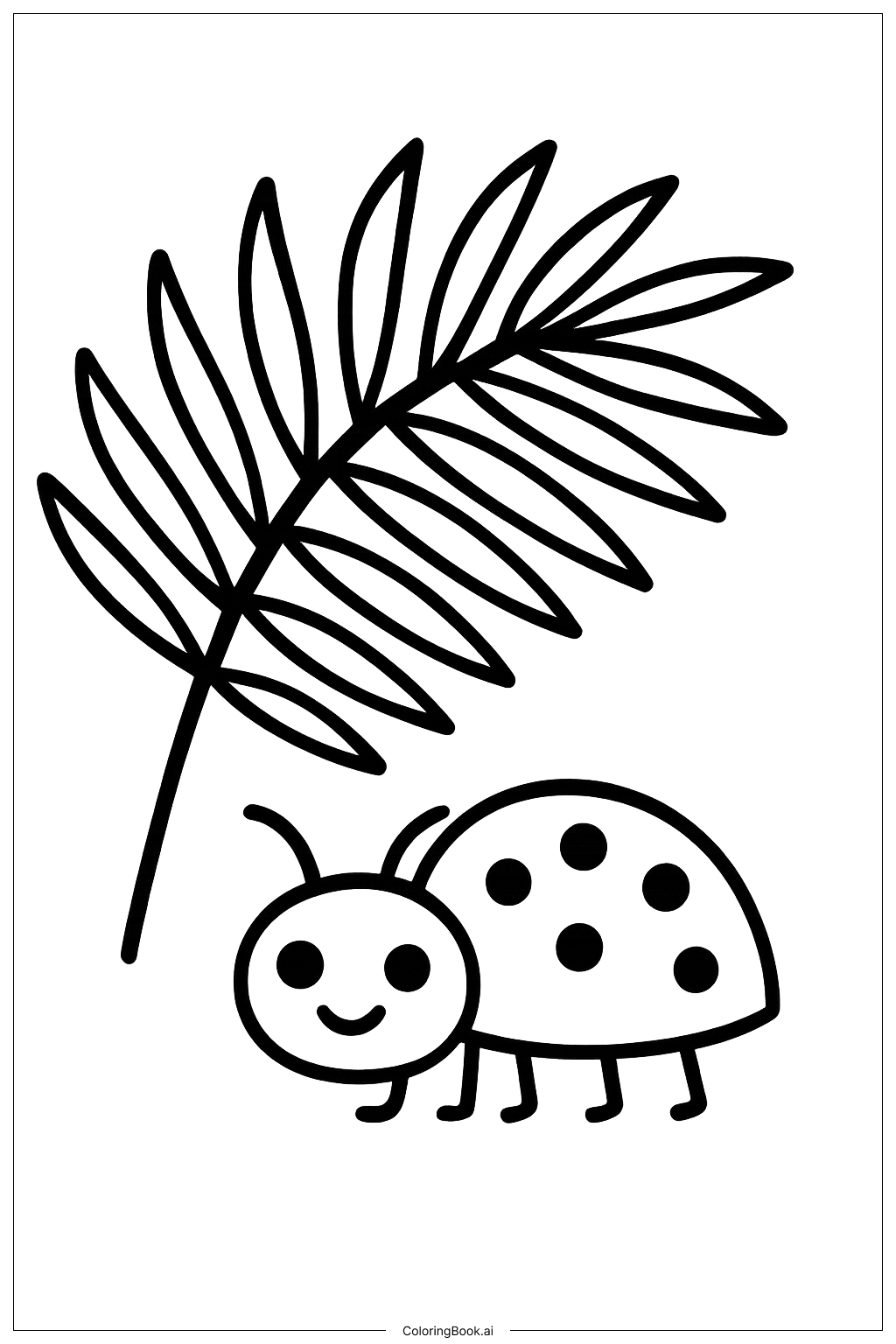
Coloring tips: How to color Palm Leaf Sheltered Bug coloring page well?
Try using bright and cheerful colors to make the picture lively. For the bug, you can use red or orange for the body and black for the spots to mimic a ladybug. The eyes can be colored dark brown or black. The palm leaf can be various shades of green, from light green for the younger leaves to darker green for the older ones. Feel free to add some yellow highlights or brown touches to add depth. Use a yellow or light blue background to give a sunny or sky feeling to the picture. You can also experiment with different coloring tools like crayons, colored pencils, or markers to see which results you like best.
Coloring challenges: Which parts are difficult to color and need attention for Palm Leaf Sheltered Bug coloring page?
1. Coloring inside the small spots on the bug's back can be tricky because they are tiny and need careful hand control. 2. The narrow and long leaflets of the palm leaf require steady coloring to avoid going out of lines. 3. Maintaining consistent shades of green for the palm leaf can be challenging since kids might want to use many colors. 4. Adding depth or texture to the palm leaf while staying within the lines may need more practice. 5. Coloring the bug's legs and antennae, which are thin, demands patience and precision to keep the lines clean.
Benefits of coloring books: Advantages of drawing Palm Leaf Sheltered Bug coloring page
Coloring this picture helps children improve their hand-eye coordination and fine motor skills. It encourages creativity by allowing them to choose colors and practice blending different shades of green for the leaf. Filling the small spots and thin shapes builds concentration and patience. This activity also promotes a sense of calm and focus as kids work carefully within the lines. Finally, completing the coloring brings a feeling of achievement and boosts confidence in their artistic abilities.